Technical Name: INSTALLATION, ASSEMBLY, DISASSEMBLY AND MAINTENANCE OF ELEVATORS COURSE NR 18
Reference: 170014
We provide courses and training; We perform Translations and Versions in Technical Language: Portuguese, English, Spanish, French, Italian, Mandarin, German, Russian, Swedish, Dutch, Hindi, Japanese and others consult.
Elevator Maintenance Course English
The purpose of the Elevator Maintenance Course English is to develop the participant’s technical ability to install, assemble, dismantle and maintain construction hoists with operational precision. Throughout the training, the student understands how each system interacts within the whole, from the shaft structure to the electromechanical mechanisms, always applying safe procedures aligned with the practical demands of the construction site. In addition, the course deepens critical reading of components, failure diagnosis and the execution of adjustments that ensure stable performance under different load and environmental conditions.
The course also aims to strengthen professional autonomy by placing the participant within the safety framework established by NR 18, which guides every stage of hoist operation on construction sites. With this foundation, the student begins to conduct activities with greater clarity about risks, prioritizing preventive decisions and rapid responses in the face of abnormal situations. As a result, they become capable of integrating technical efficiency, operational communication and safe behavior in all phases of the process.
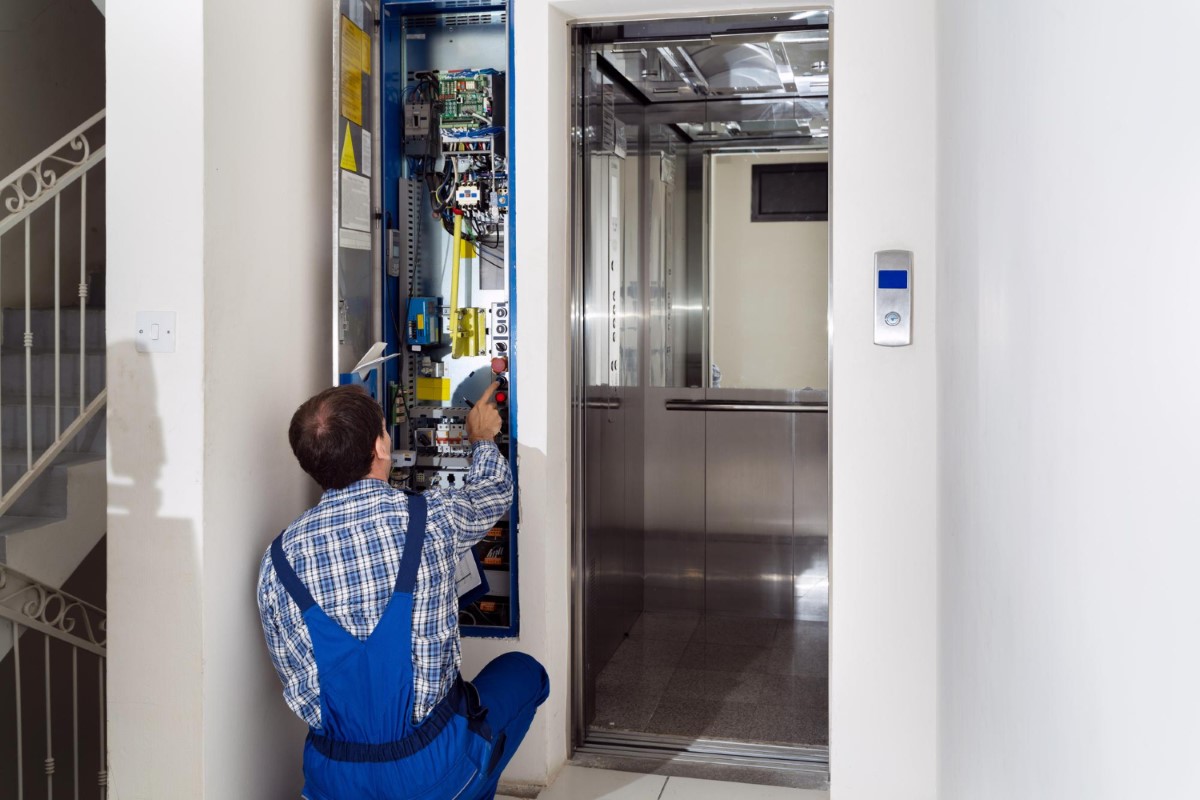
Routine maintenance inside the control panel preserves system integrity and prevents failures during daily elevator operation.
Who is responsible for ensuring the safe installation of the construction hoist?
The responsibility lies with the professional who performs each installation stage with technical precision and full operational awareness. This specialist evaluates structural interfaces, confirms dimensional alignment and validates the interaction between mechanical and electrical systems before authorizing the hoist for operation. Through this active performance, the installer ensures that the equipment operates within safe and predictable conditions on the jobsite.
This responsibility continues throughout the equipment’s lifecycle, as the technician monitors wear, system reactions under different loads and any deviations that may affect stability. By acting proactively, this professional prevents critical failures and ensures that the hoist maintains consistent performance during daily use, even under environmental variations such as wind, vibration and shifting logistics.
When should technical inspections be carried out during hoist operation?
The inspection routine must follow the operational rhythm of the jobsite, since the hoist’s behavior changes depending on load, environment and progressive mechanical wear. A well-structured inspection schedule allows early detection of deviations and prevents operational risks from evolving into failures.
Inspection frequency and technical purpose
| Inspection Moment | Technical Purpose |
|---|---|
| Initial installation | Verify assembly, structural alignment and system responsiveness |
| Start of each workday | Confirm doors, locks, controls and basic operational function |
| After structural changes | Revalidate operational limits after modifications to the tower or frame |
| Scheduled intervals | Identify wear, gaps, deformation and early failure patterns |
Elevator Maintenance Course English: Verification of cabin clearance is mandatory
Clearance verification is essential because it maintains dimensional stability and ensures that the cabin operates without interference that could disrupt door mechanisms or vertical alignment.
Cabin door to wall clearance
Cabin door to landing floor clearance
Periodic measurement using proper instruments
Adjustments recorded and corrected as needed
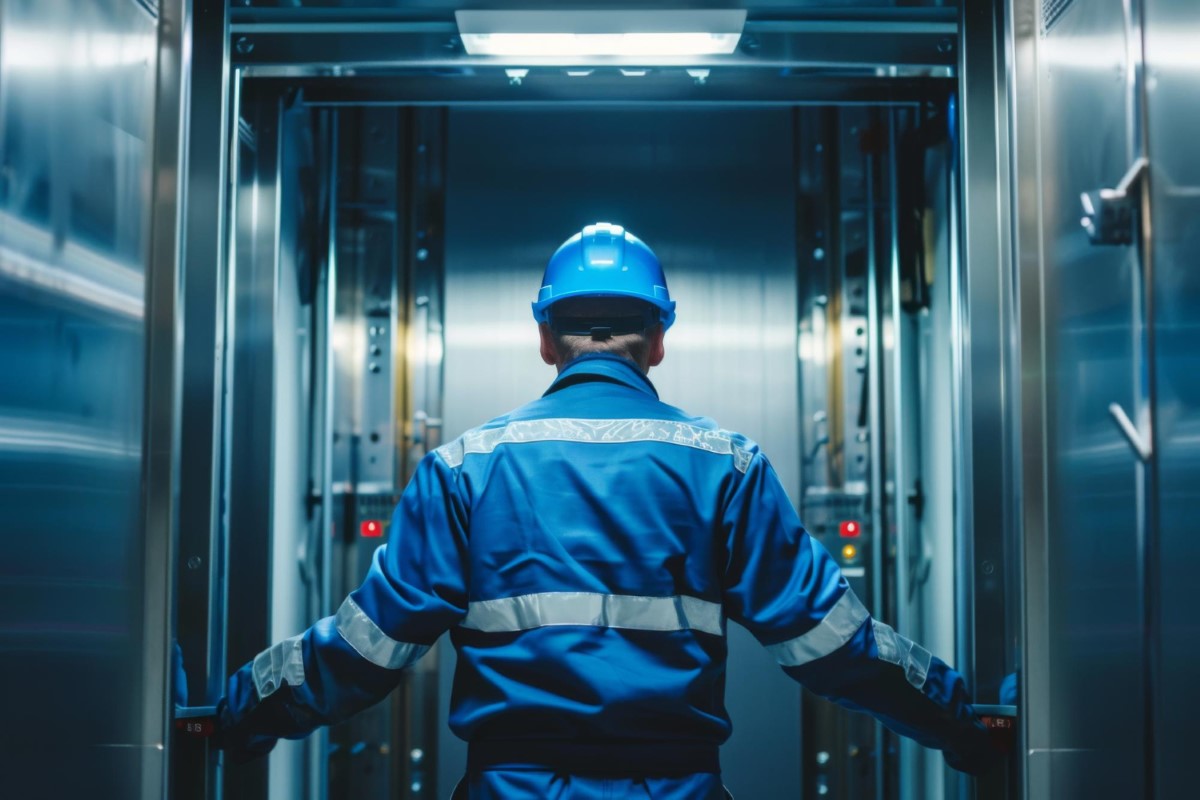
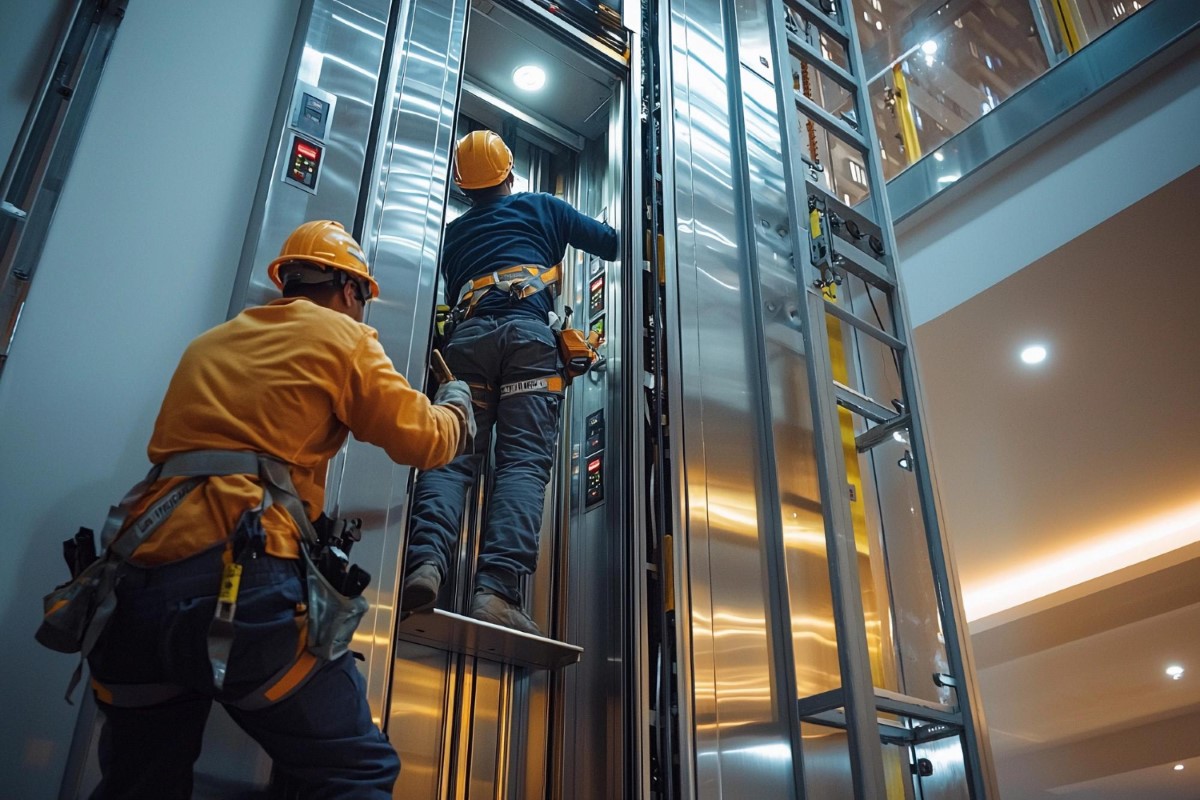
Precision in elevator installation begins with controlled access and full operational awareness inside the hoist shaft.
Why does the construction hoist require strict control of transported load?
Strict load control determines how the system reacts under operation, influencing acceleration, braking, vibration and component fatigue. When the load is monitored accurately, the hoist maintains predictable behavior, protects motors and brakes, and reduces asymmetric stress on the structure. This creates a safer and more stable operating cycle.
Furthermore, balanced load distribution prevents misalignment and premature wear on guides, counterweight systems and structural elements. Ignoring this balance accelerates deterioration, increases thermal stress and may trigger unsafe conditions. Proper load control extends equipment life and reduces unplanned downtime.
Which area must be isolated during the assembly or disassembly of the hoist?
The isolation area must be defined considering the spatial configuration of the jobsite and the risks associated with handling heavy structural components. Proper isolation prevents unauthorized personnel from entering regions where falling objects, structural adjustments or lifting operations may occur. This controlled perimeter significantly reduces human interference and enhances procedural safety.
Areas requiring isolation
| Area | Reason for Isolation |
|---|---|
| Hoist base | Tower installation and risk of falling components |
| Tower and alignment zone | Guide installation and adjustment of vertical structure |
| Hoist pit region | Cabin movement during testing and functional validation |
| Upper machine area | Handling of motors, pulleys, brakes and safety devices |
Elevator Maintenance Course English: The hoist motor requires continuous dimensional evaluation
Motor stability depends on measurements that confirm alignment, torque response and thermal behavior. These evaluations ensure precise control of movement and reduce vibration levels.
Vibration assessment
Temperature monitoring
Nominal torque verification
Alignment check between pulleys and cables
Where does the highest incidence of failures occur during hoist operation?
Failures tend to occur in areas where mechanical, electrical and structural systems interact simultaneously, especially in door assemblies, sensors, braking systems and cabin alignment components. These regions receive repetitive stress and are sensitive to fine adjustments, making them more prone to wear and performance loss over time.
In addition, these same areas are heavily exposed to dust, humidity and vibration from the jobsite. Environmental exposure affects sensor accuracy, compromises lubrication and accelerates deterioration of moving parts. Performing preventive maintenance in these critical points stabilizes system operation and reduces the risk of unexpected failures.
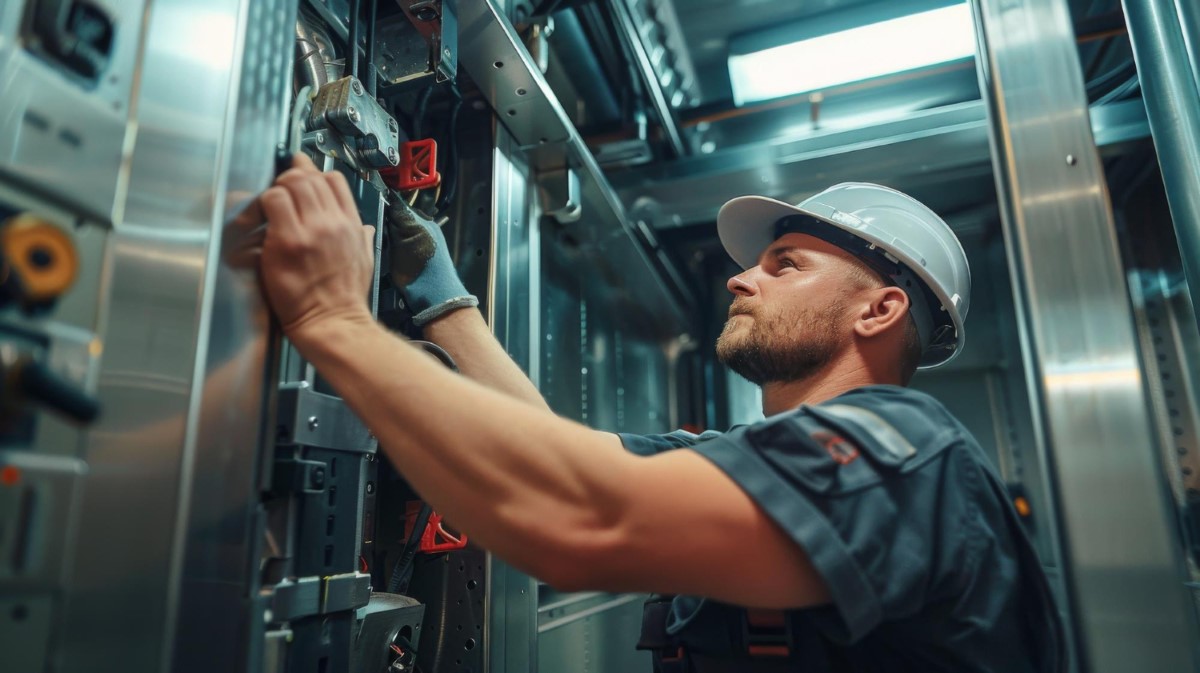
Technical adjustments during elevator assembly ensure accurate alignment, reliable braking response and long-term mechanical stability.
Whats is the important of the Elevator Maintenance Course English?
The importance of the Elevator Maintenance Course English lies in preparing professionals to work with construction hoists using a high level of technical accuracy and operational awareness. As participants learn how each mechanical and electromechanical system behaves, they gain the ability to identify risks, interpret structural conditions and apply safe procedures throughout installation, assembly, disassembly and maintenance. This elevates their capacity to act decisively, prevent failures and maintain equipment stability even under the dynamic conditions of a construction site.
The course is equally essential because it aligns all activities with the requirements established by NR 18, which governs safety practices for construction environments and specifically addresses hoists used for transporting people and materials. By understanding and applying these principles, the professional not only protects themselves and others but also ensures full regulatory compliance, reducing operational incidents and strengthening the overall safety culture of the worksite.
Click the Link: Criteria for Issuing Certificates in accordance with the Standards
Certificate of completion
Elevator Maintenance Course English
INSTALLATION, ASSEMBLY, DISASSEMBLY AND MAINTENANCE OF ELEVATORS COURSE NR 18
Course Load: 40 Hours
MODULE 1 – Fundamentals, Application Field and Responsibilities (6 Hours)
Scope and application of elevator systems in construction
Definitions, terminology and general technical boundaries
Operator, installer and supervisor responsibilities
Documentation, traceability, operational communication and safety signs
Integration of elevators into site logistics and work routines
MODULE 2 – Risk Management, Work Stages and Significant Hazards (8 Hours)
Structure of risk evaluation applied to elevator activities
List of significant risks: mechanical, structural, operational and environmental
Work stages: preparation, installation, assembly, disassembly and maintenance
Hazard identification during movement of materials and people
Control measures and supervision criteria
MODULE 3 – Elevator Structure: Box, Cab, Doors and Access Systems (8 Hours)
Distances and clearances: cab door, box walls and floor doors
Closing systems, inspection doors and emergency access
Protection of areas under car or counterweight
Floor doors and cabin doors: fixation, glazing, sliding systems and impact protection
Behavior of doors under fire conditions
Autonomous closing, unlocking mechanisms and multi-leaf door configurations
MODULE 4 – Mechanical and Electromechanical Systems (8 Hours)
Elevator machine characteristics
Electromechanical brake operation
Stop verification and operation time limiter
Guides, bumpers and travel limiters
Suspension, compensation and protection systems
Overspeed control, upward motion protection and uncontrolled movement prevention
MODULE 5 – Engine Room, Pulley Room and Electrical Installations (6 Hours)
Access conditions and structural layouts of engine and pulley rooms
Lighting, clearances and equipment handling
Electrical installations and appliances
Main switches, control panels and protection elements
Alarm systems and communication between cab, engine room and building entrance
MODULE 6 – Cab Performance, Accessibility and Emergency Behavior (4 Hours)
Nominal load, usable area and passenger capacity
Platform protector and prevention of falls into the box
Cab without door: restrictions and risk control
Emergency hatch, door locking, roof resistance and ventilation
Emergency lighting and in-cab lighting
Behavior of elevators in emergency or abnormal operation
Completion and Certification:
Practical Exercises (when contracted);
Evidence Records;
Theoretical Evaluation;
Practical Evaluation (when contracted);
Certificate of Participation.
NOTE:
We emphasize that the General Normative Program Content of the Course or Training may be modified, updated, supplemented, or have items excluded as deemed necessary by our Multidisciplinary Team. Our Multidisciplinary Team is authorized to update, adapt, modify, and/or exclude items, as well as insert or remove Standards, Laws, Decrees, or technical parameters they consider applicable, whether related or not. The Contracting Party is responsible for ensuring compliance with the relevant legislation.
Elevator Maintenance Course English