Technical Name: NR 10 – SEP TRAINING COURSE (SAFETY IN THE POWER ELECTRICAL SYSTEM (SEP) AND ITS SURROUNDINGS) – TAUGHT IN ENGLISH
Reference: 231510
We provide Courses and Training; We carry out Translations and Versions in Technical Language: Portuguese, English, Spanish, French, Italian, Mandarin, German, Russian, Swedish, Dutch, Hindi, Japanese, and others upon request.
Objective of the NR10 SEP Course English
The NR10 SEP Course English aims to qualify professionals to work safely in power electrical systems (SEP) and their surroundings, in accordance with NR 10, using technical English as the main tool for instruction, operation, and communication. It provides normative mastery, situational awareness, and multilingual technical preparedness, ensuring that the worker understands and executes each critical step with fluency and precision.
In addition to complying with Brazilian legislation (NR 10, NBR 14039, among others), the English version enables professionals to operate in bilingual operations, multinational industrial environments, and work fronts with international technical interaction. The language becomes part of the protection system, not an obstacle.
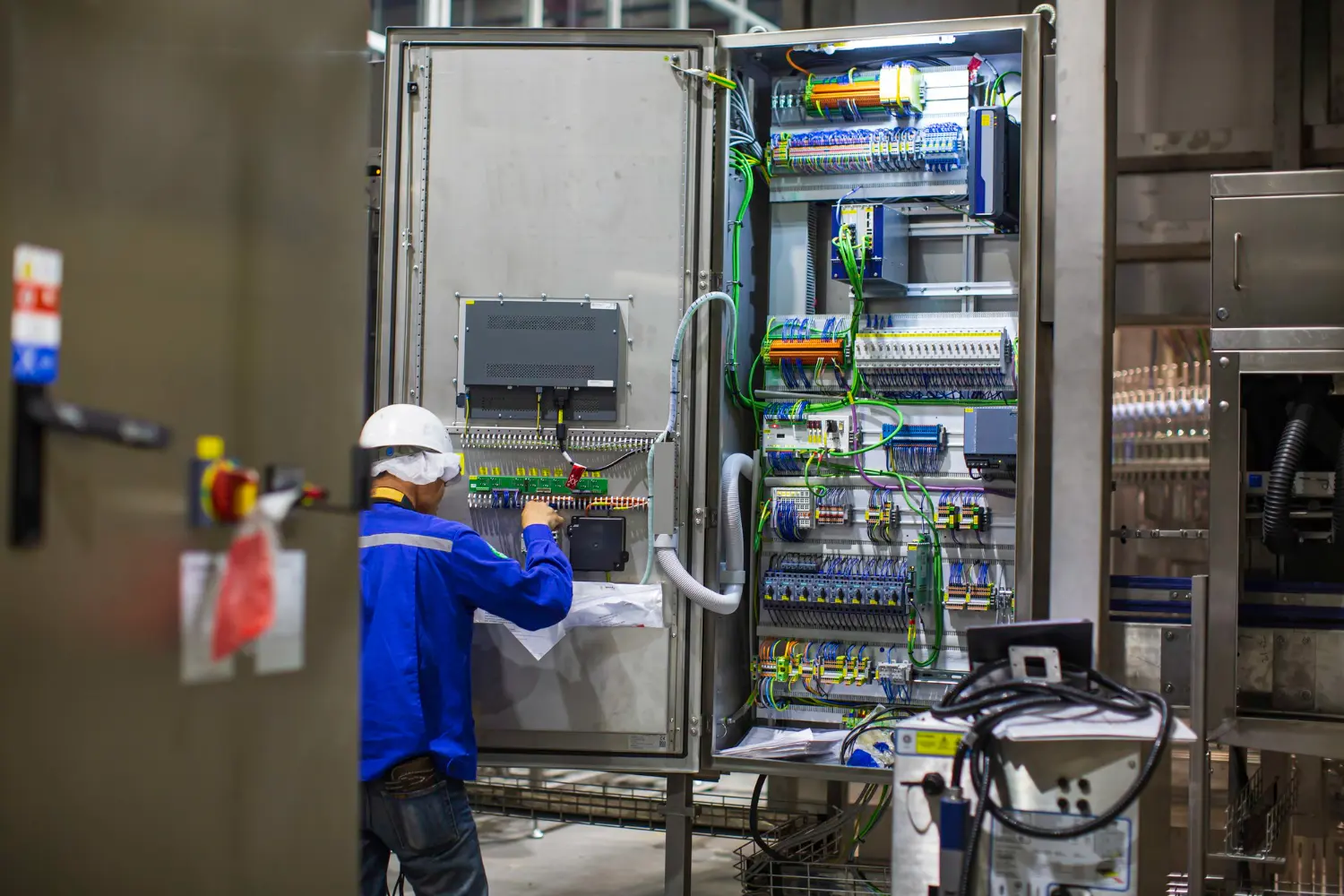
Professional works in the organization of cables and connections in an automated panel, within a controlled environment and under the procedures of the standard. – NR10 SEP Course in English
What makes NR 10 – SEP training in English essential for professionals working in electrical installations with international standards?
NR 10 – SEP training in English ensures technical fluency in critical procedures, increasing synergy in multinational teams and reducing communication noise that, in energized contexts, can be fatal. The course does not merely translate the standard; it reconstructs the knowledge in a bilingual format, aligning vocabulary, the standard, and preventive behavior.
In operations that follow IEC, IEEE, OSHA, and international contract requirements, the ability to understand and apply commands, instructions, and reports in English is not a luxury; it is a shield against human errors and nonconformities.
NR 10 – SEP training taught in English is mandatory according to Brazilian and international legislation
The NR10 SEP English Course is required whenever the worker operates in SEP or its risk zones and communication in English is a contractual, normative, or operational requirement. This is especially true when there are foreign supervisors, documentation in English, or when the operation is subject to international certifications.
In practice, mandatory requirements appear in audits, inspections, and bids that demand evidence of training compatible with the official language of the operation. Brazilian legislation (NR 10) does not prohibit training in other languages as long as the technical content is equivalent and the issuance of the ART is legally valid.
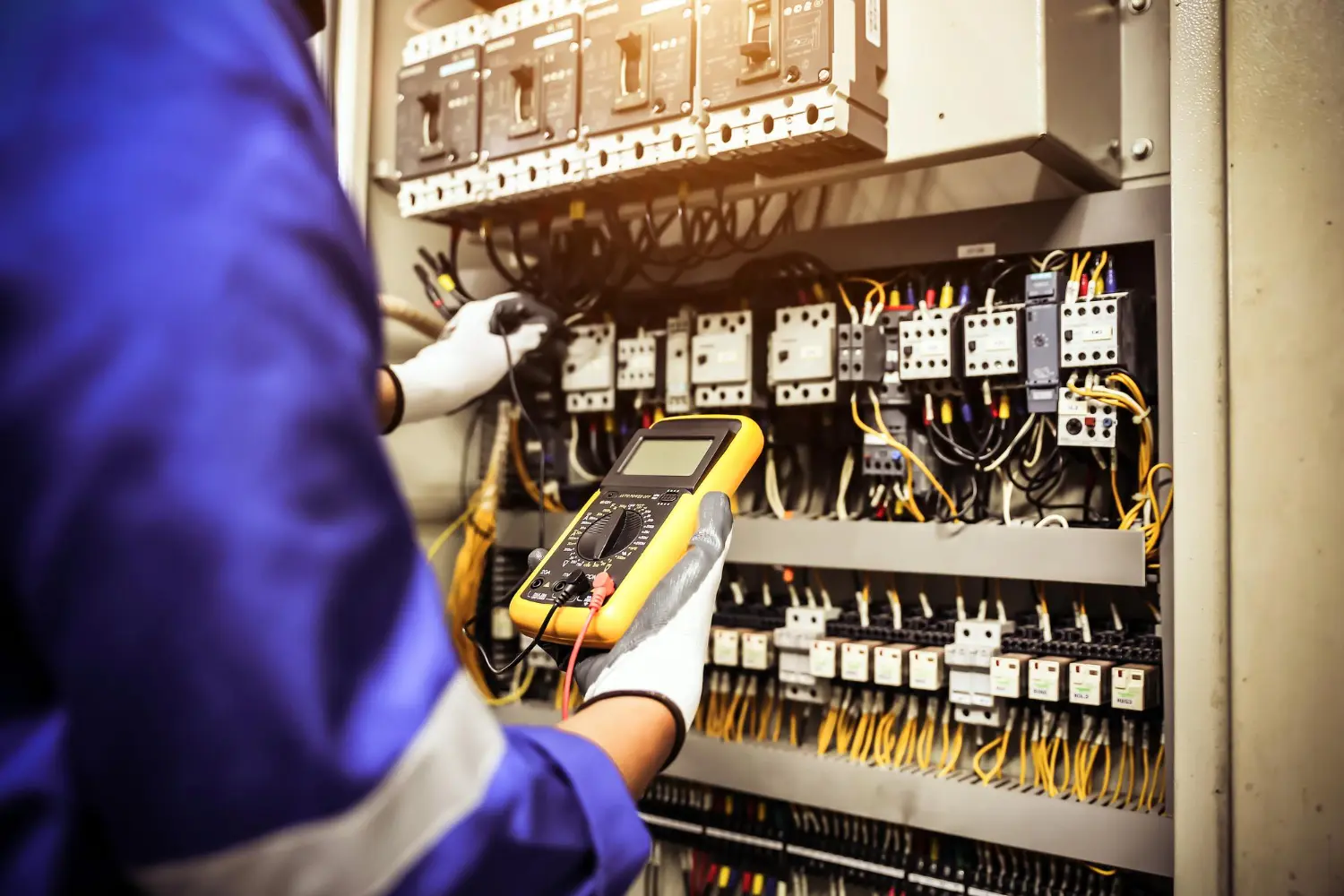
Technician performs safe measurement with a multimeter on an electrical panel, reinforcing lockout practices, grounding, and the use of PPE.
Where is the technical content of NR 10 – SEP in English most frequently applied?
This content is frequently applied on offshore platforms, thermoelectric plants under international control, binational substations, multinational refineries, and mining areas controlled by foreign groups. In these operations, technical English is the standard operational language.
It is also common in EPC (Engineering, Procurement and Construction) projects, in contracts with safety clauses based on international standards, and in internal training of global companies that adopt English as a corporate language.
Training in English contributes to the effectiveness of the APR (Preliminary Risk Analysis) in the SEP
The APR depends on the precise interpretation of the scenario and the risks involved. When professionals understand the technical terms and operational commands directly in the language of the operation without relying on informal translations, the result is a safer, more realistic, and more effective analysis.
In addition, the course in English trains the team to draft, understand, and respond to APRs in accordance with international standards, which eliminates ambiguities and significantly reduces the likelihood of incidents caused by unclear interpretation.
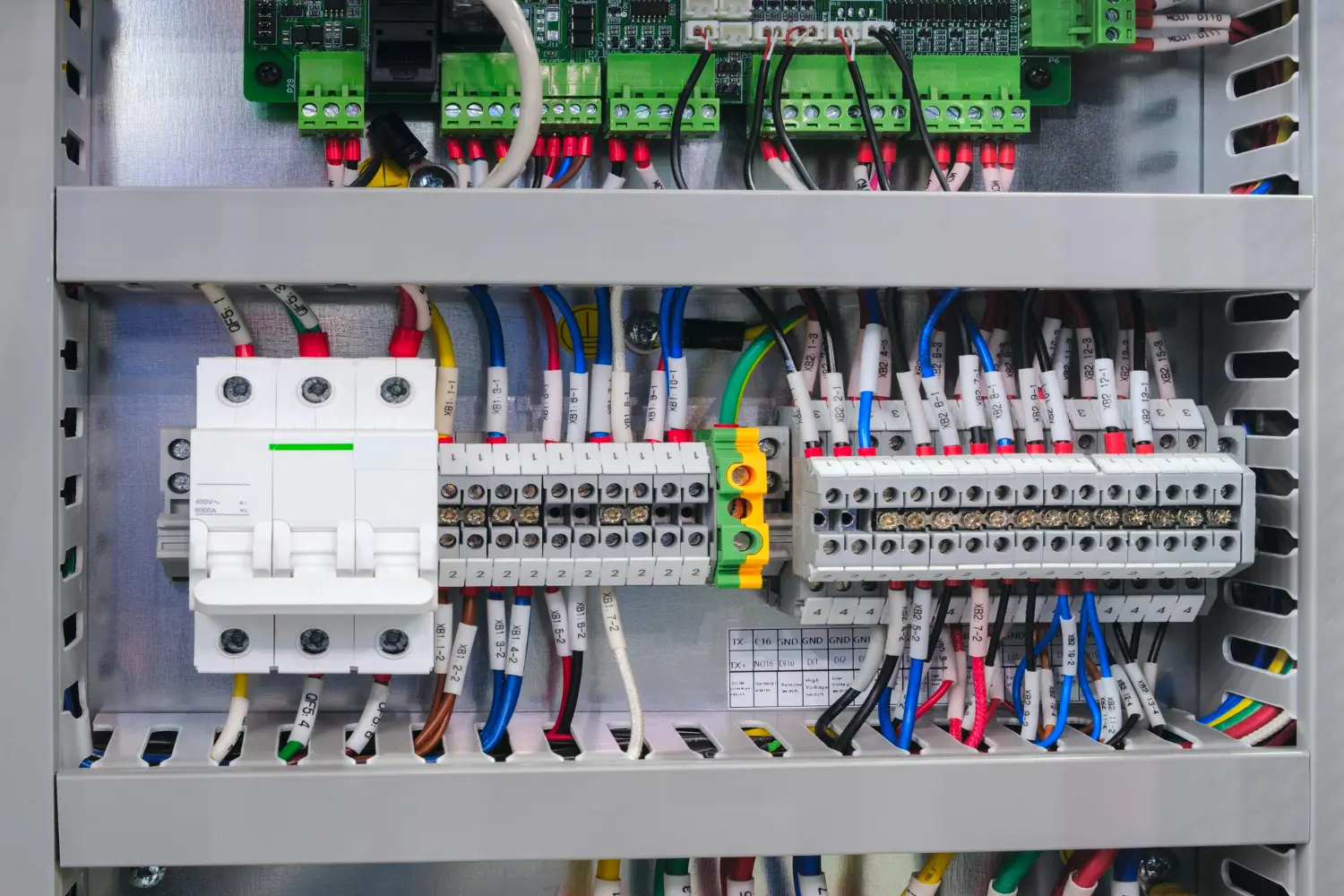
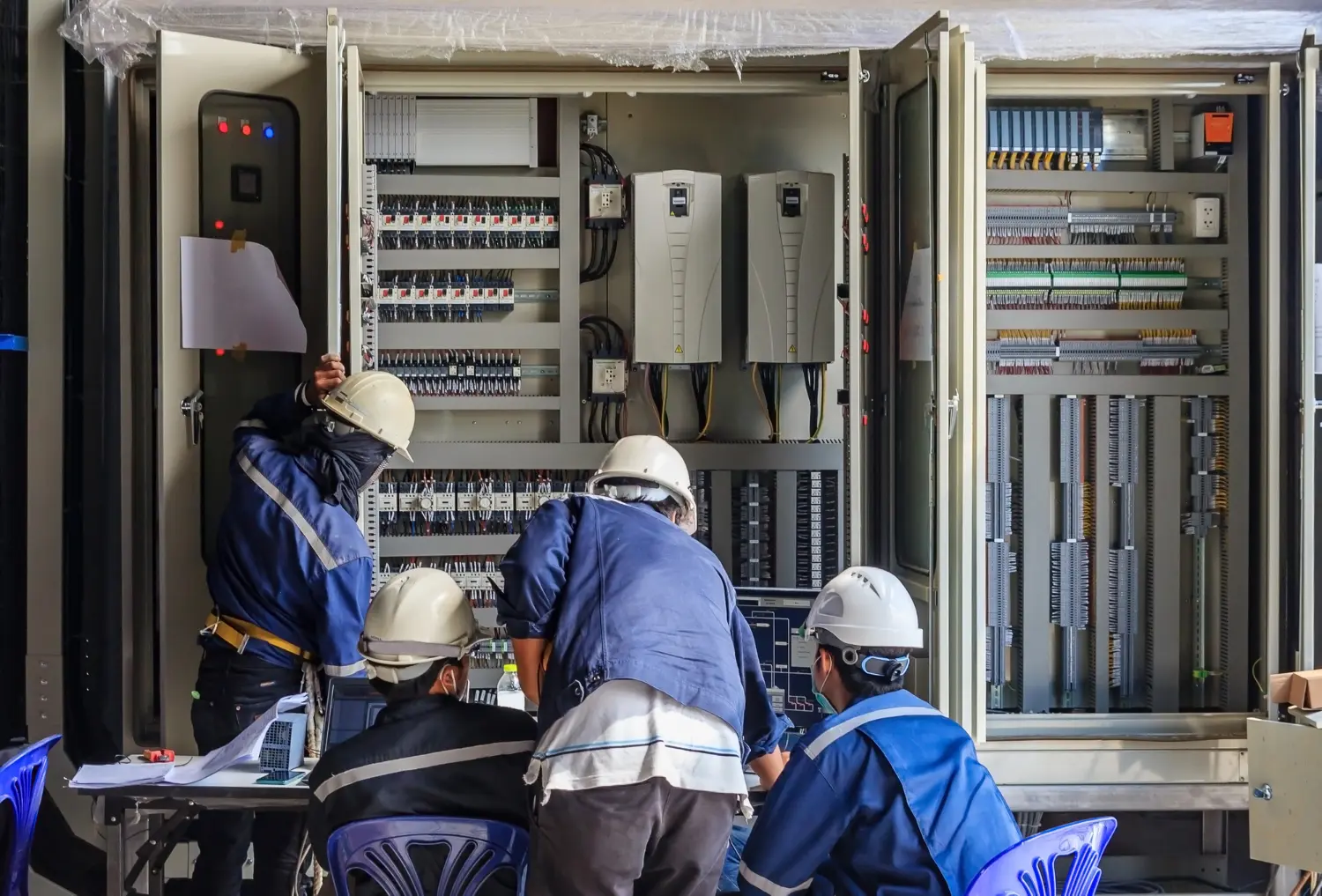
Control panel with well-distributed terminals, demonstrating clean and safe assembly, ideal for inspections and maintenance.
What is the impact of bilingual communication on response time in electrical accidents?
In critical situations, seconds define lives. Bilingual communication, trained with fluency and technical precision, reduces reaction time, eliminates hesitation, and enables coordinated responses even with multilingual teams.
The NR 10 SEP course in English empowers the professional to understand and issue commands with clarity. Thus, it ensures the immediate execution of alerts, shutdowns, isolations, or rescues, without linguistic noise. In energized environments, this fluency is synonymous with control and survival.
Who must be mandatorily trained with NR 10 SEP content in English:
All professionals who work directly or indirectly in medium- and high-voltage electrical installations in international contexts must be trained. Therefore, this includes electricians, engineers, maintenance technicians, supervisors, foremen, and attendants who interact with documentation, protocols, or interlocutors in English.
The requirement extends to outsourced service providers, offshore workers, commissioning and inspection teams, and members of consortia or joint ventures with foreign headquarters or control. Thus, technical fluency in the language is a criterion of operational integrity.
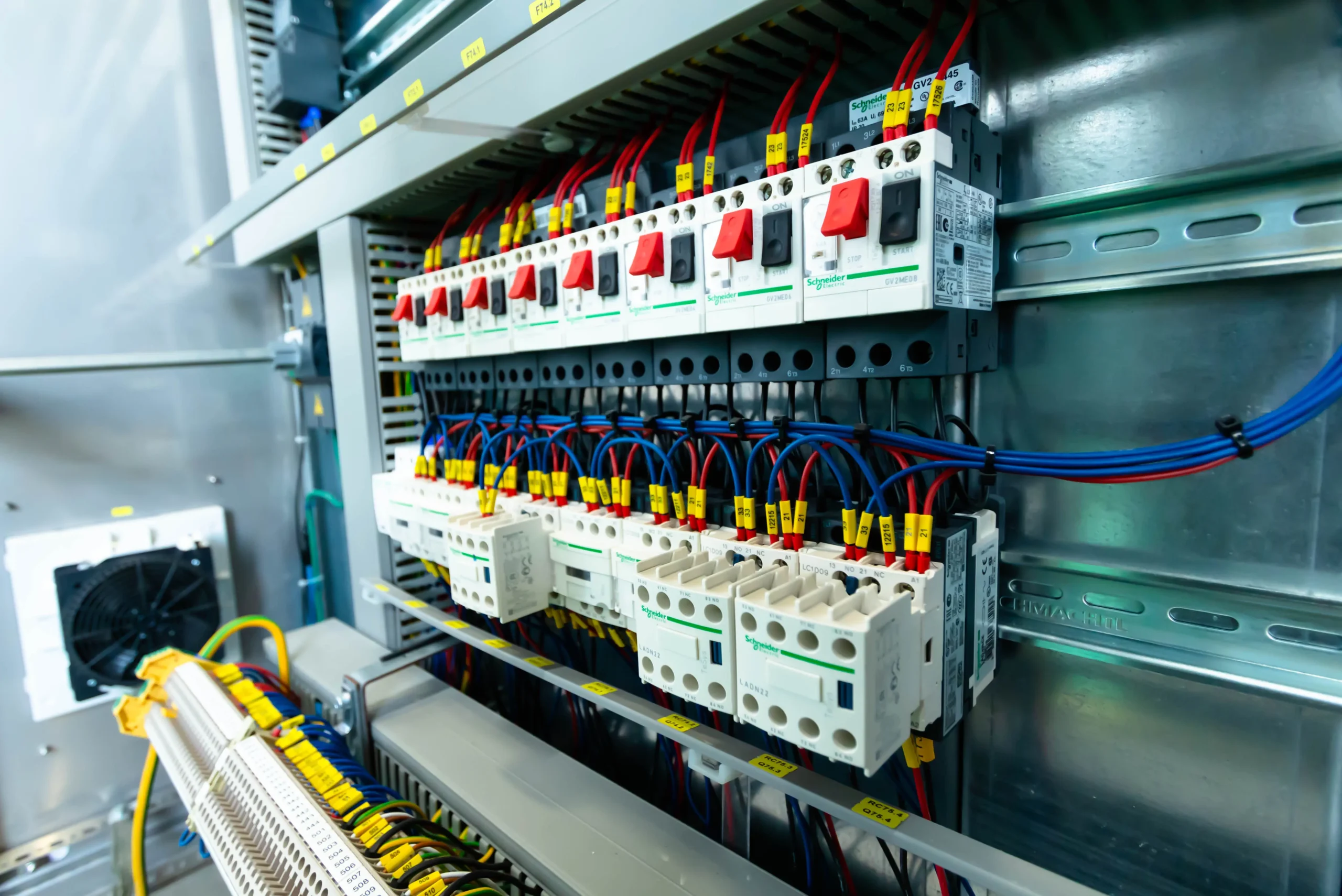
Panel with components properly identified, as required by NR 10 and international best practices for electrical traceability.
What is the purpose of NR 10 – SEP training in English in multinational audits and inspections?
It serves as technical proof of compliance with the standards required by the international client, demonstrating that the worker understands the safety content in the language of the operation. Likewise, in audits, this reduces legal exposure and strengthens the compliance image of the contracted company.
More than a documentary requirement, bilingual training signals technical maturity. Therefore, it demonstrates commitment to operational excellence. It reinforces the trust of foreign contractors and opens doors to new contracts.
Technical communication in English is a differential and has already become a silent requirement in the electrical sector
Technical fluency in English is no longer just a competitive advantage. Thus, it has become an implicit requirement in operations that cross borders, especially where standards coexist with NR 10.
Those who do not keep up with this linguistic advancement are, in practice, limiting their field of operation. The language of risk must be the language of action. Therefore, in the global electrical sector, this language is inevitably technical English.
Click the Link: Criteria for Issuing Certificates in accordance with the Standards
Professional Free Training Basic Concepts (Does not replace Academic Education or Technical Training)
Certificate of completion
NR 10 SEP Course in English
NR 10 – SEP TRAINING COURSE (SAFETY IN THE POWER ELECTRICAL SYSTEM (SEP) AND ITS SURROUNDINGS) – TAUGHT IN ENGLISH
Total Workload: 40 Hours
Module 1 – Work Organization (5 Hours)
Work organization:
a) service scheduling and planning;
b) teamwork;
c) dossier and registry of installations;
d) work methods;
e) communication.
Module 2 – Typical Risks in the SEP and Their Prevention (5 Hours)
Typical risks in the SEP and their prevention:
a) proximity and contact with energized parts;
b) induction;
c) atmospheric discharges;
d) static;
e) electrical and magnetic fields;
f) communication and identification;
g) work at height, machines, and special equipment.
Module 3 – Organization of the Power Electrical System (SEP) (4 Hours)
Organization of the Power Electrical System – SEP.
Module 4 – Equipment, Tools and Protections (5 Hours)
Work equipment and tools (selection, use, conservation, verification, testing).
Collective protection systems.
Personal protective equipment.
Work postures and clothing.
Module 5 – Risk Analysis and Work Procedures (4 Hours)
Risk analysis techniques in the SEP.
Work procedures – analysis and discussion.
Module 6 – Accident Response and Technical Responsibilities (4 Hours)
Training in techniques for removal, care, and transportation of accident victims.
Typical accidents – analysis, discussion, and protective measures.
Responsibilities.
Module 7 – Conducts and Operational Conditions (3 Hours)
Behavioral aspects.
Prohibitive conditions for services.
Module 8 – Live Working Techniques (6 Hours)
Live working techniques:
a) live-line;
b) at potential;
c) in internal areas;
d) distance work;
e) night work;
f) underground environments.
Module 9 – Operational Logistics and Signaling (4 Hours)
Safety with vehicles and transportation of people, materials, and equipment.
Signaling and isolation of work areas.
Release of installation for service, operation, and use.
Completion and Certification:
Practical Exercises (when contracted);
Evidence Records;
Theoretical Evaluation;
Practical Evaluation (when contracted);
Certificate of Participation.
Observation:
The content presented follows the guidelines established by NR-10 (Regulatory Standard No. 10), which addresses safety in electrical installations and services. The standard aims to ensure the physical integrity of workers and prevent accidents involving electricity through safety measures and training.
NOTE:
We emphasize that the General Normative Program Content of the Course or Training may be modified, updated, supplemented, or have items excluded as deemed necessary by our Multidisciplinary Team. Our Team is authorized to update, adapt, modify, and/or exclude items, as well as insert or remove Standards, Laws, Decrees, or technical parameters considered applicable, whether related or not. The Contracting Party is responsible for ensuring compliance with the relevant legislation.
NR 10 SEP Course in English