Technical Name: SAFETY TRAINING IN THE OPERATION OF PROCESS UNITS – ENGLISH INSTRUCTION
Reference: 55561
We provide courses and training; We carry out Translations and Versions in Technical Language: Portuguese, English, Spanish, French, Italian, Mandarin, German, Russian, Swedish, Dutch, Hindi, Japanese and others consult.
Process Units Course in English
The objective of Process Units Course in English is to develop the participant’s technical capacity to operate process units with precision, situational awareness and regulatory discipline. Through a structured progression of concepts, the training explains how pressure behavior, heat transfer, fluid mechanics and chemical interactions influence the stability of industrial systems. As the learner advances, the course integrates these principles into real operational logic, enabling informed decision making and a consistent interpretation of equipment behavior under varying conditions.
Additionally, the course aims to elevate safety performance by strengthening risk perception and procedural reliability. Participants learn how to evaluate hazards, control energy sources and apply critical measures aligned with NR 13. By connecting these regulatory requirements to practical scenarios, the program reinforces compliance and prepares workers to prevent failures, respond to abnormal situations and maintain continuous operational integrity.

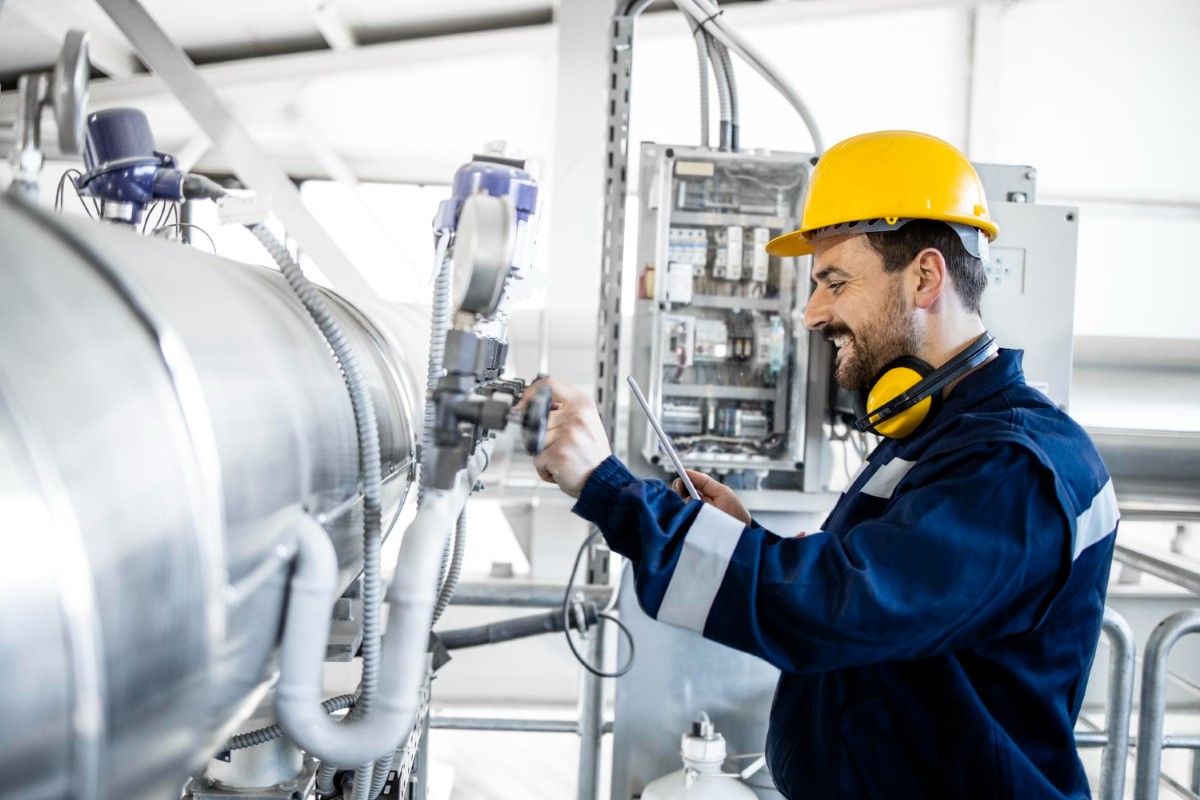
Final manual check performed to ensure safe startup conditions and compliance with operational procedures.
Who is responsible for ensuring safe operation within process units?
Safe operation depends on professionals who actively interpret system behavior and intervene before physical variables reach unsafe thresholds. Because process units react instantly to changes in pressure or temperature, operators must apply technical judgment continuously and maintain precise control during every stage of production.
Responsibility also extends to regulatory compliance. By applying the requirements of NR 13 and evaluating equipment limitations correctly, operators keep boilers, pressure vessels and storage systems within their design boundaries. This combination of technical skill and legal alignment sustains a stable and predictable operational environment.
When should operational parameters be verified during unit activities?
To establish a structured and reliable workflow, operators must verify parameters at specific decision points throughout the process. The table below highlights the key verification moments and the results expected from each stage.
| Operational Stage | Verification Requirement | Expected Outcome |
|---|---|---|
| Start-up | Confirm pressure, flow and temperature baselines | Stable initial operating conditions |
| Continuous operation | Monitor deviations and alarm responses | Immediate correction of abnormal trends |
| Pre-shutdown | Validate safe depressurization and cooling | Controlled system transition |
| Emergency response | Check isolation and containment states | Risk reduction and system stabilization |
Process Units Course in English: The operator must interpret pressure variations accurately
Effective pressure interpretation requires a clear understanding of how mechanical, thermal and dynamic forces interact inside the equipment. The topics below identify the primary elements that support accurate decision making.
Correct reading of manometric and absolute pressure
Recognition of internal and external pressure effects
Understanding the influence of temperature on pressure rise
Identification of unstable flow conditions
Assessment of vacuum formation in equipment
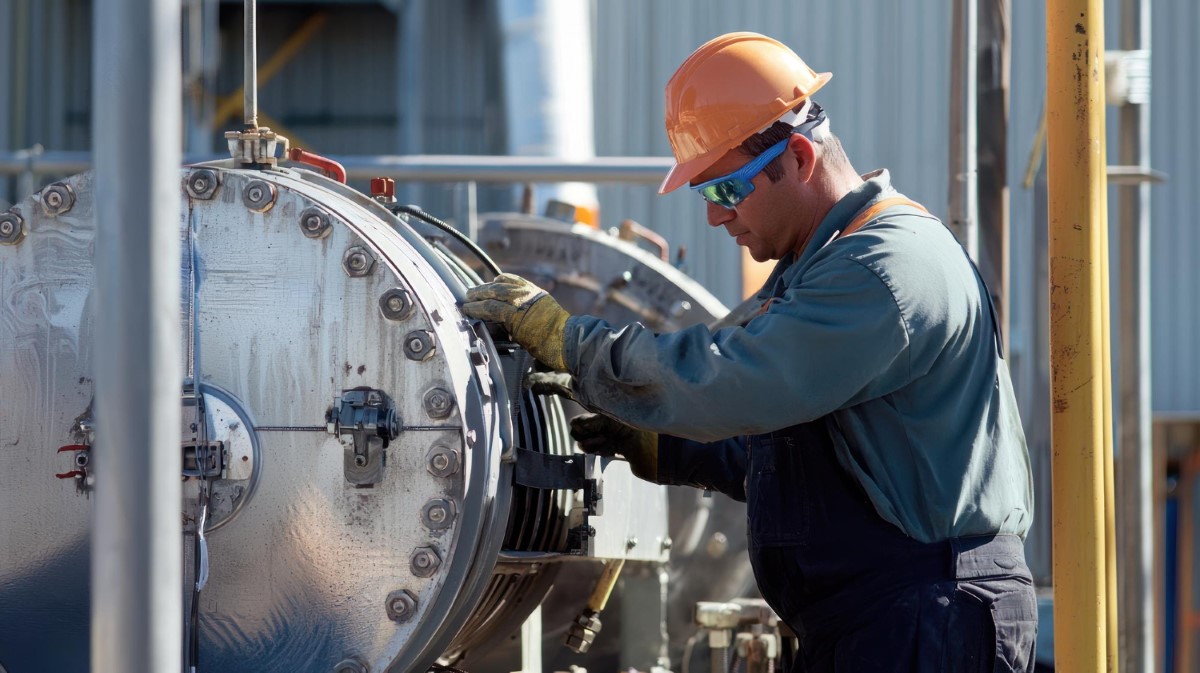
Inspection of flange sealing conditions to prevent leaks during process unit operation.
Why does accurate heat transfer understanding improve operational safety?
A solid understanding of heat transfer enhances operational safety because it allows the operator to predict how systems will behave when thermal loads fluctuate. As heat flows through equipment, structural materials experience expansion, vapor formation intensifies and internal pressures rise. Recognizing these patterns supports early intervention and prevents thermal overstress.
Furthermore, precise interpretation of conduction, convection and radiation strengthens emergency control. When operators perceive heat accumulation trends with clarity, they adjust operating conditions before they compromise mechanical integrity. This proactive approach aligns with NR 13 requirements and reinforces the safe handling of thermal equipment.
Which parameters are essential for evaluating fluid behavior inside process units?
To guide operational decisions with reliability, fluid-related parameters must be evaluated systematically. The table below presents the essential variables that define fluid performance under industrial conditions.
| Parameter | Operational Relevance | Safety Impact |
|---|---|---|
| Flow regime | Determines laminar or turbulent behavior | Affects pressure loss and control stability |
| Density | Influences separation, mixing and pumping | Modifies load distribution in equipment |
| Viscosity | Governs resistance to movement | Impacts energy demand and heat generation |
| Pressure differential | Drives fluid displacement | Determines pump selection and system balance |
Process Units Course in English: Thermodynamic stability must be maintained at all times
Maintaining thermodynamic stability demands a continuous assessment of heat flow, energy exchange and phase transitions inside the unit. The topics below identify the main elements that sustain equilibrium.
Consistent temperature control
Correct steam quality management
Prevention of condensation inside process lines
Balanced heat exchange rates
Alignment between energy supply and system demand
Where do most operational deviations originate inside process units?
Operational deviations typically emerge in sections where physical variables fluctuate beyond their design envelopes. These deviations often occur in pumps, valves, heat exchangers or pipeline segments that generate turbulence and resistance, progressively altering the system’s balance.
Another relevant factor is the degradation of mechanical components through corrosion, scaling or fatigue. When operators integrate maintenance history and NR 13 inspection criteria into their daily assessments, deviations diminish and overall system reliability increases. This approach strengthens operational continuity and reinforces the plant’s safety performance.
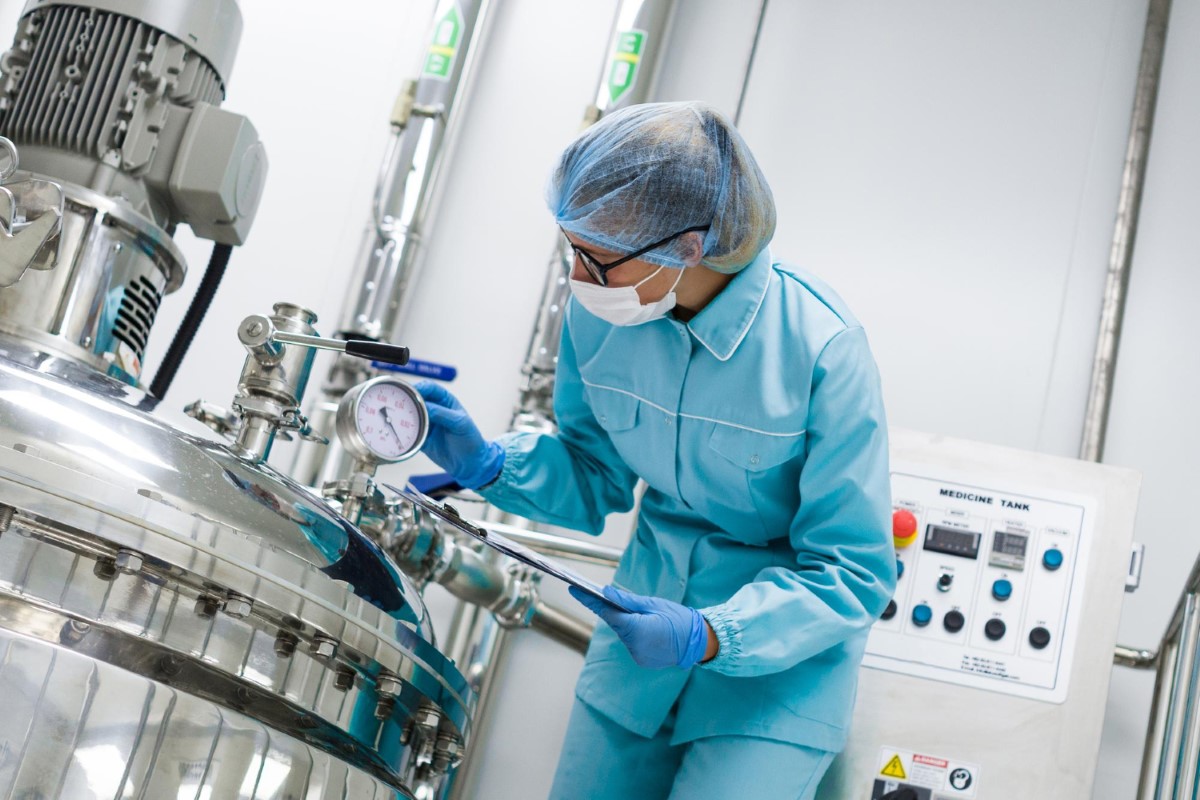
Operator analyzing system response during routine checks to maintain thermodynamic stability.
What is the importance of the Process Units Course in English?
The importance of Process Units Course in English lies in its ability to transform operators into technically competent professionals capable of interpreting pressure systems, heat transfer behavior and fluid dynamics with precision. Because process units react instantly to fluctuations in temperature, load or flow, the training strengthens situational awareness and prepares workers to anticipate instability rather than simply respond to alarms. This proactive understanding reduces mechanical stress, prevents operational deviations and elevates the overall performance of industrial assets.
Additionally, the course reinforces regulatory compliance by grounding all operational decisions in the requirements of NR 13. By connecting theory to real-world operating conditions, participants learn how to respect design limits, control hazardous energy, prevent overpressure scenarios and maintain safe conditions throughout the system lifecycle. This alignment supports safer workplaces, reduces environmental impact and protects the integrity of equipment and personnel.
Click the Link: Criteria for Issuing Certificates in accordance with the Standards
Certificate of Completion
Process Units Course in English – NR 13
SAFETY TRAINING IN THE OPERATION OF PROCESS UNITS – ENGLISH INSTRUCTION (REQUIREMENT: 1304)
Workload: 40 Hours
MODULE 1 – APPLIED PHYSICS FOR PROCESS OPERATIONS (4 HOURS)
Fundamental physical principles applied to industrial operations
Atmospheric pressure, absolute pressure and gauge pressure
Internal pressure, external pressure and vacuum behavior
Pressure units and conversion principles
Gravity effects and pressure distribution in fluids
Industrial relevance of physical parameters in process safety
MODULE 2 – HEAT TRANSFER AND THERMODYNAMIC FUNDAMENTALS (4 HOURS)
Heat and temperature: operational definitions and industrial implications
Heat transfer modes: conduction, convection and radiation
Specific heat and sensible heat concepts
Heat transfer under constant temperature conditions
Basic thermodynamic principles applied to process units
Saturated steam, superheated steam and operational limits
MODULE 3 – FLUID MECHANICS AND FLOW CHARACTERISTICS (4 HOURS)
Fundamental fluid mechanics concepts applied to process systems
Flow pressure behavior in industrial pipelines
Flow regimes: laminar flow and turbulent flow
Liquid movement by gravity, pressure differential and siphon principles
Head loss: roughness, line accessories and flow restrictions
Principles of fluid pumping and operational considerations
MODULE 4 – APPLIED CHEMISTRY AND MATERIAL INTERACTIONS (4 HOURS)
Density behavior in liquids, gases and mixed phases
Solubility principles in operational environments
Gas and vapor diffusion mechanisms
Acids and bases: operational definition, pH scale and process impacts
Fundamentals of industrial corrosion and degradation mechanisms
MODULE 5 – EQUIPMENT INSPECTION, MAINTENANCE AND INDUSTRIAL RECORDS (4 HOURS)
Inspection principles for process equipment
Maintenance concepts applicable to mechanical, chemical and thermal systems
Documentation, records and traceability requirements
Operational reliability and preventive approaches
MODULE 6 – PROCESS EQUIPMENT AND OPERATIONAL COMPONENTS (8 HOURS)
Process equipment classification and operational functions
Steam boilers: basic operational concepts
Industrial pumps: operating principles and failure modes
Heat exchangers: function, efficiency and limitations
Condensers, evaporators and cooling systems
Compressors and vacuum-generating systems
Reactors, gas scrubbers and desmineralizers
Storage tanks, spheres and silos
Industrial dryers and separators
Turbines, injectors and ejectors
Industrial piping systems: accessories, fittings and safety devices
Instrumentation fundamentals in process monitoring
MODULE 7 – UNIT OPERATION: PROCESS DESCRIPTION AND SAFETY LOGIC (4 HOURS)
Description of industrial process flow
Start-up and shutdown procedures
Chemical waste disposal and environmental preservation requirements
Evaluation and control of process-related risks
Protection against deterioration, explosion and mechanical instability
Emergency procedures and operational continuity
MODULE 8 – LEGISLATION, STANDARDS AND REGULATORY REQUIREMENTS (4 HOURS)
Applicable legislation for process operations
Normative requirements guiding safe operation of process units
Documentation, compliance obligations and regulatory evidence
Integration of legal frameworks into operational procedures
Completion and Certification:
Practical Exercises (when contracted);
Evidence Records;
Theoretical Evaluation;
Practical Evaluation (when contracted);
Certificate of Participation.
NOTE:
We emphasize that the General Normative Program Content of the Course or Training may be modified, updated, supplemented, or have items excluded as deemed necessary by our Multidisciplinary Team. Our Multidisciplinary Team is authorized to update, adapt, modify, and/or exclude items, as well as insert or remove Standards, Laws, Decrees, or technical parameters they consider applicable, whether related or not. The Contracting Party is responsible for ensuring compliance with the relevant legislation.
Process Units Course in English – NR 13