
Reference: 60963
We provide Courses and Training; We carry out Translations and Versions in Technical Language: Portuguese, English, Spanish, French, Italian, Mandarin, German, Russian, Swedish, Dutch, Hindi, Japanese, and others upon request.
NR20 Advanced Course 2 in English
The NR20 Advanced 2 Course in English aims to train the worker to operate with precision, safety, and conscious decision-making in environments that handle flammable and combustible materials. The training deepens the understanding of specific risks, strengthens situational awareness, and promotes the immediate application of operational controls capable of reducing the likelihood of critical incidents. Through a technical and direct approach, the participant learns to interpret danger signals, anticipate failure scenarios, and perform safe interventions with full command of the process.
In addition, the course ensures full compliance with NR 20, guaranteeing that all operational stages meet legal requirements and the best industrial safety practices. The participant develops strategic skills for risk analysis, emergency response, and management of operational variables that influence system stability. Thus, the training strengthens the culture of prevention and prepares the professional to work in high-risk facilities with a high technical level and normative responsibility.

Modern fuel station reinforces the application of safety systems, risk management, and continuous monitoring required in NR-20 Advanced.
Who should attend the NR-20 Advanced II Training?
Professionals who work directly with the handling, transfer or storage of flammable and combustible fluids must attend the NR-20 Advanced II Training. These workers operate in environments where ignition sources, volatile atmospheres and critical interfaces demand advanced technical skills and heightened situational awareness. The course strengthens their ability to anticipate hazardous conditions and implement controls with consistency and discipline.
Furthermore, supervisors, safety coordinators, emergency response personnel and operators responsible for process stability also benefit from the training. By aligning their actions with the requirements of NR 20, the training ensures operational reliability and regulatory compliance across all high-risk scenarios.
When should workers apply operational controls involving flammable materials?
The application of controls must occur whenever workers perform tasks in environments where flammable liquids or vapors may be present. This includes routine operations, inspections, maintenance, product transfer and emergency interventions. The following table clarifies how these situations require different layers of protection.
| Operational Scenario | Required Control | Associated Risk |
|---|---|---|
| Product transfer | Bonding and grounding | Electrostatic discharge |
| Tank opening | Gas detection | Formation of explosive atmosphere |
| Line maintenance | Isolation and lockout | Accidental release |
| Emergency response | Immediate communication | Escalation of the event |
NR20 Advanced 2 Course: A critical procedure demands maximum attention.
Critical procedures determine whether the operation remains stable or evolves toward an unsafe condition. Their effectiveness depends on consistent application and disciplined execution.
Work permit
Ignition source control
Atmospheric monitoring
Area release

Fuel nozzles organized by class demonstrate the need for correct identification and safe handling to avoid incompatibilities and operational risks.
Why does Management of Change directly influence safety with flammable materials?
Management of Change influences safety because even simple alterations in equipment, materials or operational parameters can shift pressure, temperature or volatility, leading to unexpected hazards. When each modification undergoes structured evaluation, the organization minimizes the chance of introducing new ignition sources or weakening existing protective layers.
This approach reinforces compliance with NR 20, which requires systematic assessment of all changes that may affect risk. By integrating engineering, operations and safety perspectives, the process ensures stable conditions, reduces systemic vulnerabilities and promotes safer decision-making throughout the facility.
Where do the main risks concentrate during the handling of flammable substances?
The most critical risks appear in areas where volatile atmospheres, pressure variations or containment limitations strongly influence behavior. The table below highlights the primary locations and their associated hazards.
| Area or Stage | Main Hazard | Technical Justification |
|---|---|---|
| Pump rooms | Overpressure | Dynamic fluid movement |
| Storage tanks | Vapor formation | Large exposed liquid surface |
| Pipelines and lines | Leaks | Vulnerable fittings and flanges |
| Containment basins | Fire spread | Surface-level expansion of liquids |
NR20 Advanced 2 Course: Operational instability becomes a trigger for accidents.
Operational instability arises when deviations accumulate and compromise system reliability. These deviations reduce the effectiveness of safety barriers and increase the potential for ignition.
Temperature variation
Pressure increase
Isolation failure
External interference
Where should emergency response begin to prevent escalation?
Emergency response must begin precisely at the point where the first abnormal signal is detected, because acting early limits the progression of the hazard. When the team intervenes at the origin, they prevent heat buildup, vapor expansion or uncontrolled migration toward ignition sources, maintaining control of the unfolding event.
This early response also aligns with NR 20, which requires immediate communication, coordinated action and rapid execution of containment strategies. By initiating efforts at the source, the organization protects its personnel, equipment and processes while reducing the overall impact of the incident.
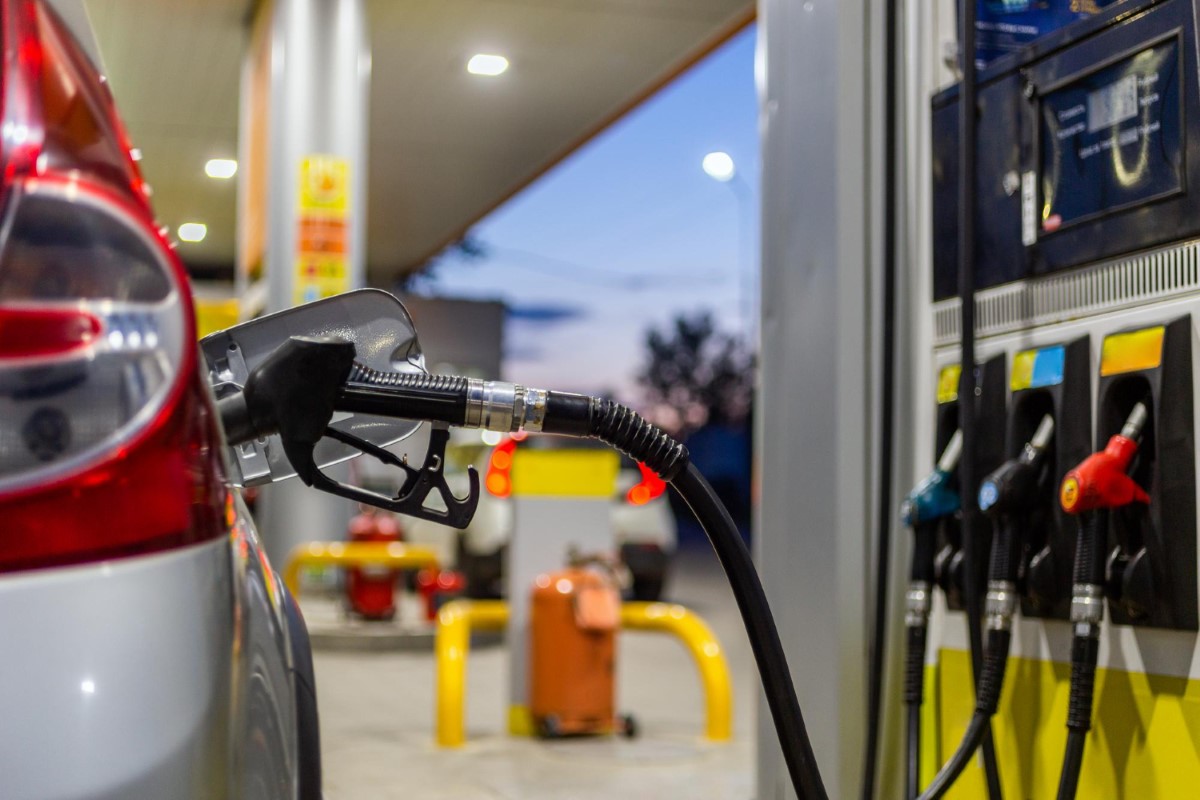
Fueling in progress highlights the importance of controlling ignition sources and preventing flammable vapors, in accordance with NR-20 requirements.
What is the importance of the NR20 Advanced Course 2?
The NR20 Advanced 2 Course is essential because it enables workers and supervisors to understand, control and anticipate the complex risks involved in handling flammable and combustible materials. Through applied knowledge, participants learn to interpret operational signals, strengthen process safety and reduce the probability of incidents that can escalate with extreme speed. In this context, NR 20 serves as the central regulatory framework that guides every decision, ensuring that operations follow legally defined safety principles and remain compliant with Brazilian occupational standards.
The importance of this course also extends to strategic corporate needs, especially for international organizations operating in Brazilian industrial environments. In the middle of this technical journey, it becomes clear that we do not sell courses; we sell technical access so foreign companies can operate in Brazil without legal risk of accidents or fines. This elevates the training from a simple regulatory requirement to a critical asset for operational continuity, legal compliance and corporate protection. As a result, organizations gain a prepared workforce, stronger risk-based decision-making and full alignment with the regulatory expectations that govern high-risk industrial activities.
Click the Link: Criteria for Issuing Certificates in accordance with the Standards
Certificate of completion
NR 20 Advanced Course 2 in English
Technical Name: NR-20 ADVANCED II COURSE FOR WORKING WITH FLAMMABLE AND COMBUSTIBLE MATERIALS IN ENGLISH
Workload: 32 Hours
Module 01 – Fundamentals, Physical Concepts and Fluid Properties (4 Hours)
Basic theory and essential concepts
Characteristics of flammable fluids
Characteristics of combustible fluids
Physical–chemical behavior and operational implications
Module 02 – Risk Identification, Ignition Sources and Safety Controls (4 Hours)
Task-related risks
Individual and collective controls
Control of ignition sources
Risk perception, behavioral factors and human influence
Module 03 – NR-20 Regulatory Study and Process Safety (4 Hours)
Full interpretation of NR-20 requirements
Safety of industrial processes
Layers of protection and operational discipline
Management of Change (MoC) fundamentals
Module 04 – Accident Analysis: Cause Tree, Fault Tree and Typical Events (4 Hours)
Introduction to Cause Tree Analysis
Introduction to Fault Tree Analysis
Accidents with flammables: patterns, causes and preventive actions
Consequences of habituation and cognitive bias
Module 05 – Fire Safety, Protection Systems and Emergency Principles (4 Hours)
Fire behavior with flammables
Fire protection systems and safety equipment
Emergency procedures for flammable scenarios
Interaction and communication with emergency response teams
Module 06 – Work Permits, Operational Controls and Critical Procedures (4 Hours)
Permit to Work (PTW) for flammable operations
Documentation flow and validation
Operational controls and compliance records
Importance of task mastery and safe routines
Module 07 – Ergonomics, Human Factors and Workstation Analysis (4 Hours)
Basic ergonomic principles
Posture, lifting and workstation evaluation
Ergonomic risks that impact safety in flammable environments
Human performance limitations
Module 08 – Evidence Recording, First Aid Fundamentals and Theoretical Evaluation (4 Hours)
Evidence registration and traceability
Basic first aid notions for incidents with victims
Behavior under stress and fear fator
Theoretical assessment and certification requirements
Completion and Certification:
Practical Exercises (when contracted);
Evidence Records;
Theoretical Evaluation;
Practical Evaluation (when contracted);
Certificate of Participation.
NOTE:
We emphasize that the General Normative Program Content of the Course or Training may be modified, updated, supplemented, or have items excluded as deemed necessary by our Multidisciplinary Team. Our Multidisciplinary Team is authorized to update, adapt, modify, and/or exclude items, as well as insert or remove Standards, Laws, Decrees, or technical parameters they consider applicable, whether related or not. The Contracting Party is responsible for ensuring compliance with the relevant legislation.
NR 20 Advanced Course 2 in English