Technical Name: NR 10 BASIC TRAINING COURSE – SAFETY IN ELECTRICAL INSTALLATIONS AND SERVICES
Reference: 10036
We offer courses and training; we perform translations and versions in technical languages: Portuguese, English, Spanish, French, Italian, Mandarin, German, Russian, Swedish, Dutch, Hindi, Japanese and others (please inquire).
Regulatory Standard No. 10 (NR-10) is a set of guidelines established by the Ministry of Labor and Employment, which aims to guarantee the safety and health of workers who interact directly or indirectly with electrical installations and services involving electricity.
NR-10 establishes minimum requirements and conditions for the implementation of control measures and preventive systems, with the objective of preventing accidents of electrical origin.
What is NR 10?
NR-10 is the standard issued by the Ministry of Labor and Employment (MTE) that establishes the minimum requirements and conditions to guarantee the safety and health of workers who, directly or indirectly, interact with electrical installations and services.
Furthermore, it is mandatory for all employers and professionals working in environments with electrical hazards, regardless of the sector (industry, construction , commerce, services, energy, etc.).
Therefore, NR-10 is not just a technical standard, but a legal instrument for protecting life. Furthermore, it standardizes procedures, ensures traceability, reduces serious accidents, and imposes documented technical responsibility.

Risk analysis is essential! Before any electrical work, follow the requirements of NR 10 for individual and collective protection.
What Types of Electricity Are There?
The types of electricity are classified according to their form of manifestation, use, and physical behavior. Here are the main types:
Static: Charges at rest; common due to friction; risk of sparks.
Dynamics: Electrons in motion; the basis of electrical systems. Direct Current (DC): Flow in one direction only (batteries). Alternating Current (AC): Reverses direction periodically (electrical grid).
Induced: Generated by a change in magnetic field (motors, generators).
Atmospheric: Natural discharges such as lightning; high risk and requires protection (lightning protection system).
The standard primarily addresses dynamic electricity, both direct and alternating current, focusing on energized installations, operations, maintenance, and technical services involving electrical networks and equipment.
Who is the target audience for the NR 10 course?
The NR-10 Course – Safety in Electrical Installations and Services is mandatory for professionals who work with risks of electric shock, whether directly or indirectly, in any phase of electrical activity: design, installation, operation, maintenance, or inspection.
Professionals who should take the course:
Electricians for residential, industrial and commercial installations;
Technicians and Technologists in Electrotechnics, Electronics or Mechatronics;
Electrical Engineers or Occupational Safety Engineers;
Occupational Safety Technicians;
Electrical system maintainers (low, medium and high voltage);
Supervisors, foremen or leaders of maintenance teams;
Installers of panels, circuit breakers, control boards, lightning protection systems , etc.;
Professionals who work in areas with the possibility of accidental energization, such as painters, mechanics, plumbers, and machine operators;
Employers and technical managers responsible for electrical installations.
Even professionals who do not work directly with electricity, but who perform activities in or adjacent to energized areas, must be trained according to NR-10, including outsourced or temporary workers. Therefore, the objective of the training is to ensure that everyone understands electrical risks , adopts control measures, correctly uses PPE and EPC, and acts in accordance with the standard, preventing accidents and ensuring the legality of operations.
What does NR 10 establish?
NR-10, issued by the Ministry of Labor, defines the minimum safety requirements for activities involving electrical installations and services . Furthermore, its application covers both low and high voltage systems, regardless of whether they are in energized or de-energized environments.
The standard’s main objective is to guarantee the safety and health of workers, requiring the adoption of risk control measures, professional training, and technical documentation. In addition, it addresses:
Control and prevention measures for electrical risks;
Mandatory training for workers;
Electrical installation records ;
Risk analysis and issuance of work permit (PT);
Collective and individual protection (collective and individual protective equipment);
Technical responsibility and legal documentation;
Safe inspections, signage, and maintenance routines.
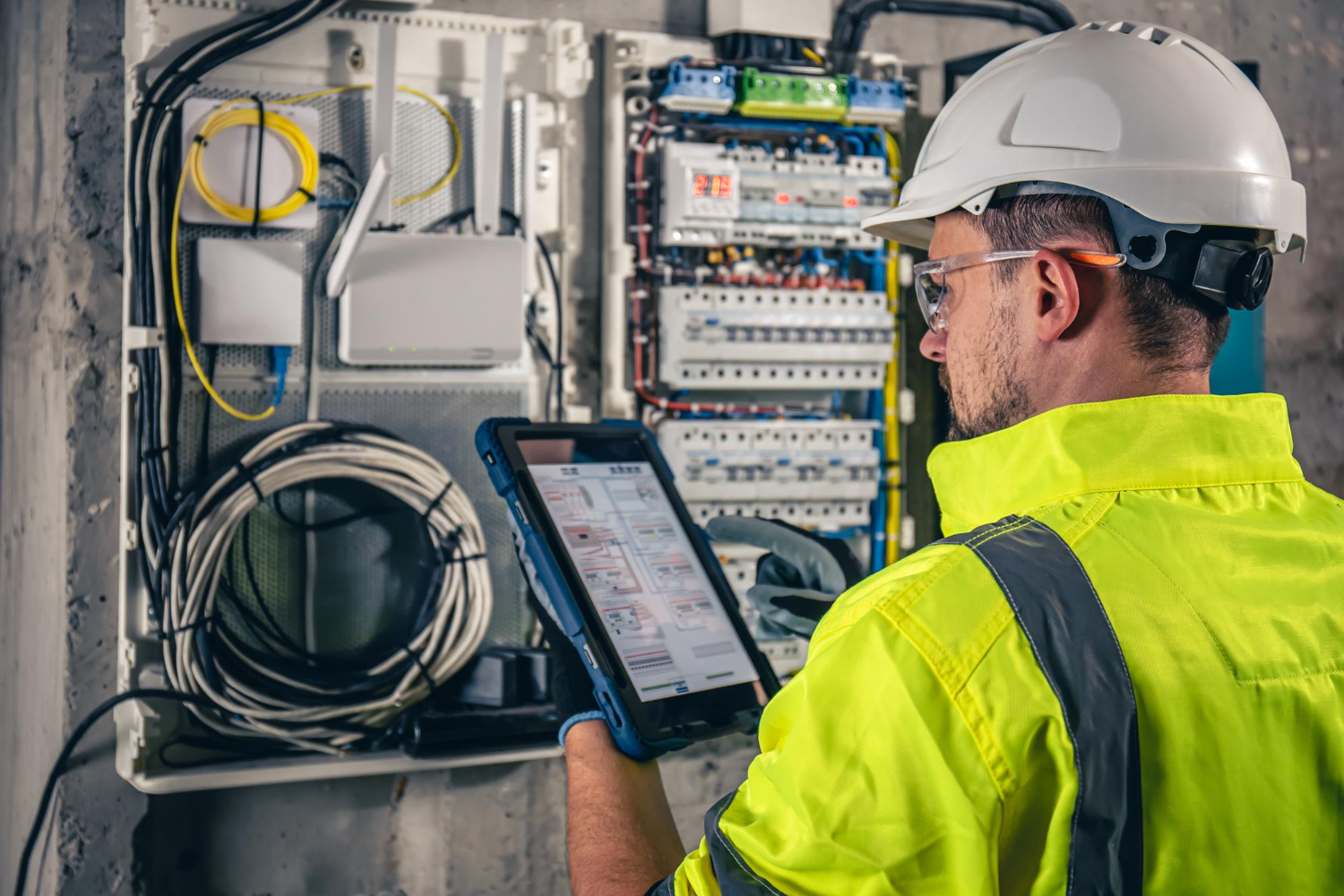
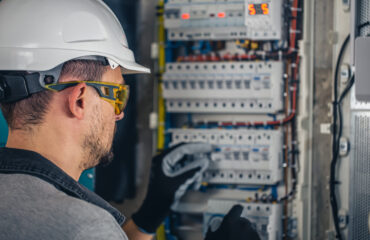
A professional trained according to NR 10 performs safe maintenance on electrical systems.
What is the importance of the NR 10 course?
Completing the NR-10 course is essential for several reasons. First, in terms of accident prevention, the training allows professionals to identify and control electrical hazards, significantly reducing the likelihood of accidents in the workplace.
Furthermore, the course ensures legal compliance, since meeting the requirements of NR-10 is mandatory for companies with workers who work with electricity. This avoids exposure to penalties, fines, and operational losses.
Finally, there is professional development. Skilled and certified workers become more competitive, expanding their possibilities for entry, advancement, and retention in the job market.
What is the difference between NR-10 and NR-10 SEP?
Although both courses focus on safety in electrical installations and services, there are significant differences between the Basic NR-10 Course and the NR-10 SEP (Power Electrical System) Course.
While the basic course covers the safety fundamentals applicable to any activity with electrical risk, the SEP course, on the other hand, is aimed at professionals who work specifically in power electrical systems, such as transmission networks, substations, and energized high-voltage systems.
NR-10 Basic : This course is intended for all professionals who work directly or indirectly with electricity. Therefore, it covers the fundamentals of electrical safety, risk control measures, and general procedures to prevent accidents in low-voltage installations.
NR-10 SEP : Aimed at professionals working in and near electrical power systems, the NR-10 SEP course addresses additional and specific measures to ensure the safety of these workers. It is essential for those who work on transmission lines, substations, and other high-voltage installations .
So ensure your company’s safety and compliance with NR-10 and enroll your professionals in our course to prevent electrical accidents.
We offer comprehensive training valid for two years and refresher courses to keep your skills up-to-date. Request a quote now and invest in the safety of your workers!
Click on the link: Criteria for Issuing Certificates in accordance with the Standards
See Also:
New NR-10: Obligation and Criminal Liability
NR (Regulatory Norms) Training: Who Pays & Where to Practice?
NR Course: Hidden Risk?
Certificado de conclusão
NR 10 Basic Course English
NR 10 BASIC TRAINING COURSE: SAFETY IN ELECTRICAL INSTALLATIONS AND SERVICES.
Total Course Duration: 40 Hours
Module 1: (2 hours)
Introduction to Electrical Safety
Module 2: (6 hours)
Risks in Electrical Installations and Services
a) Electric shock, mechanisms and effects
b) Electric arcs; burns and falls
c) Electromagnetic fields
Module 3: (4 hours)
Risk Analysis Techniques
Module 4: (8 hours)
Electrical Risk Control Measures
a) De-energization
b) Functional grounding (TN/TT/IT); protective grounding; temporary
grounding c) Equipotential bonding
d) Automatic power supply disconnection
e) Residual current devices
f) Extra-low voltage
g) Barriers and enclosures
h) Interlocks and lockouts
i) Obstacles and partitions
j) Insulation of live parts
k) Double or reinforced insulation
l) Placement out of reach
m) Electrical separation
Module 5: (3 hours)
Brazilian Technical Standards – ABNT NBR
NBR-5410, NBR 14039 and others
Module 6: (3 hours)
MTE Regulations
a) NR Standards
b) NR-10 (Safety in Electrical Installations and Services)
c) Qualification, certification, training, and authorization
Module 7: (2 hours)
Collective Protection Equipment
Module 8: (2 hours)
Personal Protective Equipment
Module 9: (3 hours)
Work Routines – Procedures
a) De-energized installations
b) Release for work
c) Signage
d) Inspections of areas, services, tools and equipment
Module 10: (2 hours)
Electrical Installation Documentation
Module 11: (3 hours)
Additional Risks
a) Height
b) Confined spaces
c) Indoor areas
d) Humidity
e) Atmospheric conditions
Module 12: (3 hours)
Fire Protection and Fighting
a) Basic concepts
b) Preventive measures
c) Extinguishing methods
d) Practice
Module 13: (2 hours)
Electrical Accidents
a) Direct and indirect causes
b) Case discussions
Module 14: (4 hours)
First Aid
a) Basic knowledge of injuries
b) Prioritization of care
c) Application of artificial respiration
d) Cardiac massage
e) Techniques for removing and transporting accident victims
f) Practical exercises
Module 15: (1 hour)
Responsibilities
Completion and Certification:
Practical Exercises:
Evidence Recording;
Theoretical Assessment;
Practical Assessment (When contracted);
Certificate of Participation.
Note : The content presented follows the guidelines established by NR-10 (Regulatory Standard No. 10), which deals with safety in electrical installations and services. The standard aims to guarantee the physical integrity of workers and the prevention of accidents involving electricity, through safety measures and training.
Note: Our Multidisciplinary Team is free to incorporate any applicable standards, laws, decrees, or technical parameters they deem relevant, whether or not they relate to the scope of the negotiated service. The Client is responsible for providing the necessary support, even if the legislation is not available, as stipulated therein.
NR 10 Basic Course English