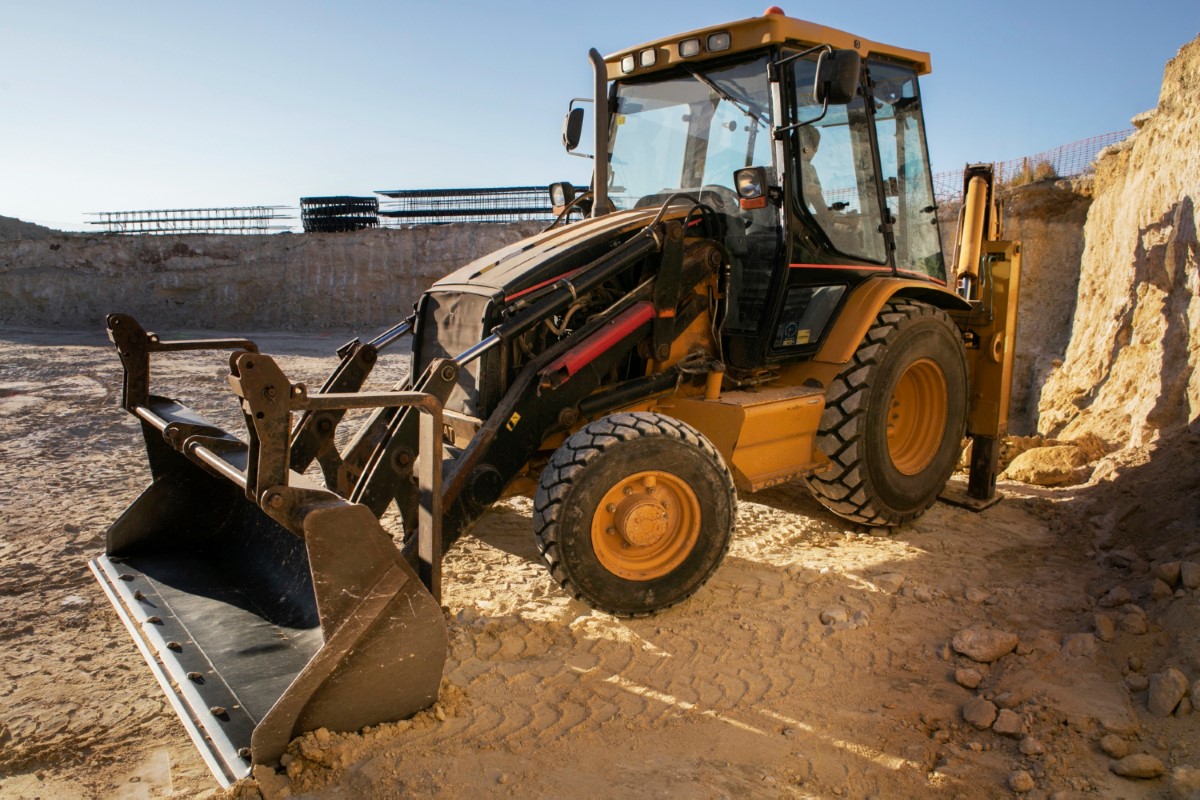
Technical Name: SAFETY TRAINING COURSE IN HEAVY MACHINERY OPERATION – NR 11 – TRANSPORT, HANDLING, STORAGE AND HANDLING OF MATERIALS
Reference: 171287
We provide courses and training; We carry out Translations and Versions in Technical Language: Portuguese, English, Spanish, French, Italian, Mandarin, German, Russian, Swedish, Dutch, Hindi, Japanese and others consult.
Heavy Machinery Course English
The Heavy Machinery Course English aims to develop the worker’s ability to operate heavy machinery with precision, safety, and conscious decision-making. Throughout the training, the participant understands how to apply the technical requirements of NR 11, interpreting operational limits, assessing dynamic risks, and adopting preventive measures that reduce the likelihood of serious accidents. This approach strengthens situational awareness and creates an operational standard aligned with the best international practices.
In addition, the course enables the professional to understand the interaction between machines, the environment, and human behavior, which increases operational efficiency and reduces failures resulting from improper operation. The participant learns to identify factors such as stability, center of gravity, operational communication, and the impact of terrain on machine performance. Thus, the training promotes an approach capable of anticipating risks, maintaining legal compliance, and ensuring that each operation occurs within the standards required by NR 11 and other complementary regulations.
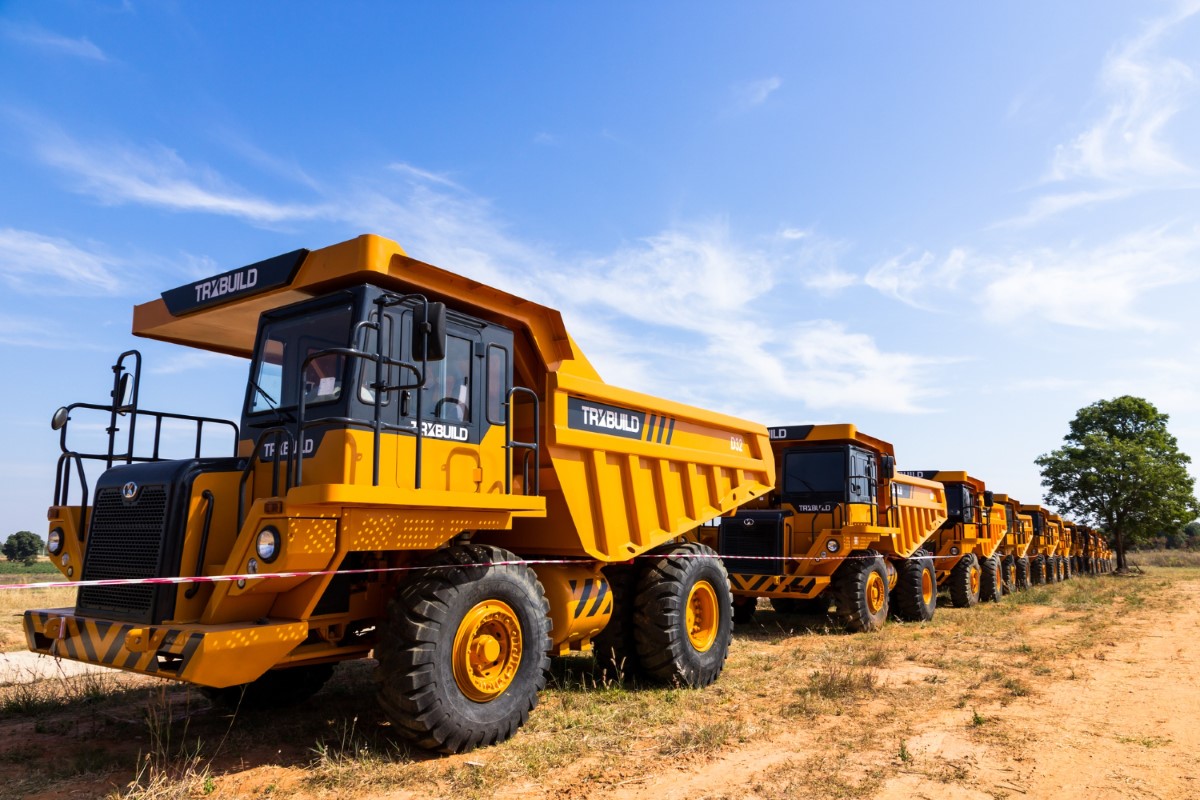
Fleet of off-road haul trucks ready for operation, emphasizing coordinated movement, signaling routines and risk control in material transport.
Who is responsible for ensuring safe operation of heavy machinery according to NR 11?
The responsibility for safe operation begins with the employer, who must establish procedures, provide training and ensure that every machine complies with the safety requirements described in NR 11. When these obligations are met, the operator receives the correct conditions to work with stability, clarity and technical awareness. This alignment between structure, training and documentation sustains the effectiveness of the process.
Operators, in turn, must apply operational rules, follow communication protocols and respect equipment limits. They also need to identify abnormal conditions, report hazards and maintain situational awareness throughout the activity. When both roles act proactively, the operation remains consistent, controlled and fully compliant with the norm.
When should risk assessment be performed during heavy machinery operation?
To answer this properly, it is important to recognize that risk assessment remains active throughout the entire operation. Before starting, the worker must evaluate environmental factors, load characteristics, terrain conditions and machine integrity according to NR 11 requirements.
Required Risk Assessment at Each Stage
| Stage of Operation | Required Assessment |
|---|---|
| Before Starting | General verification, terrain check, pre-operation checklist |
| During Operation | Monitoring stability, communication alignment, load behavior |
| After Operation | Recording anomalies, shutdown validation, safe closure |
Heavy Machinery Course English: Operating outside load limits is prohibited
This statement highlights a fundamental safety rule: every piece of heavy machinery operates within physical and structural boundaries defined by engineering principles and reinforced by NR 11. When the operator respects these limits, the machine maintains stability, predictable behavior and structural integrity throughout the operation.
Nominal limit
Center of gravity
Dynamic stability
Structural fatigue

Bulldozer performing heavy earthmoving tasks, demonstrating traction management and safe maneuvering in restricted work zones.
Why does communication failure represent a critical risk during machinery operation?
Communication failure generates misalignment between operators and ground personnel, increasing the probability of collision, crushing or overturning. Because NR 11 emphasizes signaling and coordinated movement, any interruption in communication directly affects safety and decision-making.
Additionally, noise, vibration and blind spots inherent to heavy machinery reduce perception. As complexity increases, communication acts as the stabilizing factor that keeps trajectory, speed and load-handling synchronized. When maintained correctly, it prevents misinterpretation and protects the entire work environment.
Where must operational limits be defined and formally documented?
To answer effectively, we must highlight that operational limits must be defined before the machine enters service. These limits include maximum load, travel speed, terrain constraints and operational angles, always based on the manufacturer’s specifications and NR 11 directives.
Documentation of Operational Limits
| Operational Element | Required Record |
|---|---|
| Maximum Load | Technical manual |
| Allowed Speed | Internal operational procedures |
| Terrain Conditions | Risk assessment documentation |
| Angles and Reach | Manufacturer specifications |
Heavy Machinery Course English: Only trained and authorized workers may operate heavy machinery
This affirmation summarizes a mandatory legal requirement and establishes a clear operational barrier: only workers who complete formal NR 11 training, receive documented authorization and demonstrate technical competence may assume control of heavy machinery. This prevents improvisation and ensures that every action taken during operation follows validated procedures.
NR 11 training
Formal authorization
Documented record
Periodic verification
What qualifications strengthen an operator’s ability to make safe decisions in dynamic environments?
The operator develops strong qualifications through structured training aligned with NR 11, which provides a clear understanding of machine behavior, load dynamics and environmental influences. With this foundation, the professional interprets terrain variations, visibility constraints and operational risks more accurately.
Further qualifications include risk perception skills, the ability to interpret technical manuals and the mastery of signaling systems. These competencies enhance anticipation of hazards, reinforce decision-making precision and maintain compliance with legal and operational requirements.

Excavator operating in uneven terrain, highlighting the importance of stability control and safe load handling under NR 11 requirements.
What is the importance of the Heavy Machinery Course English?
The Heavy Machinery Course English is important because it develops the worker’s ability to operate heavy machinery with safety, precision, and situational awareness. The course strengthens the technical interpretation of the requirements of NR 11, enabling the professional to recognize operational risks, understand the structural limits of machines, and adopt behaviors that prevent serious accidents. This combination of knowledge and direct application creates an operational standard aligned with the best industrial safety practices.
In addition, the course expands the operator’s ability to analyze complex environments, adjust decisions in real time, and apply operational controls that reduce human error. The participant learns to evaluate factors such as terrain, visibility, stability, communication, and load limits, ensuring that each movement follows the parameters required by NR 11 and complementary standards. This technical mastery enhances operational efficiency, protects lives, and preserves equipment while maintaining full legal compliance.
Click the Link: Criteria for Issuing Certificates in accordance with the Standards
Heavy Machinery Course NR 11
SAFETY TRAINING COURSE IN HEAVY MACHINERY OPERATION – NR 11 – TRANSPORT, HANDLING, STORAGE AND HANDLING OF MATERIALS
Workload: 40 Hours
MODULE 1 – Regulatory Framework and NR 11 Fundamentals (4 Hours)
Scope and applicability of NR 11
Legal duties of employers and workers
Fundamental safety principles in material handling
Classification of heavy machinery and load-handling systems
Definitions: equipment, load, stability, center of gravity, balance
MODULE 2 – Operation Safety for Heavy Machinery (5 Hours)
Safety requirements for elevators, cranes, conveyors and conveyor machines
Hazard recognition in industrial environments
Pre-operation rules and safe start-up procedures
Lockout/Tagout concepts for machinery isolation
Operational limits and prohibited actions
Mechanisms of instability and rollover risks
Safe approach strategies around moving equipment
MODULE 3 – Structural and Functional Knowledge of Machinery (5 Hours)
Identification of main structural components
Chassis, frame, axles, suspension and traction elements
Concept of operational cycles for heavy machinery
Differences between fixed, mobile and articulated equipment
Reading and interpreting manufacturer’s technical manuals
Influence of design characteristics on operational safety
MODULE 4 – Engine Operation and Complementary Systems (4 Hours)
Basic components of combustion engines
Air intake, fuel system, lubrication and cooling systems
Understanding engine operation cycles
Complementary engine systems and safety interfaces
Failure indicators and operational risks
Influence of load and terrain on engine performance
MODULE 5 – Communication, Transmission and Hydraulic Systems (4 Hours)
Operational communication systems for equipment operators
Mechanical and automatic transmission principles
Torque, traction and power transfer
Hydraulic system fundamentals: pumps, hoses, valves and cylinders
Steering systems and interaction with hydraulic circuits
Routine monitoring requirements and failure risks
MODULE 6 – Load Limits, Stability and Operational Controls (4 Hours)
Interpretation of load charts and manufacturer specifications
Center of gravity, leverage, radius and tipping points
Dynamic stability during transport and lifting
Impact of terrain, slope and weather conditions
Overload risks and structural fatigue
Normative requirements for load control and monitoring
MODULE 7 – Mobile Equipment: Types and Characteristics (5 Hours)
General characteristics of mobile heavy machinery
Operational differences and safety factors for each type
MODULE 8 – Safety Equipment, PPE and Collective Protection (4 Hours)
Key concepts and principles of safety equipment
Personal Protective Equipment (PPE): selection, use and limitations
Collective Protection Equipment (CPE): barriers, guards, alarms and signaling
Operation and verification of safety devices
Inspection of equipment and safety items
Routine inspections and pre-operation checklists
MODULE 9 – Driving, Circulation and Signaling Rules (3 Hours)
Safe driving principles for heavy machinery
Internal circulation routes and right-of-way rules
Visual and audible signaling requirements
Communication between operators and ground personnel
Rules for restricted areas and proximity to pedestrians
Speed control and terrain adaptation
MODULE 10 – Risk Recognition, Risk Analysis and Control Measures (3 Hours)
Risk identification during operation
Types of risks associated with heavy machinery
Speed, track conditions, environmental conditions, vehicle conditions
Application of risk analysis methodologies
Definition of engineering, administrative and operational controls
Documentation and traceability of the risk assessment
MODULE 11 – Release Procedures and Operational Permissions (3 Hours)
Types of vehicles used in industrial operations
Responsibilities for release and authorization
Criteria for equipment release to operate
Roles and duties of Release Officers
Formal procedures for permission to carry out the activity
Recordkeeping and compliance requirements
Completion and Certification:
Practical Exercises (when contracted);
Evidence Records;
Theoretical Evaluation;
Practical Evaluation (when contracted);
Certificate of Participation.
NOTE:
We emphasize that the General Normative Program Content of the Course or Training may be modified, updated, supplemented, or have items excluded as deemed necessary by our Multidisciplinary Team. Our Multidisciplinary Team is authorized to update, adapt, modify, and/or exclude items, as well as insert or remove Standards, Laws, Decrees, or technical parameters they consider applicable, whether related or not. The Contracting Party is responsible for ensuring compliance with the relevant legislation.
Heavy Machinery Course NR 11