Technical Name: IMPROVEMENT COURSE SAFETY AND HEALTH IN WORK WITH FLAMMABLES AND COMBUSTIBLES NR 20 – BASIC LEVEL IN ENGLISH
Reference: 55655
We provide courses and training; We perform Translations and Versions in Technical Language: Portuguese, English, Spanish, French, Italian, Mandarin, German, Russian, Swedish, Dutch, Hindi, Japanese and others consult.
NR20 Basic Course English
The objective of the NR20 Basic Course English is to develop the technical competence necessary for the participant to understand, interpret, and safely apply the operational requirements involved in working with flammable and combustible substances. Throughout the training, the student progresses from thermochemical concepts to prevention practices, connecting causes and effects and understanding how small process variations directly influence risk. This active approach expands situational awareness and strengthens decision-making in sensitive environments.
In addition, the course enables the professional to recognize hazards, control ignition sources, and respond accurately to scenarios that require immediate preparation. By continuously applying NR 20, the training creates a solid foundation that supports both legal compliance and operational efficiency. In this way, the participant becomes capable of working safely, consciously, and aligned with regulatory requirements.
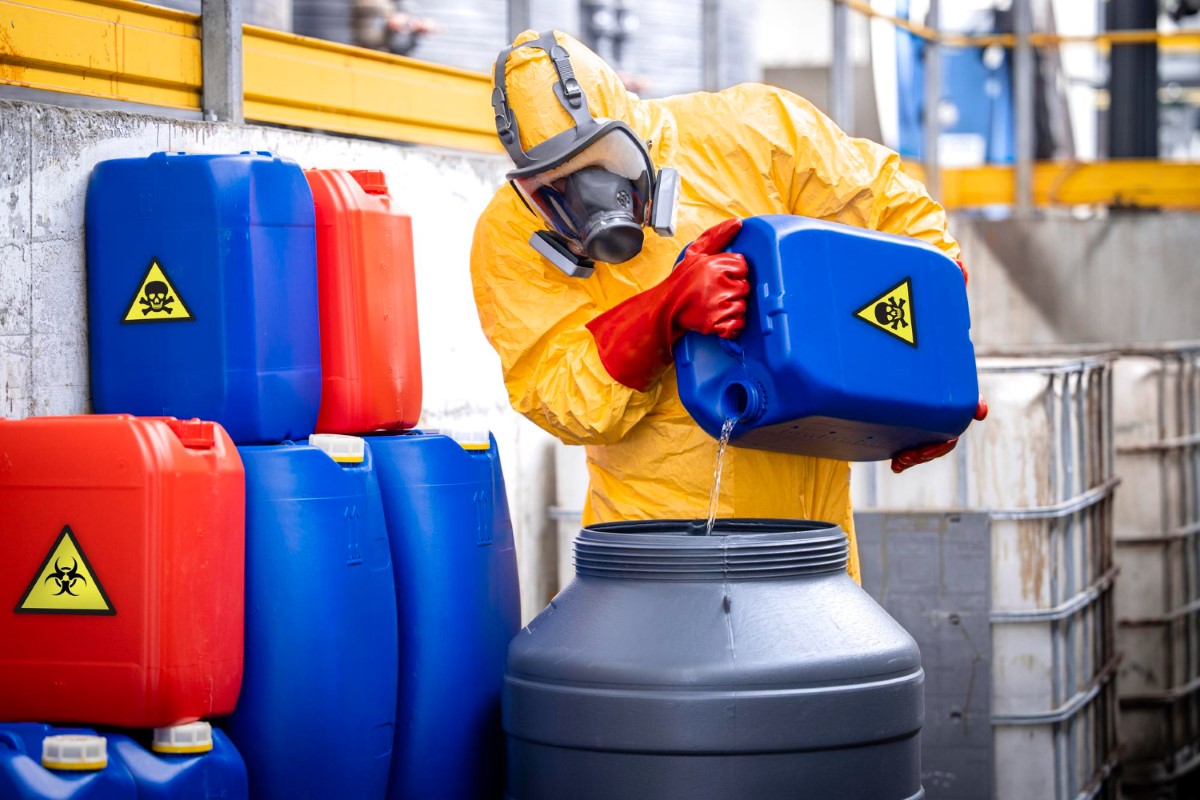
Safe handling of flammable substances requires precise assessment, controlled conditions and full protective equipment.
Who needs Basic NR 20 training to work safely with flammables and combustibles?
Workers who handle, store, transfer or remain in operational areas with flammable and combustible substances require NR 20 Basic training. As they engage directly with processes capable of gerar vapors, ignition points and atmospheric hazards, they must operate with a precise understanding of risk control. This requirement ensures that every individual exposed to these materials acts with technical consistency and situational awareness.
The course also becomes essential for professionals who supervise operations or authorize work in flammable environments. By understanding how the NR 20 frames responsibilities and safety conditions, these individuals influence the integrity of the entire system. Consequently, they reduce operational variability and elevate the organization’s ability to prevent incidents.
NR20 Basic Course English: The training is required whenever operations introduce exposure to flammable substances
NR 20 Basic training becomes mandatory whenever a worker enters or performs activities in environments where flammable substances create operational exposure. This requirement ensures that each individual acts with technical mastery, understands the dynamics of vapor formation and maintains consistent control over ignition risks.
| Condition of Exposure | Need for NR 20 Basic Training |
|---|---|
| Entry into areas with flammable liquids or gases | Mandatory before beginning activities |
| Handling or transferring flammable products | Required prior to operational authorization |
| Support functions performed in classified areas | Required before accessing the environment |
| Interface with emergency or ignition control | Required to maintain system integrity |
Which controls are fundamental for safe operation with flammables?
Core controls establish the structure that keeps operations stable, preventing conditions that allow vapors, ignition sources or unsafe behaviors to converge. Without these controls, even routine tasks gain unpredictable layers of risk.
Procedural discipline
Environmental monitoring
Elimination of ignition sources
Correct use of protective equipment
Rapid communication in abnormal conditions
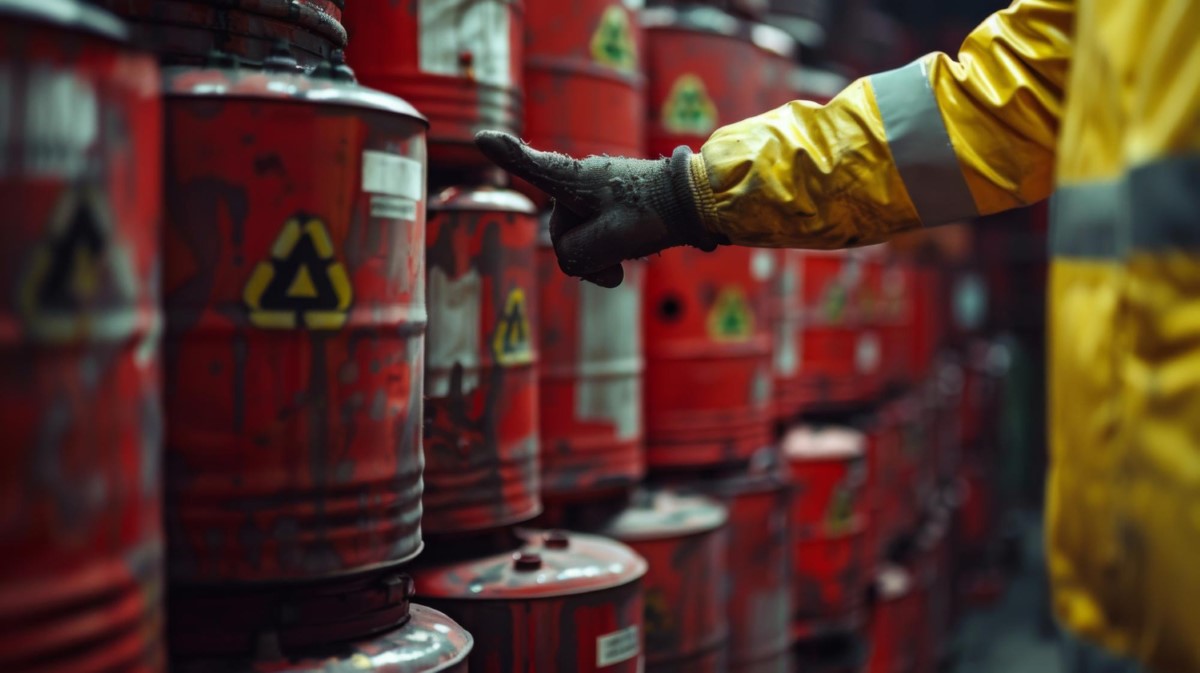
Inspecting storage drums regularly prevents leaks, vapor release and ignition hazards in high-risk environments.
Why does NR 20 training significantly reduce fire and explosion risk?
NR 20 training reduces risk by reshaping how workers identify hazards, recognize changes in process conditions and sustain operational discipline. As participants learn how vapors behave, how ignition forms and how small deviations escalate, they operate with sharper perception and greater control. This proactive mindset pushes the risk curve downward.
The course also strengthens the connection between human behavior and engineered safety barriers. When workers understand how their actions interact with environmental factors, equipment interfaces and emergency procedures, they apply interventions earlier and more precisely. This alignment enhances both compliance and the overall resilience of the system.
Where should operational monitoring be prioritized during flammable handling?
Monitoring gains importance in zones where process variables shift quickly and vapor formation, friction or pressure changes can destabilize operations. These regions demand closer attention to ensure that early indicators of danger never go unnoticed.
| Area or Process | Reason for Monitoring |
|---|---|
| Storage zones of flammable liquids | Higher probability of vapor accumulation |
| Transfer and pumping points | Friction, leakage and static generation |
| Ventilation pathways | Influence on vapor dispersion and dilution |
| Equipment interfaces | Heat generation and possible ignition activation |
NR20 Basic Course English: Operational discipline is mandatory in flammable environments
Operational discipline forms the backbone of safe behavior in flammable contexts because it removes unpredictability from actions that could otherwise trigger ignition or vapor release. This consistency protects both the worker and the entire installation.
Consistent application of procedures
Verification before each task
Reporting deviations immediately
Continuous hazard recognition
Respect for safety boundaries
What factors determine whether a worker is fully competent to operate under NR 20 Basic?
Competence emerges when the worker connects theoretical understanding with real-time interpretation of operational dynamics. By identifying how vapor behavior, heat sources and atmospheric conditions interact, the individual acts with foresight, preventing scenarios that might evolve into fire or explosion. This capability reflects technical maturity and situational intelligence.
Competence also depends on the worker’s ability to apply control measures consistently. When procedural rigor, environmental perception and effective use of protective equipment coexist, the professional sustains a safety posture that aligns with NR 20 expectations. This integration shows that the individual not only learned the rules but internalized behavior patterns that elevate operational reliability.
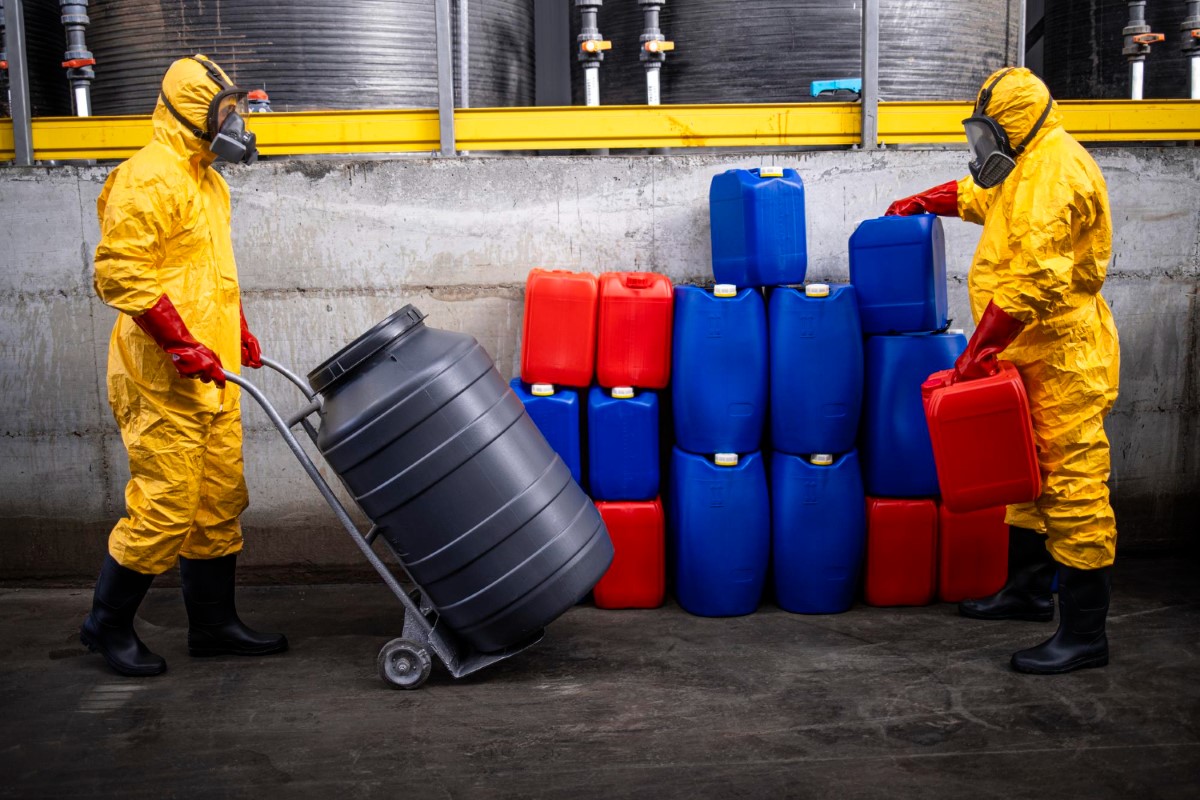
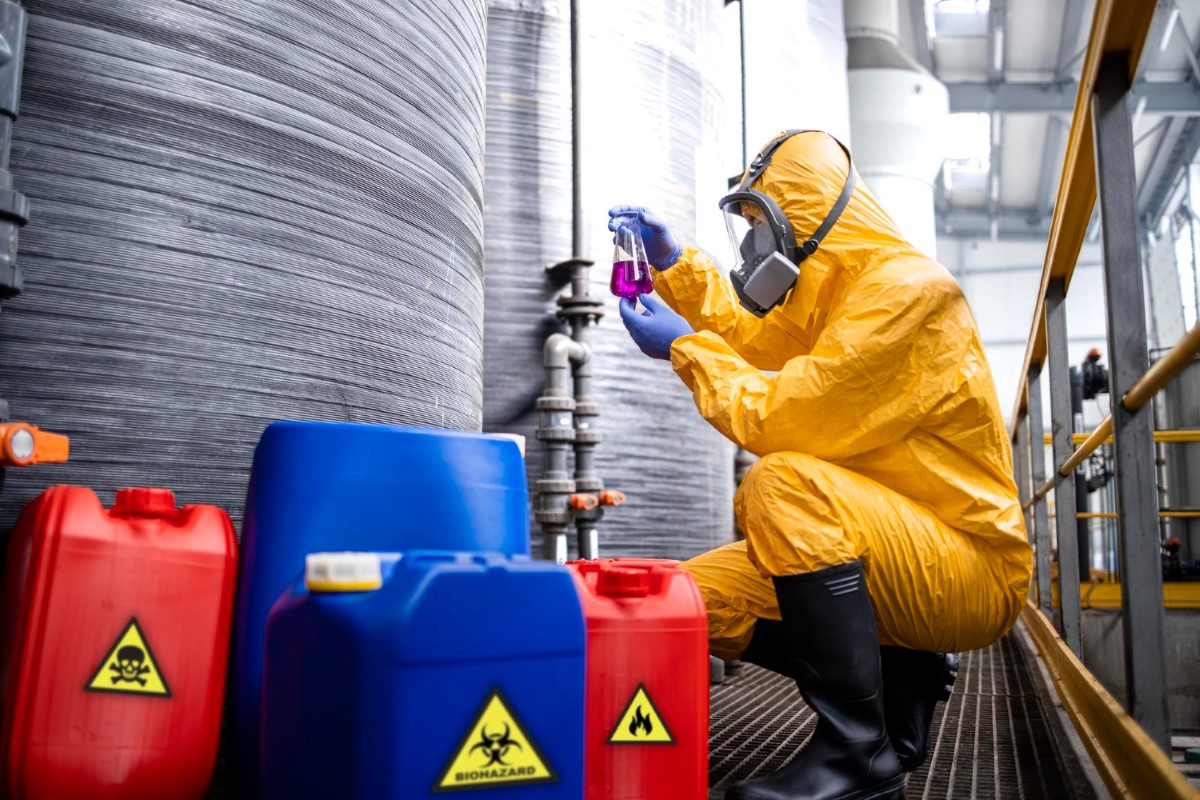
Coordinated handling of chemical containers maintains operational stability and reduces exposure to flammable risks.
What is the importance of NR20 Basic Course English?
The importance of the NR20 Basic Course English lies in raising the level of operational control and the worker’s ability to interpret risks associated with flammable and combustible materials. Since these substances exhibit unpredictable behavior depending on temperature, pressure, ventilation, and the presence of ignition sources, the course transforms technical knowledge into conscious action. In this way, the participant understands how small variations in the process can drastically alter the risk scenario, reinforcing the need for continuous operational discipline.
In addition, the course ensures direct alignment with the requirements of NR 20, strengthening legal compliance and reducing the likelihood of incidents involving fires, explosions, and hazardous atmospheres. By incorporating methods of prevention, hazard recognition, and initial emergency response, the professional becomes capable of acting with precision, protecting the integrity of the facility, and sustaining high standards of organizational safety.
Click the Link: Criteria for Issuing Certificates in accordance with the Standards
Certificate of Completion
NR 20 Basic Course in English
IMPROVEMENT COURSE SAFETY AND HEALTH IN WORK WITH FLAMMABLES AND COMBUSTIBLES NR 20 – BASIC LEVEL IN ENGLISH
Workload: 08 Hours
MODULE 1 – Regulatory Framework and Operational Responsibilities – 01 Hour
Regulatory interpretation for activities involving flammables
Roles, duties and organizational responsibility
Foundations of safe operation in facilities handling flammable substances
MODULE 2 – Fundamentals of Flammables and Combustibles – 01 Hour
Definitions of flammable liquids, vapors and gases
Flash point, flammability limits and autoignition characteristics
Thermochemical behavior and influence on operational safety
MODULE 3 – Classification of Facilities Handling Flammables – 01 Hour
Criteria for classifying facilities according to operational scale
Identification of hazard zones and installation categories
Technical documentation required for compliant classification
MODULE 4 – Ignition Sources and Risk Control – 01 Hour
Recognition of direct and indirect ignition sources
Static electricity, mechanical friction and arc generation
Control strategies to eliminate or minimize ignition potential
MODULE 5 – Personal Protective Equipment for Flammable Operations – 01 Hour
Selection criteria for protective clothing and equipment
Flame-resistant garments, gloves, footwear and respiratory protection
Inspection routines and limitations of personal protective systems
MODULE 6 – Hazard Recognition and Risk Assessment – 01 Hour
Identification of operational hazards involving flammable fluids
Evaluation of volatility, density and behavioral interactions
Use of work authorization processes for high-risk activities
MODULE 7 – Accident Scenarios and Emergency Preparedness – 01 Hour
Analysis of potential accidents involving leaks, spills and fires
Consequences of vapor cloud ignition and explosion phenomena
Structure of internal and external emergency response actions
MODULE 8 – Fire Behavior, Containment and First Aid Principles – 01 Hour
Understanding fire chemistry and combustion stages
Extinguishing methods and selection of appropriate agents
Fundamental first aid actions for burns, inhalation hazards and shock
Completion and Certification:
Practical Exercises (when contracted);
Evidence Records;
Theoretical Evaluation;
Practical Evaluation (when contracted);
Certificate of Participation.
NOTE:
We emphasize that the General Normative Program Content of the Course or Training may be modified, updated, supplemented, or have items excluded as deemed necessary by our Multidisciplinary Team. Our Multidisciplinary Team is authorized to update, adapt, modify, and/or exclude items, as well as insert or remove Standards, Laws, Decrees, or technical parameters they consider applicable, whether related or not. The Contracting Party is responsible for ensuring compliance with the relevant legislation.
NR 20 Basic Course in English