
Technical Name: Initial Level Training Course – NR 18 – Working Conditions and Environment in the Constriction Industry (Basic in Work Safety)
Reference: 171000
We provide courses and training; We perform Translations and Versions in Technical Language: Portuguese, English, Spanish, French, Italian, Mandarin, German, Russian, Swedish, Dutch, Hindi, Japanese and others consult.
NR 18 Initial Course English
The NR18 Initial Course English aims to train workers to recognize, assess, and control risks present on construction sites, strengthening their understanding of the working conditions and environment defined by NR 18. In this way, participants develop the ability to apply preventive measures immediately, understanding how the PGR, EPCs, and PPEs integrate to reduce accidents and maintain safe operations.
In addition, the training guides students to correctly interpret legal requirements and act with operational awareness, ensuring they respond effectively to critical situations that occur daily in construction. Thus, the course promotes safe, consistent behavior aligned with the responsibilities established by NR 18 and complementary standards, creating a technically prepared professional capable of acting with autonomy and responsibility.

Who is responsible for ensuring safe conditions on the site according to NR 18?
The responsibility falls primarily on the employer, who must implement control measures, provide PPEs and EPCs, and develop the PGR according to NR 18 guidelines. However, the worker also has direct duties, since they must follow instructions, use equipment correctly, and report identified risks. These roles complement each other and create a continuous safety system.
By understanding this shared responsibility, the course reinforces that prevention only works when everyone acts in an aligned and conscious manner. Thus, participants learn that safety is not just a legal obligation but a collective practice that sustains the physical integrity of everyone on the construction site.
When should the site’s PGR be revised to maintain compliance with NR 18?
The PGR must keep up with the fast pace of construction, which changes at every phase and constantly introduces new risks. Whenever the environment changes, revision becomes necessary to ensure that control measures remain effective and aligned with NR 18 requirements.
| Situation requiring revision | Technical justification |
|---|---|
| Change in construction phase | New risks appear and previous controls are no longer sufficient |
| Introduction of new equipmen | Need to assess mechanical, electrical, and operational risks |
| Occurrence of accidents or near misses | Indicates failures in control requiring immediate correction |
| Legal or normative changes | Required adjustments to maintain compliance with NR 18 |
NR18 Initial Course English: Safety signage must remain visible during all phases of construction.
Signage guides movement, identifies risks, and supports visual communication on the site. When it stays clear and accessible, it reduces misinterpretation and strengthens preventive action by everyone.
constant visibility
update according to construction progress
compliance with technical standards
installation in critical areas
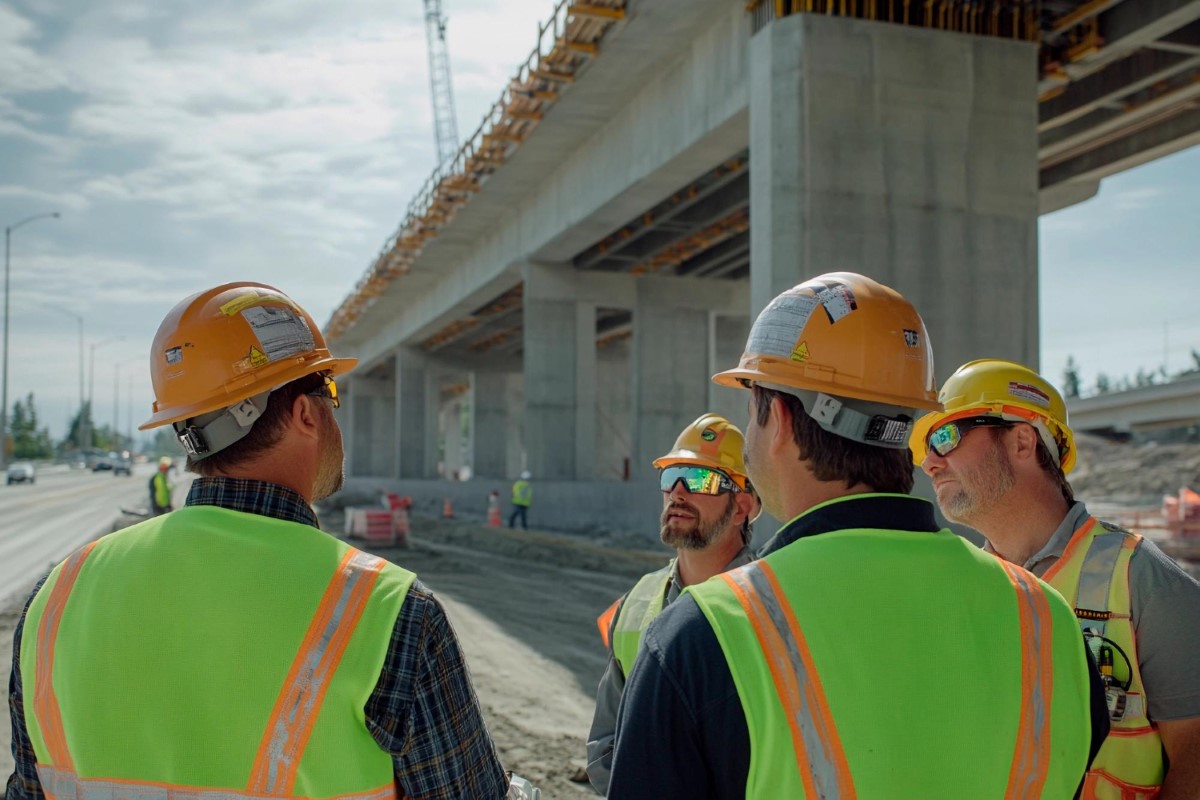
Why does EPC have priority over PPE in accident prevention on the site?
EPC reduces the risk at its origin and protects all exposed workers simultaneously, making it more efficient in the hierarchy of controls. NR 18 reinforces that collective measures must be adopted whenever possible before resorting to PPE, as they operate more broadly and durably. Thus, EPC represents the first protective barrier in the construction environment.
When students understand this priority logic, they begin to interpret the site strategically. The analysis shifts from an individual focus to a systemic one, enabling safer and faster decisions aligned with normative guidelines.
Where should daily risk inspection be applied to ensure operational safety?
Daily inspection functions as the first prevention filter because it identifies failures before they become accidents. By applying it in the correct areas, workers ensure operational continuity and reinforce compliance with NR 18.
| Area evaluated | Inspection focus |
|---|---|
| Pedestrian circulation | Floor conditions, obstructions, and signage |
| Machine zones | Protections, safety distances, and collision risk |
| Storage areas | Material stability and product segregation |
| Work fronts | Sudden changes affecting operational risk |
| Height areas | Anchorage, fixation, and collective protection systems |
NR18 Initial Course English: Safe operation depends on constant assessment of the environment.
Safe operation begins with a careful reading of the environment, which changes rapidly during construction. By assessing the surroundings before acting, workers anticipate threats and maintain process integrity.
checking weather conditions
verifying collective protections
observing interferences along the path
analyzing worker flow
What is the impact of NR 18 on reducing accidents in construction?
NR 18 establishes technical parameters that guide everything from site organization to routine operational procedures, creating a more predictable and safer environment. By applying these requirements, workers reduce exposure to typical risks such as falls, electric shocks, cave-ins, and impacts with machinery. The course demonstrates how these normative actions translate into real protection in daily operations.
Additionally, NR 18 reinforces preventive behaviors and integrates responsibilities, ensuring that safety does not depend only on equipment but also on conscious decisions. Thus, the impact is evident: fewer accidents, reduced severity of occurrences, and greater operational stability.
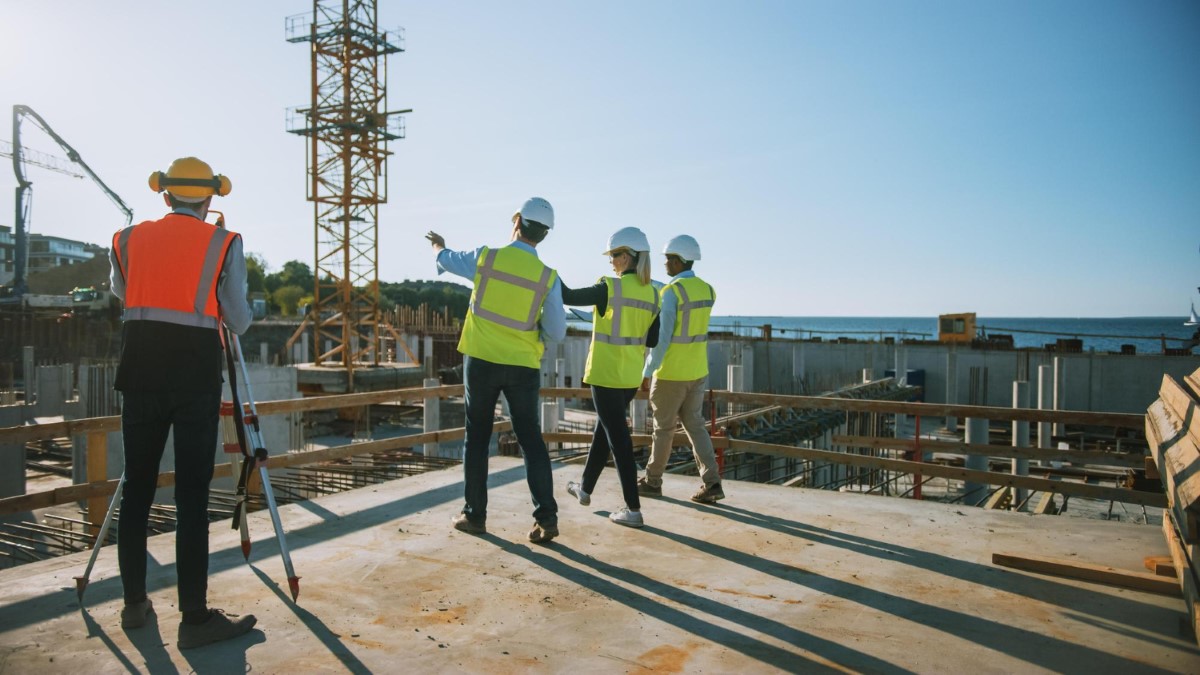
What is the importance of the NR18 Initial Course English?
The NR18 Initial Course English is essential because it trains workers to recognize risks and apply control measures immediately, reinforcing the preventive culture required by NR 18. By understanding how site conditions influence safety, participants develop the ability to interpret complex scenarios, act precisely, and prevent serious incidents before they develop into accidents.
Furthermore, the training guides professionals to use PPEs and EPCs correctly, integrate with the PGR, and follow procedures compatible with the dynamic reality of construction. Thus, the course not only meets a legal requirement but also expands the worker’s operational awareness, elevating individual and collective protection at all stages of construction.
Click the Link: Criteria for Issuing Certificates according to the Standards
Certificate of completion
Course NR 18 Initial
Technical Name: Initial Level Training Course – NR 18 – Working Conditions and Environment in the Constriction Industry (Basic in Work Safety)
Course Load: 04 Horas
MODULE 1 – Fundamentals of NR 18 and Working Conditions – 04 hours
Working conditions and environment in construction
Organization, cleaning, circulation, and living areas
Identification of risks inherent to construction site activities
Structural concepts of the PGR applied to the construction site
Responsibilities of the employer and the worker according to NR 18 and NR 01
Concepts of hazard, risk, hierarchy of controls, and preventive measures
Completion and Certification:
Practical Exercises (when contracted);
Recording of Evidence;
Theoretical Evaluation;
Practical Evaluation (When contracted);
Certificate of Participation.
NOTE:
We emphasize that the General Normative Programmatic Content of the Course or Training may be altered or updated, with items added or removed as necessary by our Multidisciplinary Team. Our Multidisciplinary Team is authorized to update, adjust, alter, and/or delete items, as well as insert or remove Standards, Laws, Decrees, or technical parameters deemed applicable, whether related or not, and the Contracting Party is responsible for fulfilling the requirements established by the relevant Legislation.
Course NR 18 Initial
Inexperienced Participants:
Minimum credit hours = 08 hours/class
Experienced Participants:
Minimum credit hours = 04 hours/class
Update (Recycling):
Minimum credit hours = 02 hours/class
Updating (Recycling): The employer must conduct periodic training Biennial and whenever any of the following situations occur:
a) change in work procedures, conditions or operations;
b) event that indicates the need for new training;
c) return from work leave for a period exceeding ninety days;
d) change of company;
e) Exchange of machine or equipment.
Course NR 18 Initial
Normative references when applicable to applicable devices and their updates:
NR 01 – Disposições Gerais e Gerenciamento de Riscos Ocupacionais (General Provisions and Occupational Risk Management)
NR 06 – Equipamento de Proteção Individual – EPI (Personal Protective Equipment – PPE)
NR 12 – Segurança no Trabalho em Máquinas e Equipamentos (Safety at Work with Machinery and Equipment)
NR 18 – Segurança e Saúde no Trabalho na Indústria da Construção (Safety and Health in the Construction Industry)
ABNT NBR 15965-1 – Sistema de classificação da informação da construção – Parte 1: Terminologia e estrutura (Construction Information Classification System – Part 1: Terminology and Structure)
ABNT NBR 16746 – Segurança de máquinas – Manual de Instruções – Princípios gerais de elaboração (Machinery Safety – Instruction Manual – General Principles for Preparation)
ABNT NBR ISO 13850 – Segurança de Máquinas – Função de parada de emergência – Princípios para projeto (Machinery Safety – Emergency Stop Function – Principles for Design)
ABNT NBR ISO 14121-2 – Segurança de máquinas – Apreciação de riscos (Machinery Safety – Risk Assessment)
ABNT NBR 16489 – Sistemas e equipamentos de proteção individual para trabalhos em altura — Recomendações e orientações para seleção, uso e manutenção (Systems and Personal Protective Equipment for Work at Height — Recommendations and Guidelines for Selection, Use, and Maintenance)
ABNT NBR 14276 – Brigada de incêndio – Requisitos (Fire Brigade – Requirements)
ABNT NBR 14277 – Instalações e equipamentos para treinamento de combate a incêndio – Requisitos (Installations and Equipment for Firefighting Training – Requirements)
ABNT NBR ISO/CIE 8995 – Iluminação de ambientes de trabalho (Lighting of Workplaces)
ABNT NBR 9735 – Conjunto de equipamentos para emergências no transporte terrestre de produtos perigosos (Emergency Equipment Set for Land Transport of Dangerous Goods)
Protocolo – Guidelines American Heart Association (American Heart Association Guidelines Protocol)
ISO 10015 – Gestão da qualidade – Diretrizes para gestão da competência e desenvolvimento de pessoas (Quality Management – Guidelines for Competence Management and People Development)
ISO 45001 – Sistemas de gestão de saúde e segurança ocupacional – Requisitos com orientação para uso (Occupational Health and Safety Management Systems – Requirements with Guidance for Use)
ISO 56002 – Innovation management – Innovation management system (Innovation Management – Innovation Management System)
Note: This Service exclusively meets the requirements of the MTE (Ministry of Labor and Employment) when dealing with other bodies, inform in the act of request.
Course NR 18 Initial
TECHNICAL CURIOSITIES –COURSE NR 18 INITIAL:
The Origin of the First Safe Construction Site Requirements
The earliest records of specific standards for construction site organization emerged after the increase in heavy construction accidents in the 1970s. These standards evolved and eventually formed the foundation of what we now know as NR 18.
Most Accidents in Construction Occur in Temporary Work
Temporary platforms, ladders, and intermediate structures are more prone to failure. NR 18 requires extra attention because these structures change rapidly during the construction process.
Brazil Has One of the Most Detailed Construction Site Standards in the World
NR 18 is considered an international reference due to its high level of detail in site organization, living areas, and step-by-step risk management applied throughout the construction cycle.
Our pedagogical project follows the guidelines imposed by Regulatory Standard No. 1.
After payment confirmation, Purchase Order, contract signed between the parties, or any other form of confirmation of agreement, the didactic material will be released within up to 72 business hours (up to 9 days), due to the adaptation of the programmatic content and compliance with the Technical Standards applicable to the scenario expressed by the Contracting Party, as well as other adjustments to the didactic material carried out by our Multidisciplinary Team for technical language according to the student’s nationality and the specific Operational and Maintenance Technical Instruction Manuals of the activities to be performed.
OTHER ELEMENTS WHEN APPLICABLE AND CONTRACTED:
Workplace safety:
Working conditions and environment;
Risks inherent to the activities carried out;
Equipment and collective protection existing at the construction site;
Proper use of personal protective equipment;
PGR of the construction site.
For the crane equipment operator: the syllabus described in Annex II of NR-12 or defined by the manufacturer/lessor.
Annex II of NR-12:
a) description and identification of the risks associated with each machine and equipment and the specific protections against each of them;
b) functioning of protections; how and why they should be used;
c) how and under what circumstances a guard may be removed, and by whom, in most cases only inspection or maintenance personnel;
d) what to do, for example, contact the supervisor if protection has been damaged or has lost its function, failing to ensure adequate security;
e) the safety principles in the use of the machine or equipment;
f) safety for mechanical, electrical and other relevant risks;
g) safe working method;
h) work permit; and
i) machine and equipment operation blocking system during inspection, cleaning, lubrication and maintenance operations.
The training of operators of self-propelled or self-propelled machines must consist of theoretical and practical steps and have the minimum program content described in the paragraphs of item 1 of this Annex and also:
a) notions about traffic legislation and health and safety at work legislation;
b) notions about accidents and diseases resulting from exposure to risks existing in the machine, equipment and implements;
c) risk control measures: Collective Protection Equipment – EPCs and Individual Protection Equipment – PPE;
d) safe operation of the machine or equipment;
e) inspection, adjustment and maintenance safely;
f) safety signs;
g) procedures in an emergency situation; and
h) notions about providing first aid.
The practical step must be supervised and documented, and can be performed on the machine that will be operated.
For the crane operator:
Operation and daily inspection of equipment;
Actuation of safety devices;
Signaling by hand and by radio communication;
Isolation of areas under suspended loads;
Load lashing;
Visual identification of damage to pulleys, hooks, steel cables and synthetic straps;
Accidents prevention;
Beware of nearby high voltage lines;
Fundamentals of NR-35 dealing with work at heights;
Current safety regulations.
For the crane operator:
All items provided for in the crane operation training;
Reading and interpretation of the lifting plan;
Conditions that affect the machine’s load capacity, in particular with regard to levelling, Characteristics of the surface under the machine, dynamic load and wind.
For the signalman/cargo logger:
Signaling by hand and by radio communication;
Safe isolation of areas under suspended loads;
Load lashing;
Knowledge for visual inspections of the conditions of use and compliance of hooks, steel cables, synthetic straps and all other elements and accessories used in lifting loads.
For the compressed air foreman:
Safety rules and regulations;
Risk analysis, impeding conditions and protection measures for compression and decompression;
Potential risks inherent to hyperbaric work;
Security systems;
Work accidents and illnesses;
Procedures and conduct in emergency situations;
For the PEMT operator: as provided for in the current national technical standard;
For workers involved in waterproofing services:
Typical accidents in waterproofing work;
Potential risks inherent to work and prevention measures;
Operation of heating equipment safely;
Conduct in emergency situations, including notions of rescue techniques and first aid (especially in the case of burns);
Area isolation and warning signs.
For workers using a suspended chair:
Operation mode;
descent techniques;
Anchor types;
Types of knots;
Equipment maintenance;
Security procedures;
Self-rescue techniques.
Activity Complements:
Awareness of Importance:
APR (Preliminary Risk Analysis);
PAE (Emergency Action Plan;
PGR (Risk Management Plan);
Understanding the need for the Rescue Team;
The importance of knowledge of the task;
Accident prevention and first aid notions;
Fire protection;
Perception of risks and factors that affect people’s perceptions;
Impact and behavioral factors on safety;
Fear factor;
How to discover the fastest and easiest way to develop Skills;
How to control the mind while working;
How to administer and manage working time;
Why balance energy during activity in order to obtain productivity;
Consequences of Habituation of Risk;
Work accident causes;
Notions about the Tree of Causes;
Notions about Fault Tree;
Understanding Ergonomics;
Job Analysis;
Ergonomic Hazards;
Hazard Communication Standard (HCS) – OSHA;
Practical exercises:
Registration of Evidence;
Theoretical and Practical Assessment;
Certificate of participation
Course NR 18 Initial
Learn More: Course NR 18 Initial
18.2 Campo de aplicação
18.2.1 Esta norma se aplica às atividades da indústria da construção constantes da seção “F” do Código Nacional de Atividades Econômicas – CNAE e às atividades e serviços de demolição, reparo, pintura, limpeza e manutenção de edifícios em geral e de manutenção de obras de urbanização.
18.3 Responsabilidades
18.3.1 A organização da obra deve:
a) vedar o ingresso ou a permanência de trabalhadores no canteiro de obras sem que estejam resguardados pelas medidas previstas nesta NR;
b) fazer a Comunicação Prévia de Obras em sistema informatizado da Subsecretaria de Inspeção do Trabalho – SIT, antes do início das atividades, de acordo com a legislação vigente. 18.4 Programa de Gerenciamento de Riscos (PGR)
18.4.1 São obrigatórias a elaboração e a implementação do PGR nos canteiros de obras, contemplando os riscos ocupacionais e suas respectivas medidas de prevenção.
18.4.2 O PGR deve ser elaborado por profissional legalmente habilitado em segurança do trabalho e implementado sob responsabilidade da organização.
18.4.2.1 Em canteiros de obras com até 7 m (sete metros) de altura e com, no máximo, 10 (dez) trabalhadores, o PGR pode ser elaborado por profissional qualificado em segurança do trabalho e implementado sob responsabilidade da organização.
18.4.3 O PGR, além de contemplar as exigências previstas na NR-01, deve conter os seguintes documentos:
a) projeto da área de vivência do canteiro de obras e de eventual frente de trabalho, em conformidade com o item 18.5 desta NR, elaborado por profissional legalmente habilitado;
b) projeto elétrico das instalações temporárias, elaborado por profissional legalmente habilitado;
c) projetos dos sistemas de proteção coletiva elaborados por profissional legalmente habilitado;
d) projetos dos Sistemas de Proteção Individual Contra Quedas (SPIQ), quando aplicável, elaborados por profissional legalmente habilitado; e) relação dos Equipamentos de Proteção Individual (EPI) e suas respectivas especificações técnicas, de acordo com os riscos ocupacionais existentes.
18.4.3.1 O PGR deve estar atualizado de acordo com a etapa em que se encontra o canteiro de obras.
18.4.4 As empresas contratadas devem fornecer ao contratante o inventário de riscos ocupacionais específicos de suas atividades, o qual deve ser contemplado no PGR do canteiro de obras.
18.4.5 As frentes de trabalho devem ser consideradas na elaboração e implementação do PGR.
Fonte: NR 18.
18.2 Scope of application
18.2.1 This standard applies to the activities of the construction industry contained in section “F” of the National Code of Economic Activities – CNAE and to activities and services of demolition, repair, painting, cleaning and maintenance of buildings in general and maintenance of urbanization works.
18.3 Responsibilities
18.3.1 The organization of the work must:
a) prohibit the entry or permanence of workers at the construction site without being protected by the measures provided for in this NR;
b) make the Prior Communication of Works in the computerized system of the Sub-secretariat of Labor Inspection – SIT, before the start of activities, in accordance with current legislation. 18.4 Risk Management Program (PGR)
18.4.1 The elaboration and implementation of the PGR at construction sites are mandatory, including occupational risks and their respective prevention measures.
18.4.2 The PGR must be prepared by a professional legally qualified in occupational safety and implemented under the responsibility of the organization.
18.4.2.1 On construction sites up to 7 m (seven meters) high and with a maximum of 10 (ten) workers, the PGR may be prepared by a qualified professional in work safety and implemented under the responsibility of the organization.
18.4.3 The PGR, in addition to contemplating the requirements provided for in NR-01, must contain the following documents:
a) project of the living area of the construction site and any work front, in accordance with item 18.5 of this NR, prepared by a legally qualified professional;
b) electrical project for the temporary installations, prepared by a legally qualified professional;
c) projects of collective protection systems prepared by a legally qualified professional;
d) projects of Personal Protection Systems against Falls (SPIQ), when applicable, prepared by a legally qualified professional; e) list of Personal Protective Equipment (PPE) and their respective technical specifications, according to the existing occupational risks.
18.4.3.1 The PGR must be updated according to the stage at which the construction site is.
18.4.4 Contracted companies must provide the contractor with an inventory of occupational risks specific to their activities, which must be included in the PGR of the construction site.
18.4.5 The work fronts must be considered in the elaboration and implementation of the PGR.
Source: NR 18.
Course NR 18 Initial: Consult-us.