Technical Name: Fire Brigade Training Course – Intermediate Level – According to NBR 14276 – Fire Brigade – Requirements and Procedures
Reference: 171209
We provide courses and training; We carry out Translations and Versions in Technical Language: Portuguese, English, Spanish, French, Italian, Mandarin, German, Russian, Swedish, Dutch, Hindi, Japanese and others consult.
Fire Brigade Intermediate Level NBR 14276
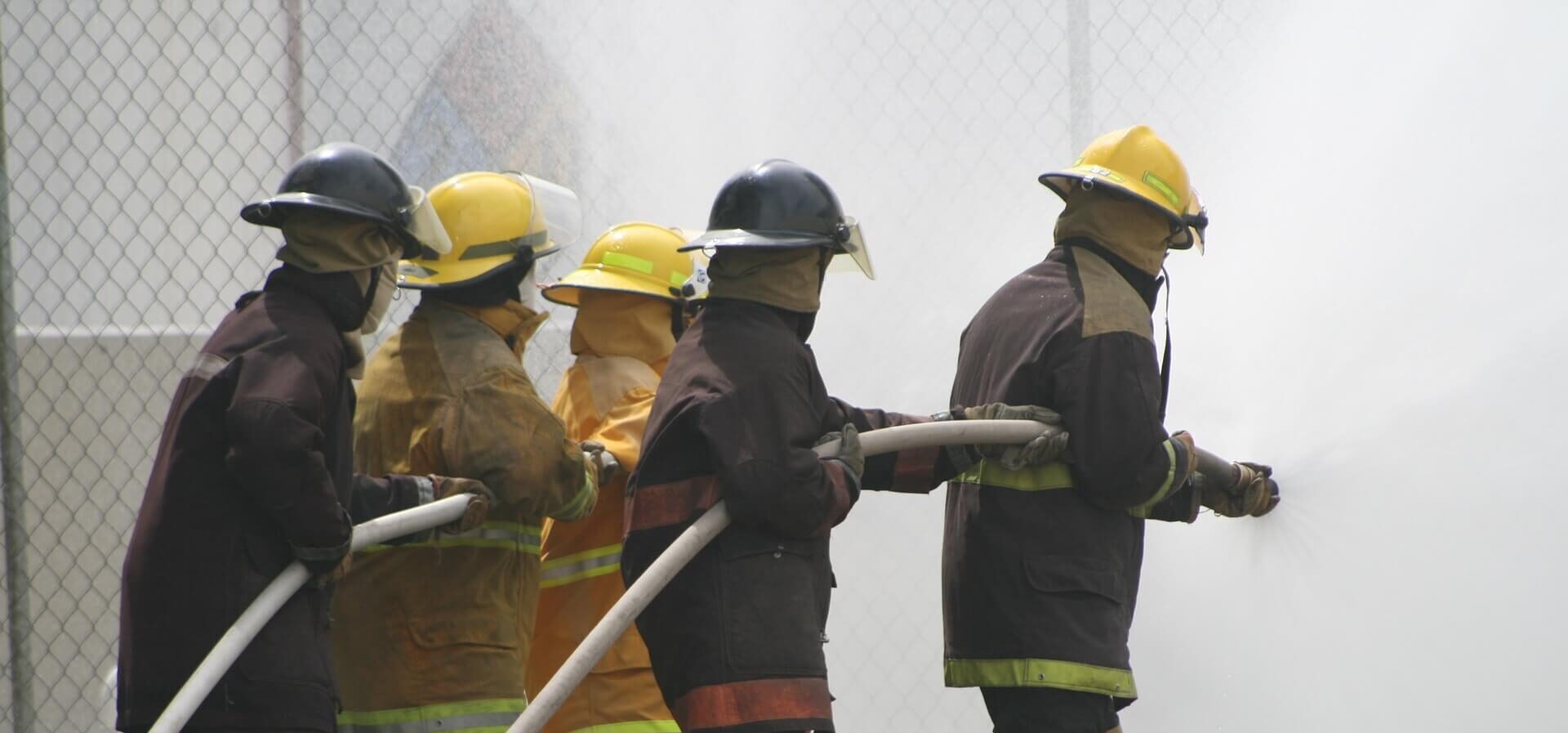
The Fire Brigade Intermediate Level NBR 14276 course aims to prepare professionals to act in the prevention and fight against the beginning of fire, area abandonment and first aid, aiming, in the event of an accident, to protect life and property, reduce the social consequences of the accident and the damage to the environment.
NR 23 – Fire Protection:
23.1 All employers must adopt fire prevention measures in accordance with applicable legislation and technical standards.
It so happens that many professionals prefer to follow the IT 17 and do not observe that in order to follow the IT 17 they must follow it in full and ignore that NR 23 recommends the applicable Technical Standards.
NBR 14276 – Fire and Emergency Brigade – Requirements and procedures
4 Requirements and procedures The emergency brigade must meet the requirements for composition. selection, training and material resources specified in this Standard.
4.1 Composition of the emergency brigade
The emergency brigade must be composed considering the occupation division. the degree of risk, the fixed population of each sector of the plant and the displacement distance of the brigadistas. The number of brigade members must be compatible to carry out the prevention and control actions and procedures described in the emergency plan, established according to predetermined accidental hypotheses. For the composition of the brigade. consideration should be given to which activities must be performed by the brigade members, such as:
a) security inspection activities;
b) first aid and/or pre-hospital care for medical emergencies:
c) rescue services;
d) fire prevention and control services:
e) emergency assistance with dangerous products;
f) activities to abandon areas;
g) continuing education teaching activities for the internal public.
Click on the Link: Criteria for Issuing Certificates in accordance with the Norms
Treinamento Livre Profissionalizante Noções Básicas (Não substitui Formação Acadêmica ou Ensino Técnico)Certificado de conclusão
Fire Brigade Intermediate Level NBR 14276
Fire Fighting Part:
Module 01 – Introduction
Objectives: Know and describe the general objectives of the training and the behavior of the brigadista.
Module 02 – Legal Aspects
Objectives: To know and describe the legal aspects related to the brigadista’s responsibility; to know and describe the procedures for the activation and operation of local public emergency services (fire department, Mobile Emergency Service (SAMU), Civil Police, Military Police).
Module 03 – Theory of Fire
Objectives: Know and describe combustion, its elements, and the chain reaction, fire temperatures (flash point, combustion and ignition).
Module 04 – Fire propagation and dynamics
Objectives: Know and describe the forms of fire propagation by conduction, convection, irradiation, as well as the physical-chemical phenomena of flashover and backdraft.
Module 05 – Fire Classes
Objectives: Identify and describe Fire classes.
Module 06 – Fire Prevention
Objectives: Know and describe the prevention techniques for fire risk assessment.
Module 07 – Extinction methods
Objectives: Know and describe the extinguishing methods of isolation, smothering, cooling and chemical extinguishing and their applications;
Practical Objectives: Demonstrate how to apply the methods.
Module 08 – Fire extinguishing agents
Objectives: Know and describe water and dry chemical extinguishing agents (PQS), at least types AB, ABC and K; CO2, foams and others available at the plant, as well as their characteristics and applications; know and know how to describe the meaning of the extinguishing capacity declared on the extinguishers.
Practical Objectives: Demonstrate how to apply extinguishing agents according to fire classes.
Module 09 – Personal Protective Equipment (PPE)
Objectives: Know and describe the Personal Protective Equipment for protection of the head, eyes and face, hearing protection, respiratory protection, trunk, upper limbs, lower limbs and the whole body.
Practical Objectives: Demonstrate how to use personal protective equipment (PPE).
Module 10 – Fire-fighting equipment 1
Objectives: To know and describe the types and operation of portable fire extinguishers and fire extinguishers on wheels, with water charge, dry chemical powder (PQS) BC and ABC, CO2, halotrom, etc.; know and describe the criteria for the definition of the extinguishing agent; know and know how to perform visual inspection on fire extinguishers, including CO2.
Practical Objectives: Demonstrate how to operate portable fire extinguishers and fire extinguishers on wheels, with water charge, dry chemical powder (PQS) BC and ABC, CO2.
Module 12 – Detection, alarm and communications equipment.
Objectives: Know and describe the most common means of detection, alarm and communications systems and their operation.
Practical Objectives: Demonstrate how to identify ways to activate and deactivate equipment.
Module 13 – Area Abandonment
Objectives: Know and describe emergency exits, safety stairs, corridors and escape routes. emergency lighting systems, safety elevator and warning means: know and describe the techniques for leaving the area, organized exit. meeting and call points and panic control.
Module 14 – People with reduced mobility
Objectives: Know and describe the approach, care and management techniques according to the plant’s emergency plan.
Module 26 – Plant-specific risks
Objectives: Know and describe the specific risks and the plant’s emergency plan.
Practical Objectives: Visit and learn about the specific risk areas of the plant.
First Aid Part:
Module 15 – Initial Assessment
Objectives: To know and describe the procedures for the evaluation of the scenario, the mechanisms of injuries, the number of victims and their physical examination.
Practical Objectives: Demonstrate how to recognize and assess imminent risks, implement protection and safety measures, recognize the mechanisms of injury, the number of victims and physical examination of these: perform triage, prioritization of care for victims and physical examination of these .
Module 16 – Airway
Objectives: To know and describe the signs and symptoms of obstructions in adults, children and conscious and unconscious babies and pre-hospital treatment.
Practical Objectives: Demonstrate how to recognize the signs and symptoms of obstructions in conscious and unconscious adults, children and infants, and pre-hospital care.
Module 17 – Cardiopulmonary Resuscitation (CPR)
Objectives: To know and describe the techniques of artificial ventilation and external cardiac compression (CPR) for adults, children and infants.
Practical Objectives: Demonstrate how to apply CPR techniques.
Module 18 – DEA
Objectives: To know and describe semiautomatic equipment for external defibrillation
Practical Objectives: Demonstrate how to use semi-automatic equipment for external defibrillation.
Module 19 – State of shock
Objectives: To know and describe the signs, symptoms and techniques of prevention and pre-hospital treatment.
Practical Objectives: Demonstrate how to apply the initial techniques for the prevention and treatment of shock.
Module 20 – Bleeding
Objectives: To know and describe hemostasis techniques and pre-hospital treatment.
Practical Objectives: Demonstrate how to recognize and assess imminent risks, implement protection and safety measures, recognize the mechanisms of injury, the number of victims and physical examination of these: perform triage, prioritization of care for victims and physical examination of these .
Module 21 – Fractures
Objectives: To know and describe open and closed fractures and immobilization techniques and pre-hospital treatment.
Practical Objectives: Demonstrate how to apply immobilization techniques in limbs, pelvis and spine and pre-hospital treatment.
Module 22 – Injuries
Objectives: To identify and describe the types of injuries and the consequences of injury severity and pre-hospital treatment.
Practical Objectives: Demonstrate specific care in incisive, blunt, penetrating, impalement and traumatic amputations.
Module 23 – Burns
Objectives: To know and describe the types of burns (thermal, chemical and electrical) and the degrees (first, second and third) of burns; know and describe the cooling and dressing techniques for burns.
Practical Objectives: Demonstrate how to apply pre-hospital burn treatment techniques and procedures.
Module 24 – Clinical emergencies
Objectives: To know and describe syncope, convulsions, cerebrovascular accident (CVA), dyspnea, hypertensive and hypotensive crises, acute myocardial infarction (AMI), diabetes and hypoglycemia and pre-hospital treatment.
Practical Objectives: Demonstrate how to apply care techniques for syncope and seizures. Demonstrate how to apply assessment techniques and initial procedures for AMI and stroke.
Module 25 – Movement, removal and transport of victims
Objectives: To know and describe the techniques for transporting victims, without and with suspected spinal injuries, on board and stretcher.
Practical Objectives: Demonstrate how to apply the techniques for moving, removing and transporting a victim on a board and stretcher.
Module 26 – Plant-specific risks
Objectives: Know and describe the specific risks and the plant’s emergency plan.
Practical Objectives: Visit and learn about the specific risk areas of the plant.
Complementary Contents (if applicable to the plant)
Module 28 – Emergencies with hazardous and environmental products
Objectives: Know and describe the procedures related to emergency assistance with hazardous and environmental products.
Practical Objectives: Demonstrate how to apply techniques for emergencies with hazardous and environmental products.
Module 29 – Rescue of victims of a fall from a height
Objectives: To know and describe the consequences of injuries resulting from suspension of victims by fall protection systems and to know the techniques for rescuing victims of falls from a height.
Practical Objectives: Demonstrate techniques and use equipment to rescue victims of falls from a height.
Module 30 – Rescue of victims in confined spaces
Objectives: To know and describe the consequences and effects of the risks and hazards identified in work in confined spaces and to know the techniques for rescuing victims in confined spaces.
Practical Objectives: Demonstrate techniques and use equipment to rescue victims in confined spaces.
Module 31 – Extrication and Extraction of Victims
Objectives: To know and describe the equipment and techniques for the extrication of victims trapped in hardware, equipment and collapsed structures.
Practical Objectives: Demonstrate safety techniques and use equipment for extrication in vehicle rescue, in equipment and in collapsed structures.
Module 32 – Emergency Management Incident Command System (SCI)
Objectives: Know and describe the concepts and procedures related to the incident command system (ICS) for emergency management.
Practical Objectives: Demonstrate incident command system (ICS) procedures for managing emergencies in simulated scenarios.
Activity Add-ons:
Awareness of Importance:
APR (Preliminary Risk Analysis);
PE (Emergency Plan);
PGR (Risk Management Plan);
Understanding the need for the Rescue Team;
The Importance of task knowledge;
Prevention of accidents and notions of first aid;
Fire protection;
Perception of risks and factors that affect people’s perceptions;
Impact and behavioral factors on safety;
Fear factor;
How to discover the fastest and easiest way to develop Skills;
How to control the mind while working;
How to administer and manage working time;
Because balancing energy during activity in order to obtain productivity;
Consequences of Risk Habituation;
Causes of accidents at work;
Understanding the Cause Tree;
Understanding Fault Tree;
Understandings about Ergonomics;
Workplace Analysis;
Ergonomic Risks;
Hazard Communication Standard (HCS) – OSHA;
Practical Exercises:
Record of Evidence;
Theoretical and Practical Assessment;
Certificate of participation.
Our Multidisciplinary Team is allowed to insert norms, laws, decrees or technical parameters that they deem applicable, whether or not they are related to the scope of the negotiated service, with the Contracting Party being responsible for carrying out the necessary services in accordance with the legislation, as established in the same.
Fire Brigade Intermediate Level NBR 14276