
Technical Name: TRAINING ON PROPER USE OF PPE, STORAGE AND MAINTENANCE IN ENGLISH
Reference: 55747
We provide courses and training; We perform Translations and Versions in Technical Language: Portuguese, English, Spanish, French, Italian, Mandarin, German, Russian, Swedish, Dutch, Hindi, Japanese and others consult.
NR06 Training English
The NR06 Training English aims to develop the participant’s ability to identify risks, correctly select Personal Protective Equipment, and understand the legal responsibilities involved in the use of such devices. Through a practical and regulatory approach, the training guides the worker to interpret the requirements of NR 06 and relate them to real exposure situations, ensuring quick and coherent decisions in different operational scenarios. In addition, the course expands awareness of material behavior, tolerance limits, and durability criteria that influence PPE efficiency.
The training also seeks to strengthen operational discipline by teaching proper methods for inspection, cleaning, conservation, and storage of equipment. In this way, the participant begins to use PPE consciously and strategically, which reduces human errors and increases the level of individual protection. By integrating the principles of NR 06 with good management and control practices, the course prepares the professional to act with precision, regulatory alignment, and technical responsibility in any work environment.

Essential PPE items organized to reinforce proper selection, storage and daily readiness for safe operations.
Who is responsible for ensuring the correct selection and use of PPE according to NR 06?
Employers and workers share responsibility for proper PPE selection and use under NR 06. Employers must analyze workplace hazards, provide certified equipment, and ensure that workers receive adequate training. This structure promotes clarity and consistency in daily operations, reducing exposure to preventable risks.
Workers, in turn, must use the equipment correctly, maintain it in good condition, and report any irregularities that compromise safety. When both sides engage actively in compliance, PPE becomes a reliable barrier against operational hazards, strengthening the overall safety management system.
When should PPE be replaced to maintain its protective efficiency?
PPE replacement relies on continuous evaluation because equipment deteriorates through use, environmental exposure, and mechanical stress. As degradation progresses, protection declines, making timely replacement essential to maintain safety performance.
| Replacement Criterion | Description |
|---|---|
| Validity Expired | PPE must be replaced after the period defined by the manufacturer |
| Structural Damage | Cuts, deformities or compromised integrity remove protection |
| Loss of Seal or Fit | Respirators or gloves that no longer seal cannot be used |
| Contamination | PPE exposed to chemicals or biological agents must be discarded |
NR06 Training English: PPE effectiveness decreases without proper storage
Preservation directly influences PPE performance, and inadequate storage accelerates material degradation. As environmental stress accumulates, the equipment loses both structural and functional integrity.
Correct temperature control
Protection from UV exposure
Avoiding chemical vapors
Preventing mechanical deformation

Worker adjusting eye protection to ensure correct fit and compliance with hazard control requirements during field activities.
Why does improper PPE selection increase workplace accidents?
Improper selection increases the likelihood of accidents because it fails to match the hazard with the correct protective barrier. When the equipment does not align with the risk, the worker remains vulnerable even though they appear to be protected. This mismatch compromises preventive strategies and weakens operational control.
Additionally, using the wrong PPE encourages unsafe improvisation and disrupts workflow continuity. Workers may adjust or remove equipment due to discomfort or inefficiency, which escalates exposure and elevates accident frequency. Correct selection is therefore essential for maintaining predictable and safe performance.
Where should PPE inspections focus to guarantee safe use?
Inspection acts as a verification mechanism that ensures the equipment maintains its original protective capacity. By detecting deterioration early, workers avoid using PPE that no longer meets certified standards.
| Inspection Area | Critical Element |
|---|---|
| Structural Integrity | Cracks, cuts or deformation |
| Functional Components | Straps, seals, buckles or fittings |
| Certification Status | CA validity and readable labeling |
| Hygiene Condition | Cleanliness and absence of residues |
NR06 Training English: PPE must follow approved certification criteria
Certification validates that PPE has undergone standardized testing and meets required performance levels. Without certified compliance, equipment cannot guarantee consistent protection.
Compliance with NR 06 requirements
Manufacturer labeling and CA number
Testing aligned with ABNT and ISO standards
Traceability of production batch
What factors influence the correct selection of PPE for a specific task?
The correct selection depends on understanding the nature, intensity and duration of the hazard. Workers and supervisors must evaluate whether the risk involves physical, chemical, thermal or biological exposure, and then choose equipment that addresses that specific threat. By following this structured approach, the decision becomes more reliable and aligned with regulatory requirements.
Environmental conditions, ergonomic fit and compatibility with other equipment also influence PPE performance. When these factors are ignored, even certified equipment may fail to function as intended. Therefore, selecting PPE requires a balanced assessment that integrates risk type, working conditions and user comfort.
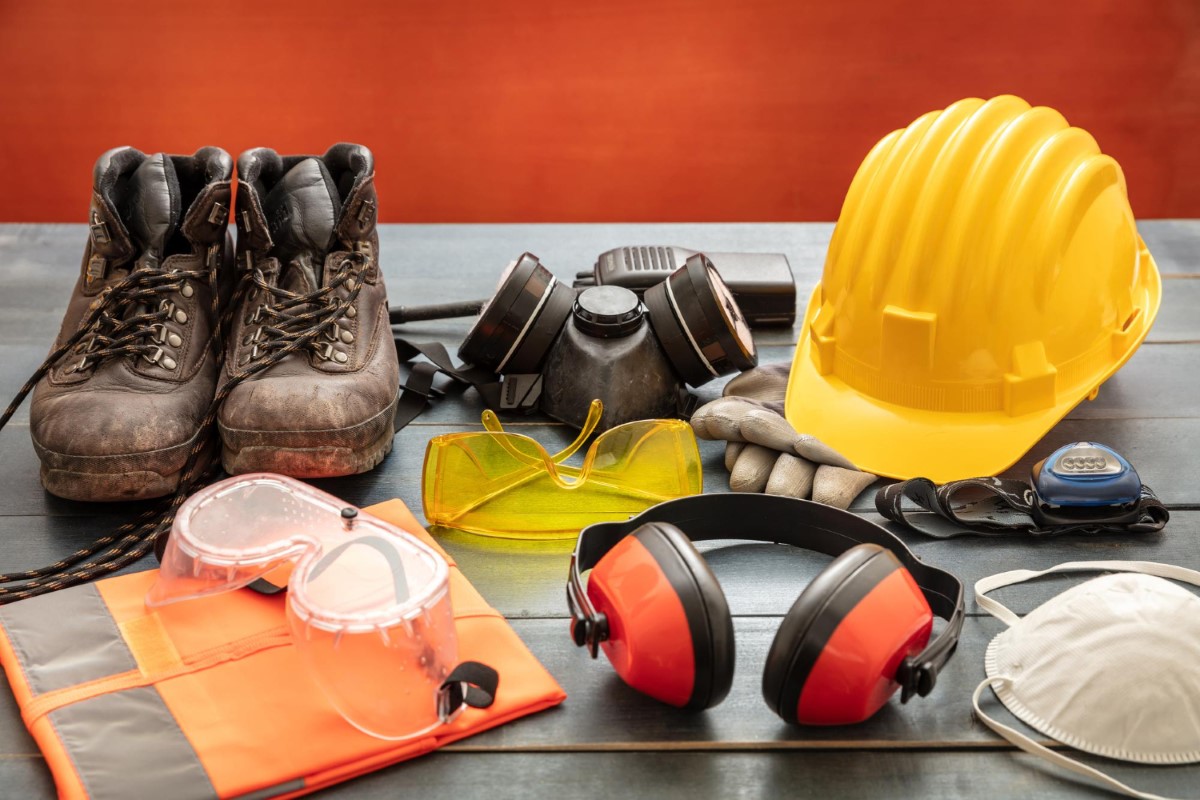
Complete PPE set prepared for inspection and use, highlighting the importance of correct maintenance and certification.
What is the importance of NR06 Training English?
The importance of the NR06 Training English lies in strengthening the worker’s ability to interpret risks and apply Personal Protective Equipment correctly and consciously, ensuring compliance with the requirements established by NR 06. When the participant understands how to select, adjust, clean, and preserve PPE, they reduce human errors, increase the efficiency of protective barriers, and directly contribute to the reduction of occupational accidents. In this way, the course transforms regulatory knowledge into practical action, promoting faster and more coherent decisions in the workplace.
In addition, the course enhances organizational maturity by integrating technical, legal, and operational criteria that support a robust prevention culture. As a result, the company improves its ability to meet audits, reduce liabilities, and maintain management systems aligned with best practices. By mastering the fundamentals of NR 06, the professional begins to act with greater precision and responsibility, raising the level of individual and collective safety in any productive sector.
Click the Link: Criteria for Issuing Certificates in accordance with the Standards
Certificate of Completion
NR 06 Training – Use of PPE and EPC in English
TRAINING ON PROPER USE OF PPE, STORAGE AND MAINTENANCE IN ENGLISH
Workload: 08 Hours
MODULE 1 – Fundamental Concepts of PPE (1 Hour)
Definition and purpose of PPE
Regulatory and legal requirements
Difference between PPE and CPE
Employer and worker responsibilities
MODULE 2 – PPE Classification and Hazard Recognition (1 Hour)
General categories of PPE
Hazard identification and PPE selection criteria
Risk, hazard, damage and loss concepts
Importance of PPE in accident prevention
MODULE 3 – Face and Eye Protection (1 Hour)
Face shields and functional applications
Safety glasses and goggles
Optical standards and impact-resistance criteria
Maintenance and suitability of facial PPE
MODULE 4 – Respiratory and Hearing Protection (1 Hour)
Types of respirators and filtration mechanisms
Selection based on contaminants and exposure conditions
Earplugs and earmuffs
Noise attenuation and tolerance limits
MODULE 5 – Body, Thermal and Fire Protection (1 Hour)
Protective clothing for torso and full body
Protection against heat and cold
Fire-resistant garments and classification requirements
MODULE 6 – Upper and Lower Limb Protection (1 Hour)
Hand protection materials and resistance characteristics
Chemical-resistant gloves and selection rules
Leg and foot protection
Slip resistance, impact resistance and task adequacy
MODULE 7 – Selection Criteria, Legal Requirements and CA Consultation (1 Hour)
Appropriate PPE selection for each task
Risk assessment for PPE indication
Legal requirements related to approval and certification
Sizing, comfort and ergonomic adequacy
MODULE 8 – Inspection, Hygiene, Conservation and Storage of PPE (1 Hour)
Inspection before use
Hygiene procedures and contamination control
Storage conditions and conservation methods
Service life, validity and replacement criteria
Completion and Certification:
Practical Exercises (when contracted);
Evidence Records;
Theoretical Evaluation;
Practical Evaluation (when contracted);
Certificate of Participation.
NOTE:
We emphasize that the General Normative Program Content of the Course or Training may be modified, updated, supplemented, or have items excluded as deemed necessary by our Multidisciplinary Team. Our Multidisciplinary Team is authorized to update, adapt, modify, and/or exclude items, as well as insert or remove Standards, Laws, Decrees, or technical parameters they consider applicable, whether related or not. The Contracting Party is responsible for ensuring compliance with the relevant legislation.
NR 06 Training – Use of PPE and EPC in English