Technical Name: COURSE CAPACITATION NR 33 SAFETY AND HEALTH IN CONFINED SPACE WORK SUPERVISOR LEVEL TAUGHT IN ENGLISH
Reference: 230376
We provide courses and training; We perform Translations and Versions in Technical Language: Portuguese, English, Spanish, French, Italian, Mandarin, German, Russian, Swedish, Dutch, Hindi, Japanese and others consult.
What is the objective of the NR33 Course Confined Space?
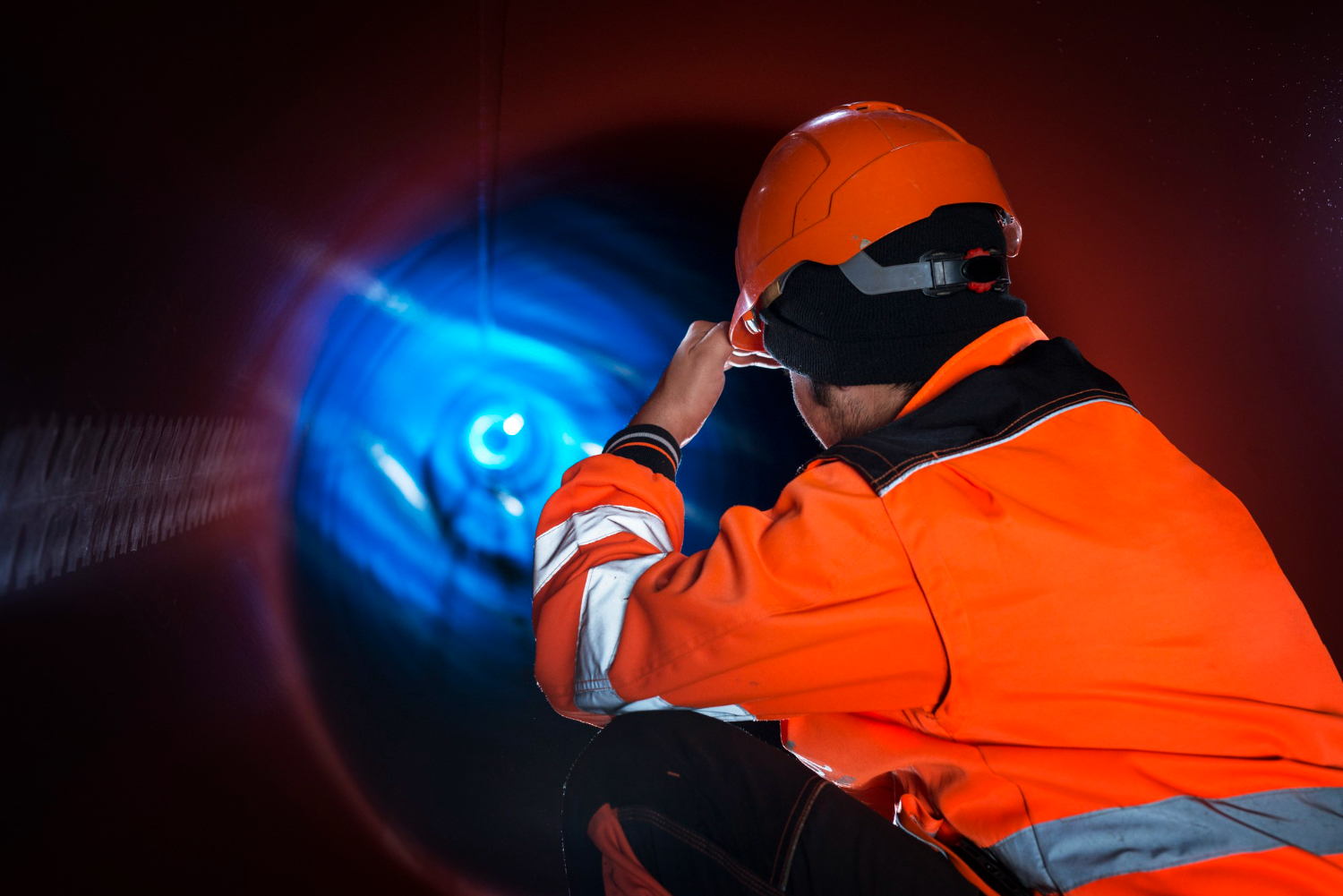
The objective of NR33 Course Confined Space in English is to train professionals to operate safely, precisely, and globally qualified in confined spaces, with a focus on communication in technical English. In this way, the course offers mastery of terminologies, operational protocols, and applicable legislation, such as NR 33 and related international standards.
Moreover, becoming proficient in another language is not just a competitive advantage — it is an operational necessity. In multinational environments, the lack of technical fluency can turn a simple command into a critical failure. Therefore, this Confined Space Course in English prepares the professional to respond with accuracy and leadership where the margin for error is zero.
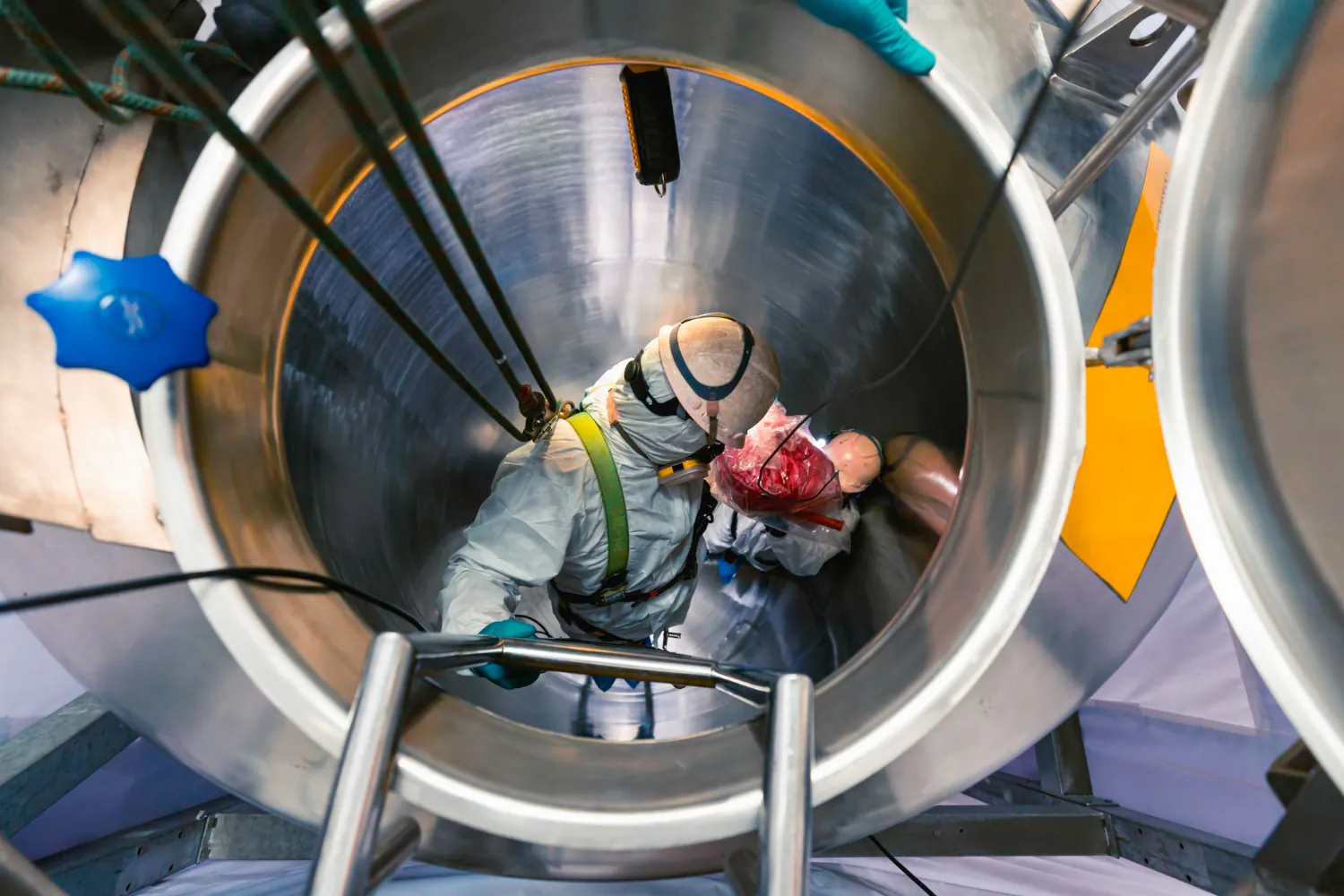
What types of rescue equipment are mandatory for operations in vertical confined spaces, and how does the supervisor validate their conformity?
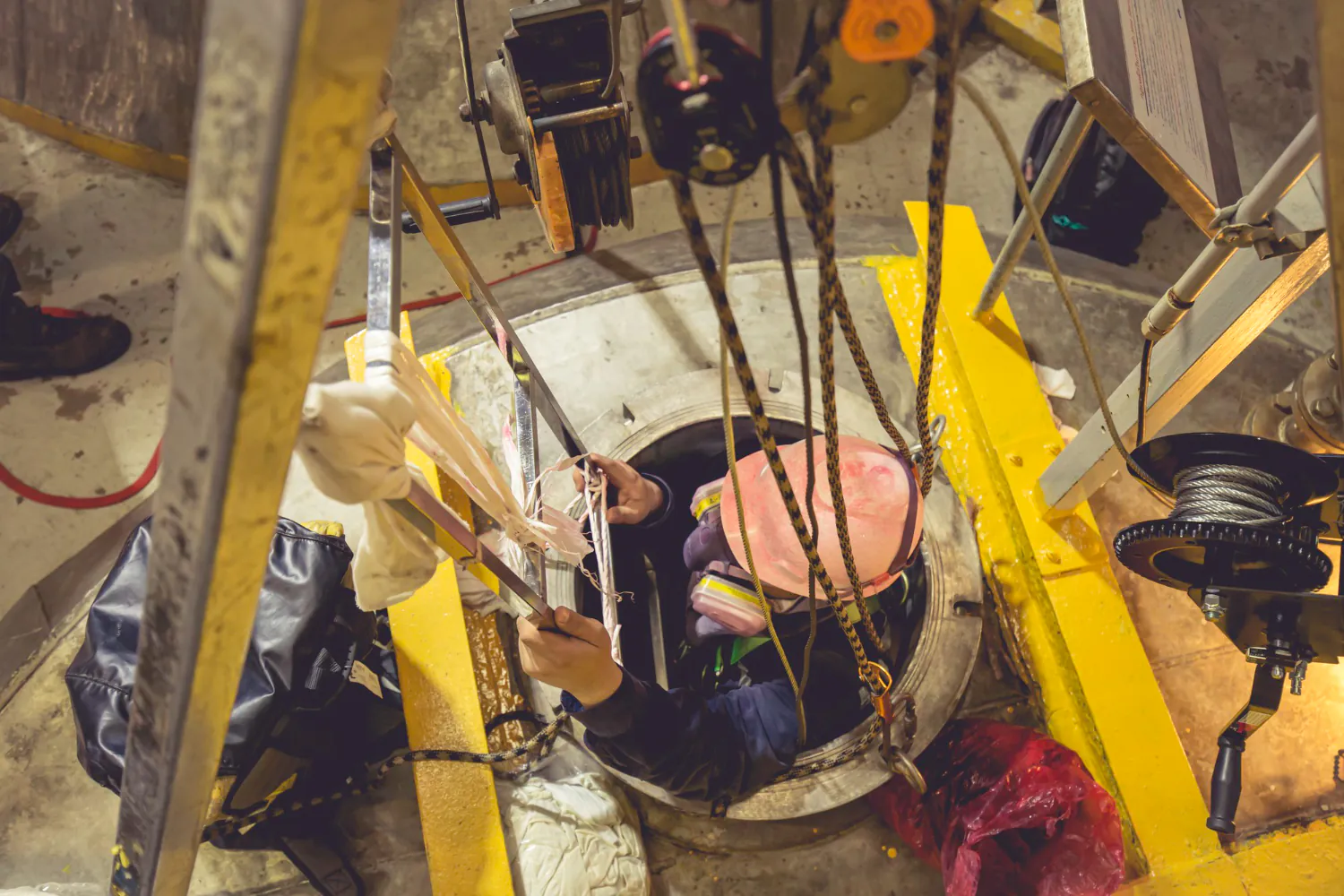
Operations in confined spaces require specific equipment that not only meets legal requirements but sustains life at the edge of operational risk. Below is a list of the main mandatory items with their respective operational purposes:
| Equipment Type | Purpose |
|---|---|
| Tripod or monopod | Anchoring and lifting of victims |
| Retractable fall arrester | Fall prevention |
| Pulleys and reduction systems | Facilitation of vertical rescue |
| Harness with dorsal point | Controlled suspension and extraction |
| Vertical lifeline | Connection of the worker to a safe point |
The supervisor’s responsibility goes beyond a checklist. Thus, technical validation involves verifying the Certificate of Approval (C.A.), reviewing the last inspection date, checking structural integrity, and performing periodic usage simulations.
When this process is treated as mere formality, the risk establishes itself silently. The illusion of safety becomes the first broken link in the protection chain.
NR33 Course Confined Space: What are the most common communication failures between supervisor, attendant, and workers, and how can they be avoided?
In confined spaces, communication between the Entry Supervisor, attendant (vigia), and authorized worker is critical to operational integrity. The most frequent failures include generic instructions, lack of visual signaling, absence of command confirmation, and insufficient updates to the Work Permit (PET) during execution.
How to avoid these failures:
Standardize communication protocols with verbal and visual signals.
Conduct objective briefings before entry.
Ensure continuous feedback among all involved.
Train the team to operate with redundancy (e.g., radio + hand signals).
Communication failure is not a language issue — it’s a command failure. Where command fluctuates, risk silently takes position. In confined spaces, those who communicate with precision, prevent with effectiveness.
What are the critical failure points in rescue planning that the Supervisor must anticipate before entry?
Anticipating rescue failures is not a best practice — it is a duty. The rescue plan must be functional, tested, and realistic. When it fails, the accident becomes unavoidable, and improvisation turns fatal.
Critical points to anticipate:
Obstructed or inadequate physical access
Rescue team lacking specific training for confined space operations
Expired or inoperative equipment
Missing or untested evacuation pla
Uncoordinated communication during the incident
Supervisors must not trust untested manuals. The rescue plan is the final proof of operational competence. If it only exists on paper, the risk is already active — and the response, delayed.
NR33 Course Confined Space in English: What technical criteria must be analyzed before authorizing entry into a confined space?
Authorization for entry into a confined space requires more than a formal verification. The supervisor must ensure that all technical, human, and operational conditions are fully aligned. Authorizing entry without criteria is like turning a key without knowing if there is oxygen on the other side.
Mandatory technical criteria:
Atmospheric analysis with multi-gas detector: presence of oxygen, absence of flammable or toxic gases.
Electrical and mechanical isolation: energy sources blocked, with Lockout/Tagout procedures applied.
Forced ventilation in operation: ensures breathable atmosphere throughout the activity.
Completed Work Permit (PET): signed, understood, and contextualized for the specific space.
Complete verification of PPE and CPE: equipment tested, in use, and compatible with identified risks.
Presence of a trained and available attendant: continuous communication and mastery of emergency protocols.
Entry into a confined space is not granted based on trust — it is authorized based on criteria. Many enter “just to take a look” and leave by luck. But the well-prepared supervisor knows that luck never replaces procedure. Therefore, when luck fails, only those who followed the standard remain standing.
What are the legal responsibilities of the Entry Supervisor, and how do they differ from the roles of the authorized worker and the attendant?
Understanding the distinction between functions within a confined space operation is essential to ensure safety and compliance with NR 33. Unlike the attendant and the authorized worker, the Entry Supervisor carries direct and non-transferable legal responsibilities.
Differences in responsibility:
| Role | Main Responsibility |
|---|---|
| Entry Supervisor | Authorize, coordinate, ensure compliance with procedures |
| Authorized Worker | Perform the technical activity safely and according to instructions |
| Attendant | Monitor the space, maintain contact, activate rescue if necessary |
The supervisor’s responsibility does not end with the signature — it begins there. While the worker operates and the attendant monitors, the supervisor sustains the technical, legal, and organizational structure of the activity. Their decision not only authorizes the task — it legitimizes the entire operation.
Why does clarity in issuing the Work Permit (PET) depend not only on the form, but on the supervisor’s ability to sustain coherence between what is declared and what is executed?
The PET (Work Permit) is the documentary translation of the environment’s technical reality. Therefore, if the execution in the field does not reflect what is written, the document loses its technical and legal validity.
Conscious supervisors complete the PET with presence and responsibility. However, those who merely repeat previous templates without real adaptation do not fill out a form — they perpetuate a hidden risk.
What is the impact of the supervisor’s conscious presence in accident prevention, considering that each decision reverberates directly in the operational field’s vibration?
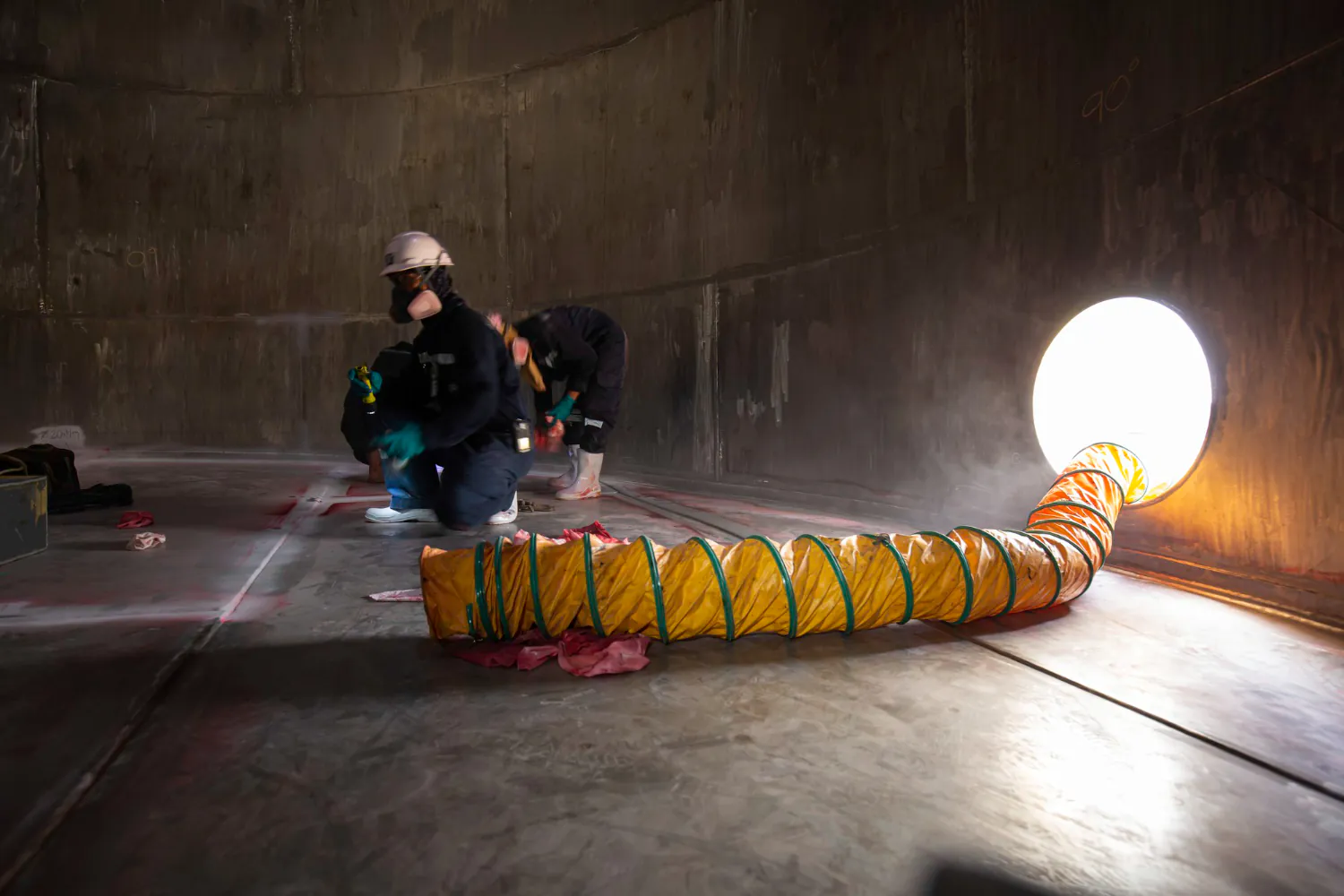
The conscious presence of the Entry Supervisor exerts a direct influence on collective behavior, team focus, and operational flow. Therefore, in confined spaces, where response time is reduced and the environment imposes complex risks, decision-making must be fast, assertive, and energetically aligned with field reality.
Supervisors who operate with full attention, observing not only compliance with regulations but also the actual state of the team, equipment, and atmosphere, are able to prevent deviations before they become operational failures. In this way, their conduct creates a “technical anchoring effect,” stabilizing the rhythm of the operation and reducing the interference of behavioral factors such as distraction, hesitation, or overconfidence.
NR33 Course Confined Space in English: Why do so many only realize the importance of technical preparation when it’s already too late?
The appreciation of technical preparation in operational safety, especially in confined spaces, usually occurs reactively, after the identification of failures that result in incidents. Therefore, this happens because risk, unlike training, is not perceptible until it manifests in a concrete way.
Companies and professionals who neglect continuous training and treat qualification as a cost—rather than a strategic investment-tend to recognize its value only after operational losses, legal penalties, or workplace accidents. Technical preparation is an essential preventive element: it operates invisibly in daily routines but becomes vital when critical variables come into play. Its absence directly compromises response effectiveness, system integrity, and, above all, the preservation of life.
Click the Link: Criteria for Certificate Issuance According to Standards
See Also:
Curso NR 33 Autorizado e Vigia em Inglês
Curso NFPA 350
Simulado de Espaços Confinados
Certificado de conclusão
NR 33 Confined Space Entry Supervisor Training
COURSE CAPACITATION NR 33 SAFETY AND HEALTH IN CONFINED SPACE WORK SUPERVISOR LEVEL TAUGHT IN ENGLISH
Total Duration: 40 Hours
Module 1 – (3 hours)
I. definitions
Module 2 – (3 hours)
II. identification of confined spaces
Module 3 – (5 hours)
III. hazard recognition, assessment and control
Module 4 – (4 hours)
IV. operation of equipment used
Module 5 – (4 hours)
V. procedures and use of the Work Permit (PET)
Module 6 – (3 hours)
VI. criteria for selection and use of risk control equipment
Module 7 – (3 hours)
VII. knowledge of safe practices in confined spaces
Module 8 – (3 hours)
VIII. occupational safety and health legislation
Module 9 – (3 hours)
IX. Respiratory Protection Program
Module 10 – (2 hours)
X. classified area
Module 11 – (4 hours)
XI. basic rescue and first aid
Module 12 – (3 hours)
XII. rescue operations
Practical Exercises:
Evidence Recording
Theoretical Evaluation
Practical Evaluation (When contracted)
Certificate of Participation
Observation:
The program content of this course complies with the guidelines established by Regulatory Standard NR 33, ensuring proper training of workers for activities in confined spaces.
Note:
We emphasize that the General Normative Training Syllabus may be modified, updated, or have items added or removed as deemed necessary by our Multidisciplinary Team.
Our Multidisciplinary Team is authorized to update, adapt, modify, and/or exclude content, including the inclusion or exclusion of Standards, Laws, Decrees, or technical parameters they deem applicable—whether directly related or not. The contracting party is responsible for ensuring compliance with applicable legislation.
NR 33 Confined Space Entry Supervisor Training