Technical Name: COURSE NR 34 – ADMISSIONAL – WORKING CONDITIONS AND ENVIRONMENT IN THE NAVAL CONSTRUCTION, REPAIR AND DISMANTLING INDUSTRY
Reference: 172681
We provide courses and training; We perform Translations and Versions in Technical Language: Portuguese, English, Spanish, French, Italian, Mandarin, German, Russian, Swedish, Dutch, Hindi, Japanese and others consult
NR34 Training in English
The course aims to prepare the participant to recognize, evaluate and control the specific risks found in the naval construction, repair and dismantling industry. By understanding how working conditions change dynamically inside shipyards, dry docks and vessel structures, the participant develops the ability to identify hazardous environments, interpret safety requirements and respond proactively. Throughout the training, the learner gains clarity on how risk perception and safe decision making directly influence operational integrity.
In addition, the course ensures full alignment with the main regulatory framework, NR 34. As a result, the participant acquires the competence to apply collective and individual protective measures, follow safety procedures with consistency and recognize the protective systems that support safe operations. Consequently, the student becomes capable of integrating best practices into daily routines, reducing exposure to incidents and strengthening compliance across all activities within the naval sector.
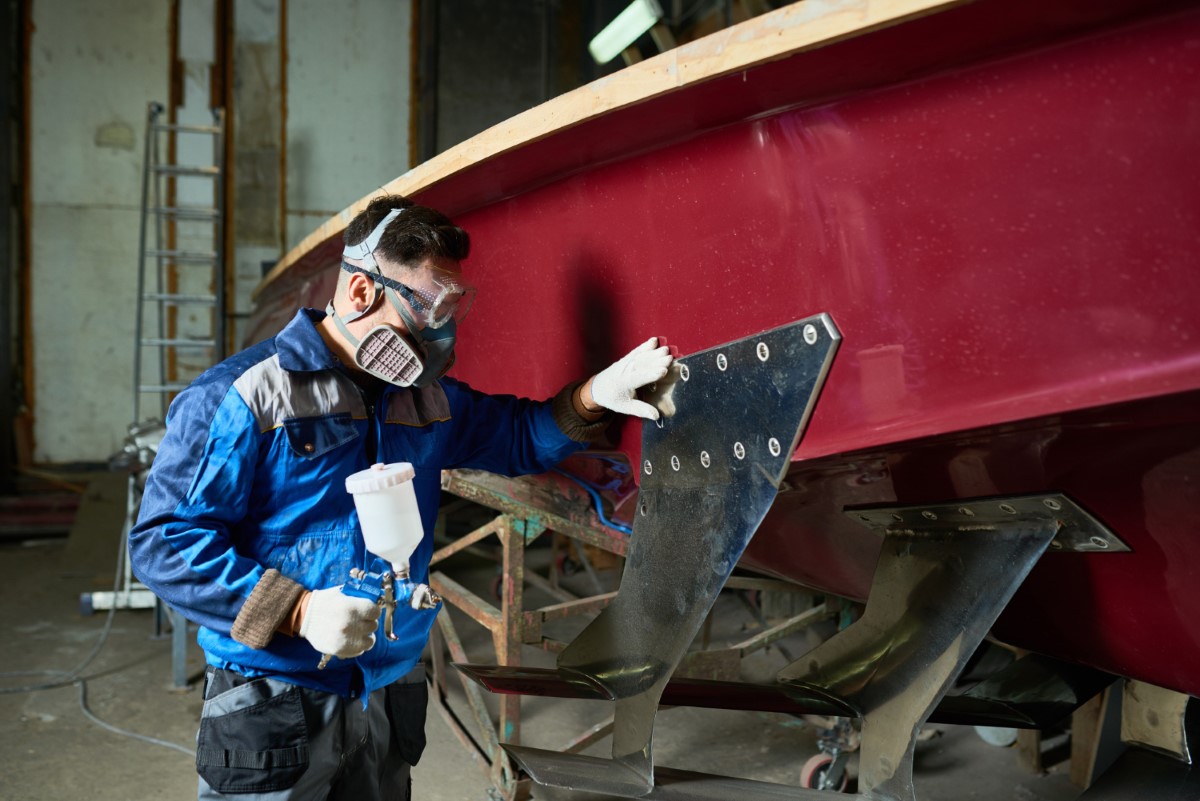
Surface preparation and spray painting on a vessel component, reinforcing the importance of respiratory protection, controlled ventilation and chemical hazard management under NR 34.
Who is responsible for identifying and controlling risks during naval construction and repair activities?
Workers are responsible for identifying and controlling risks when they understand how conditions change rapidly inside shipyards, dry docks and vessel structures. By receiving structured training aligned with NR 34, they develop the ability to detect hazards early and act before unsafe situations escalate. This proactive interpretation of the environment strengthens operational stability and reduces unexpected exposures.
Supervisors and safety teams also play an essential role by monitoring work fronts, verifying EPC conditions and ensuring proper PPE usage. Their active oversight creates a multilayered protection system that stabilizes operations and reinforces compliance across all activities. Through combined responsibility, the safety ecosystem becomes stronger and more resilient.
When should workers evaluate environmental conditions before entering a vessel or structural compartment?
Workers must evaluate environmental and atmospheric conditions before entering any confined or partially enclosed naval environment. This evaluation is necessary because ships, hulls and tanks often present sudden variations in ventilation, oxygen levels and heat accumulation.
| Required Procedure | Purpose |
|---|---|
| Ventilation check | Ensures air renewal and dispersion of contaminants |
| Oxygen measurement | Confirms the area is not in an IDLH condition |
| Temperature assessment | Avoids thermal hazards from heated plates or confined heat |
| Visual inspection | Identifies obstacles, slips, structural interference and hazards |
NR34 Training in English: Proper risk identification is essential
NR 34 establishes that continuous interpretation of the environment is mandatory before any activity. This active evaluation reduces human error, anticipates hazards and ensures safe operational decision making.
Immediate identification of danger sources
Monitoring of simultaneous operations
Recognition of atmospheric variations
Continuous verification of escape routes
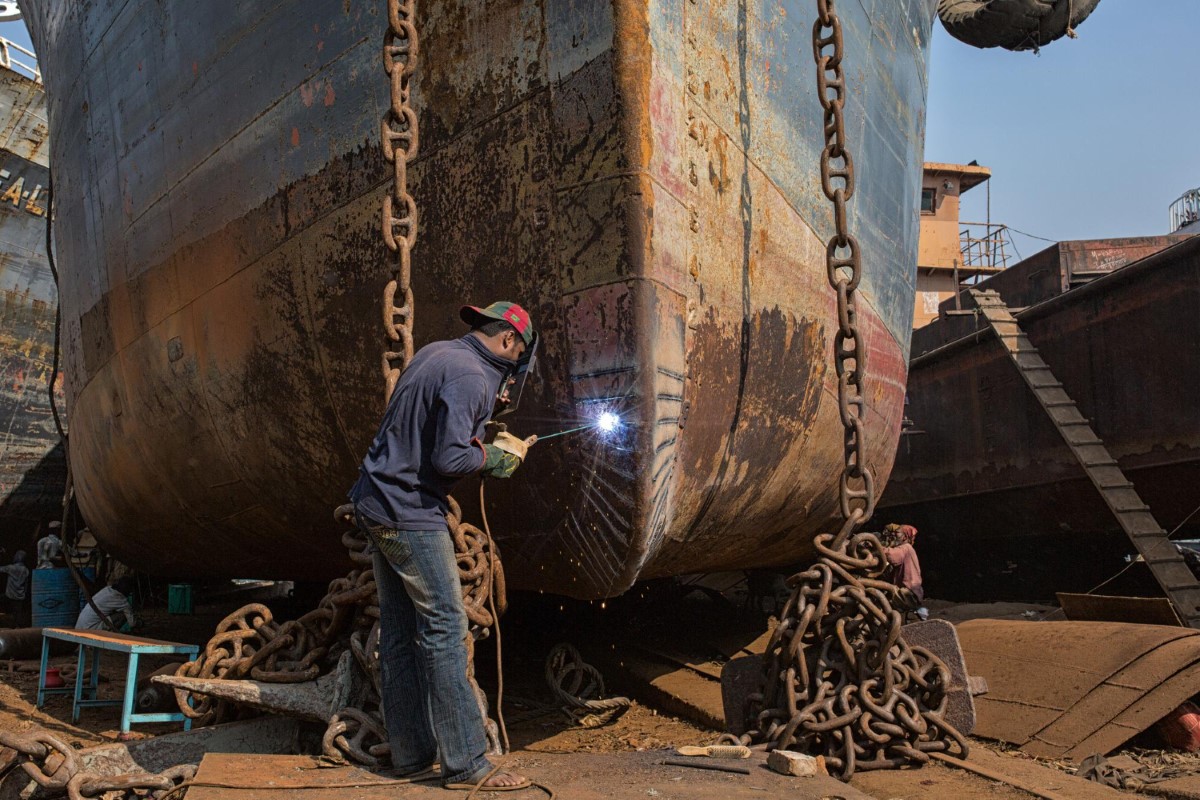
Welding work performed on the ship’s hull, highlighting the need for proper PPE, hot work controls and safe access conditions as required by NR 34.
Why do safe working conditions depend heavily on effective Collective Protection Equipment (EPC)?
Safe working conditions depend on EPC because these systems create physical barriers that significantly reduce exposure to falls, burns, atmospheric hazards and entrapment. When EPC is installed correctly and inspected regularly, risks diminish at their origin, preventing workers from relying solely on PPE to remain safe.
EPC also reflects the hierarchy of controls required by NR 34, which prioritizes engineering measures over individual actions. By integrating guardrails, ventilation systems, enclosures and isolation mechanisms, the environment becomes more predictable, stable and resistant to operational errors. As a result, workers experience safer conditions and incident rates decrease.
What types of PPE must workers use when performing high-risk naval operations?
Workers must use specific PPE according to the risks present in naval construction, repair and dismantling activities. Because each task exposes the worker to distinct dangers, proper PPE selection is essential for maintaining safety and regulatory compliance.
| Type of PPE | Practical Application |
|---|---|
| Naval safety helmet | Protection against impacts and falling objects |
| Specialized gloves | Chemical, thermal or cut protection |
| Anti-slip footwear | Reduction of slips on wet or unstable surfaces |
| Respiratory protection | Control of exposure to fumes and hazardous vapors |
| Hearing protectors | Prevention of auditory damage in high-noise areas |
NR34 Training in English: Safe access routes must remain clearly identified
NR 34 requires organized work environments with clearly marked access routes to prevent falls, collisions and entrapments. When these routes stay visible and unobstructed, movement becomes safer and operational flow becomes more predictable.
Continuous and visible signage
Clear and unobstructed walkways
Adequate lighting inside vessel structures
Identification of alternative escape paths
Where should emergency response actions begin during incidents in shipyards or vessel structures?
Emergency response actions must begin at the nearest designated safe zone identified in the emergency plan established under NR 34. These areas include assembly points, evacuation corridors, fire watch positions and zones with verified atmospheric safety. Initiating response actions from these locations reduces reaction time and improves containment effectiveness.
Starting emergency procedures at these designated points also enhances communication, deployment of EPC resources and support for workers who may already be exposed to hazardous atmospheres or thermal events. This structured approach strengthens rescue efficiency and aligns operational behavior with regulatory expectations, resulting in safer outcomes.
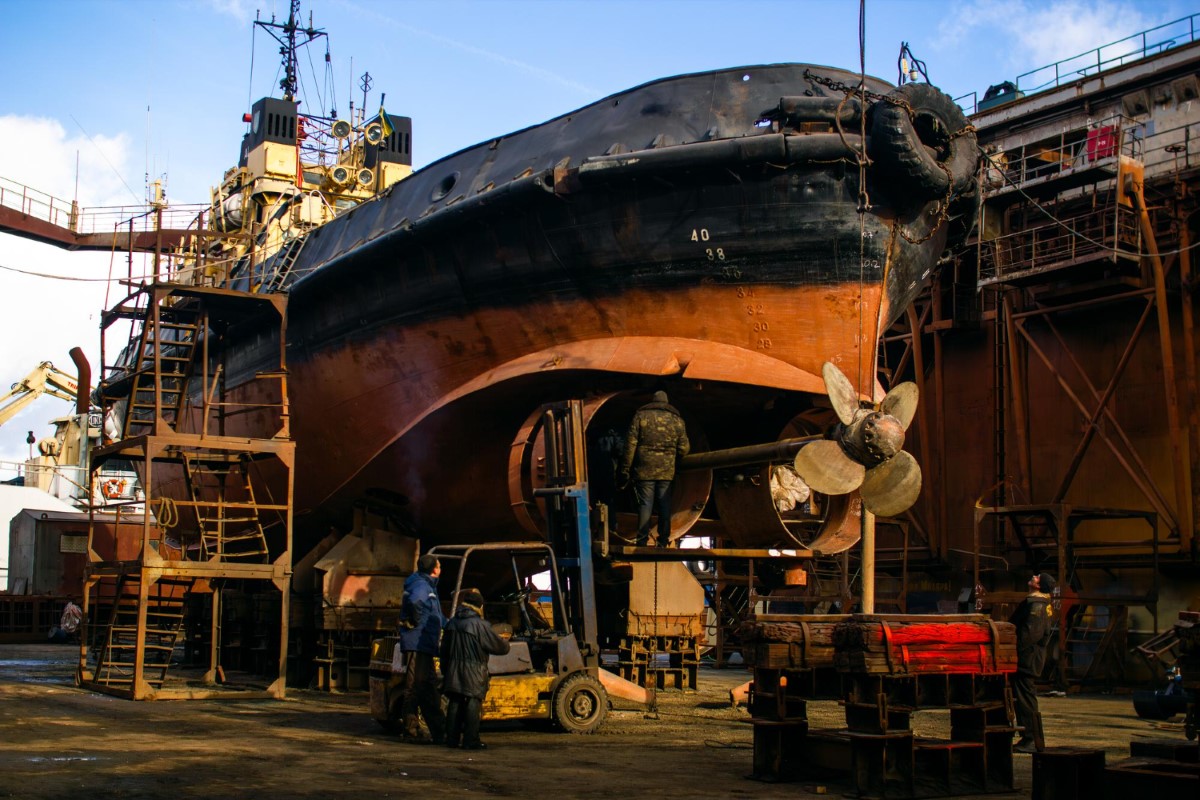
Dry dock maintenance activities showing simultaneous operations, structural access routes and EPC requirements for safe naval repair environments.
Whats is the important of the NR34 Training in English?
The course is important because it equips workers with the technical capacity to identify risks, interpret environmental conditions and apply preventive measures in shipyards, dry docks and vessel structures. By understanding how hazards evolve in real time, participants learn to make safer decisions and maintain operational stability even in complex or high-risk environments. This preparation strengthens individual awareness and ensures that everyday activities follow consistent safety practices.
Furthermore, the course ensures strict alignment with NR 34, which establishes the minimum requirements for safe operations in the naval sector. By integrating the principles of EPC, PPE and hazard control required by the regulation, the training reinforces compliance and reduces the likelihood of accidents, legal liabilities and operational delays. As a result, companies gain safer teams, more reliable processes and a significant reduction in exposure to critical incidents.
Click the Link: Criteria for Issuing Certificates in accordance with the Standards
Certificate of Completion
NR 34 Admission Training in English
COURSE NR 34 – ADMISSIONAL – WORKING CONDITIONS AND ENVIRONMENT IN THE NAVAL CONSTRUCTION, REPAIR AND DISMANTLING INDUSTRY
Hours: 06 Hours
MODULE 1 – Risks Inherent to the Activity (1.5 Hours)
Classification of risks in naval construction, repair and dismantling activities
Mechanical risks involving cutting, crushing, entanglement and lifting operations
Physical risks related to noise, vibration, heat stress and inadequate ventilation
Chemical risks generated by welding fumes, solvents, paints and hazardous vapors
Biological risks associated with humid, contaminated or poorly ventilated environments
Ergonomic risks involving repetitive motions, awkward postures and manual handling
Accident risks during access, boarding, scaffolding, ladders, vessels and dry docks
Interaction of simultaneous operations and cumulative exposure to combined hazards
Consequences of uncontrolled risks, including injuries, intoxication, fires and explosions
MODULE 2 – Working Conditions and Environment (1.5 Hours)
Characteristics of naval work environments such as shipyards, docks, hulls, tanks and scaffolds
Regulatory requirements of NR 34 for organization of work areas and access routes
Atmospheric conditions including ventilation, oxygen levels and hot work zones
Minimum safety conditions for platforms, ramps, ladders and walkways
Environmental challenges involving humidity, slippery surfaces and restricted mobility
Interference control between simultaneous operational fronts
Preventive measures for safe displacement in vessels and industrial structures
Communication systems, signage, alarms and isolation areas
Guidelines for escape routes, assembly points and emergency response actions
MODULE 3 – Collective Protection Equipment – EPC (1.5 Hours)
Concept and hierarchy of controls according to NR 34 and NR 01
Types of EPC used in naval operations such as guardrails, safety nets and impact barriers
Exhaust and ventilation systems for atmospheric control in confined or semi-confined areas
Fire prevention and firefighting EPC including fixed systems, blankets and fire watch structure
Machine guarding, enclosures and physical isolation systems
Criteria for selection, installation, inspection and maintenance of EPC
Importance of daily verification, functional condition and compliance signage
Impact of EPC on reducing falls, burns, entrapments and exposure to hazardous agents
MODULE 4 – Proper Use of Personal Protective Equipment – PPE (1.5 Hours)
Legal requirements of NR 06 and NR 34 regarding PPE supply, training and supervision
PPE commonly used in naval construction and repair such as helmets, gloves and safety footwear
Specific PPE for welding, cutting, grinding, painting and high-noise areas
Respiratory, eye, face, hearing and thermal protection applicable to hot work environments
Selection of PPE based on the Risk Management Program (NR 01 – GRO / PGR)
Procedures for correct donning, doffing, hygiene, storage and care
Limitations of PPE and the need for integration with EPC and administrative controls
Criteria for PPE replacement, conservation, traceability and user responsibility
Completion and Certification:
Practical Exercises (when contracted);
Evidence Records;
Theoretical Evaluation;
Practical Evaluation (when contracted);
Certificate of Participation.
NOTE:
We emphasize that the General Normative Program Content of the Course or Training may be modified, updated, supplemented, or have items excluded as deemed necessary by our Multidisciplinary Team. Our Multidisciplinary Team is authorized to update, adapt, modify, and/or exclude items, as well as insert or remove Standards, Laws, Decrees, or technical parameters they consider applicable, whether related or not. The Contracting Party is responsible for ensuring compliance with the relevant legislation.
NR 34 Admission Training in English