Technical Name: FIRST AID TRAINING IN ENGLISH
Reference: 55778
We provide Courses and Training in Technical Language: Portuguese, English, Spanish, German, Hindi, Mandarin, Cantonese, Japanese, among others.
First Aid Training English
The First Aid Training English aims to provide participants with solid theoretical knowledge to recognize, analyze, and respond appropriately to emergency situations within the occupational context. By addressing first aid principles, clinical assessment concepts, and risk perception, the training strengthens decision-making capacity while promoting safe behavior during emergencies. Consequently, participants become better prepared to act responsibly and support health protection in the workplace.
Furthermore, the course emphasizes prevention, human factors, and communication during emergency scenarios. By connecting first aid knowledge with occupational health management, participants understand how emergency response integrates with broader health surveillance and risk control processes. The course is primarily aligned with NR 07, which establishes the foundations for worker health protection, monitoring, and emergency preparedness within organizations.
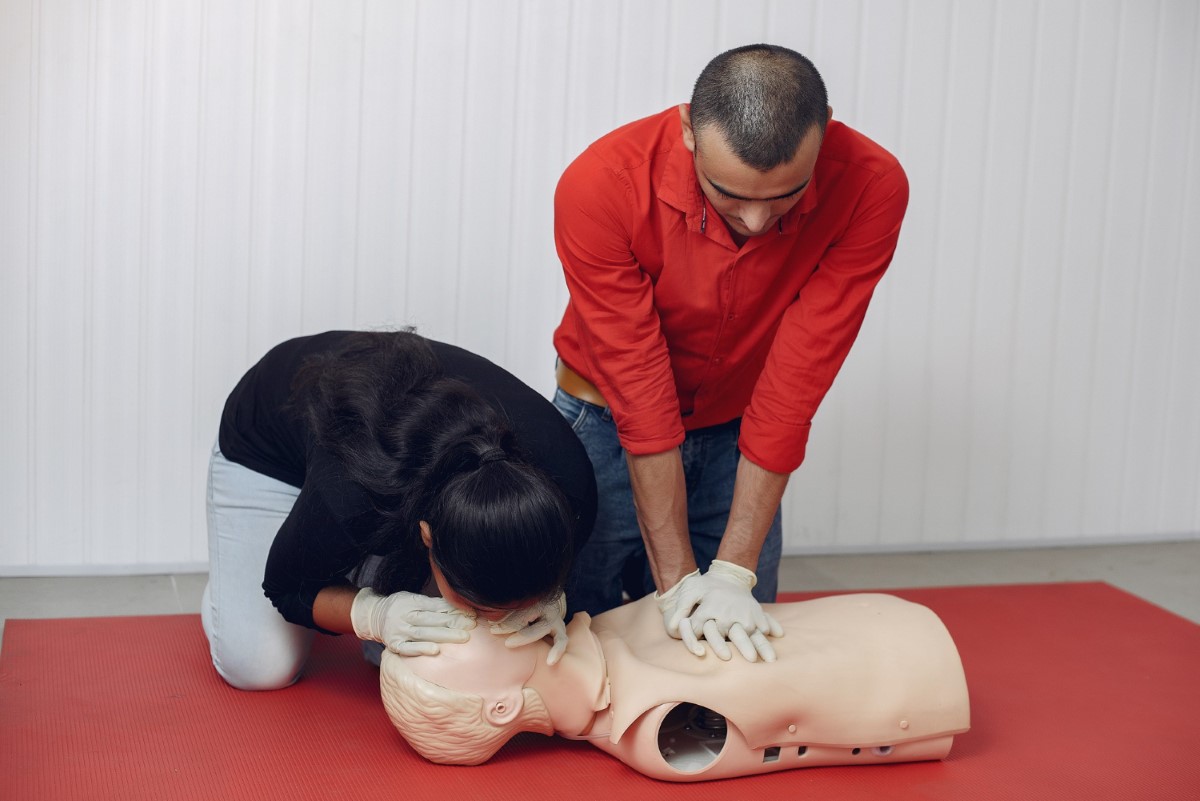
Hands-on practice of cardiopulmonary resuscitation (CPR) to enhance the ability to save lives during cardiac emergencies.
Who should attend First Aid Training in an occupational context?
This course is designed for workers, supervisors, safety professionals, and managers who are exposed to occupational risks or who hold responsibility for health and safety decision-making. It is especially relevant for those who must recognize emergencies early and activate proper response systems without performing clinical procedures.
Moreover, organizations benefit when trained personnel understand how first aid knowledge integrates with occupational health management. By aligning emergency awareness with NR 07, participants strengthen preventive actions and reduce health-related impacts in the workplace.
When is theoretical first aid knowledge essential in the workplace?
Before any emergency occurs, theoretical first aid knowledge plays a critical preventive role. It enables early recognition of abnormal conditions, supports faster decision-making, and reduces errors caused by panic or misinformation.
Below are situations where theoretical knowledge becomes essential:
| Situation | Why Theory Matters |
|---|---|
| Sudden illness at work | Early recognition of warning signs |
| Accidents without immediate medical support | Correct prioritization of actions |
| High-risk environments | Prevention of secondary incidents |
| Emergency communication | Accurate information to responders |
First Aid Training English: Theoretical first aid knowledge supports safe decision-making
Understanding first aid concepts allows individuals to act with clarity and responsibility during emergencies. Knowledge reduces hesitation and prevents unsafe improvisation.
Improves situational awareness
Reduces panic-driven errors
Supports structured emergency communication
Aligns actions with occupational health programs

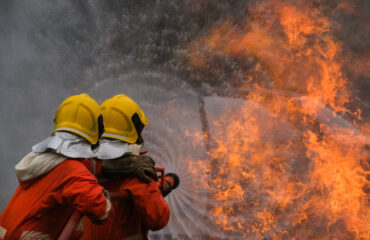
First responders administering critical care at the scene, demonstrating the importance of teamwork and timely action in medical emergencies.
Why is First Aid Training connected to NR 07?
First aid training directly supports the objectives of NR 07, which focuses on worker health protection, monitoring, and emergency preparedness. By understanding first aid principles, workers contribute to early identification of health events that may require medical follow-up under the PCMSO framework.
In addition, the integration of first aid knowledge with NR 07 strengthens preventive strategies. It promotes continuity between emergency response, occupational health surveillance, and corrective actions, thereby reducing long-term health consequences and organizational liability.
Where does theoretical first aid knowledge apply within an organization?
Theoretical first aid knowledge applies across multiple organizational levels and environments. It is not limited to emergency teams, but extends to daily operations and decision-making processes.
| Organizational Area | Application |
|---|---|
| Operational areas | Early risk recognition |
| Administrative offices | Response to sudden illness |
| Supervisory roles | Emergency coordination |
| Occupational health programs | Health monitoring integration |
First Aid Training English: First aid training strengthens prevention and health awareness
The course enhances the understanding of how emergencies relate to prevention and occupational health systems.
Reinforces preventive culture
Improves health risk perception
Supports NR 07 health monitoring actions
Encourages responsible behavior during incidents
Which risks are reduced through theoretical First Aid Training?
The course reduces risks associated with delayed response, misinterpretation of symptoms, and unsafe reactions during emergencies. By improving theoretical understanding, participants minimize the likelihood of secondary injuries, incorrect communication, and escalation of health events.
Furthermore, by aligning first aid knowledge with NR 07, organizations strengthen their occupational health management. This alignment reduces absenteeism, supports early medical intervention, and improves overall safety performance in a structured and compliant manner.

“Practicing life-saving skills on a mannequin to prepare for real-life emergency situations, ensuring quick and effective response.
What is the important of the First Aid Training English?
This course plays a critical role in strengthening occupational health awareness and emergency readiness within organizations. By providing structured theoretical knowledge in first aid, risk perception, and emergency response, participants become capable of recognizing early signs of health events and acting responsibly. As a result, decision-making becomes faster, safer, and more aligned with preventive principles, reducing the likelihood of escalation and secondary incidents.
Moreover, the course directly supports compliance with NR 07, which establishes the foundation for worker health monitoring and emergency preparedness. By integrating first aid knowledge with occupational health management, organizations reinforce prevention strategies, improve communication during emergencies, and enhance the effectiveness of health protection programs in the workplace.
Click the Link: Criteria for Issuing Certificates in accordance with the Standards
Certificate of Completion
First Aid Training English
FIRST AID TRAINING IN ENGLISH
Course Load: 16 Hours
MODULE 1 – Foundations of First Aid and Emergency Communication (4 Hours)
Principles and objectives of first aid
Scope and limitations of first aid intervention
Agile communication with specialized emergency teams
Emergency communication protocols and information flow
Scenario analysis and situational awareness
Creation of a safe environment for first aid application
Preliminary checks and scene safety assessment
Victim approach principles and ethical considerations
Legal responsibility and duty of care
Interpretation of applicable legislation and standards
MODULE 2 – Human Anatomy, Vital Signs, and Clinical Assessment (4 Hours)
Basic human anatomy applied to first aid
Identification of normal and abnormal physiological conditions
Recognition of vital signs
Pulse and respiratory activity assessment principles
Primary assessment concept and priorities
Secondary assessment concept and systematic evaluation
Identification of clinical abnormalities
Understanding clinical emergencies and warning signs
Conceptual understanding of airway management and obstruction
MODULE 3 – Emergency Conditions and Response Concepts (4 Hours)
Concepts of shock and systemic response
Recognition and understanding of convulsions
Stroke AVE awareness and early signs
Cardiac emergencies and heart attack recognition
Wounds and hemorrhage concepts
Burns classification and response principles
Fractures and immobilization concepts
Choking and airway obstruction awareness
Clinical emergencies overview
Theoretical foundations of cardiopulmonary resuscitation
Reanimation principles and physiological basis
MODULE 4 – Safety, Human Factors, and Risk Perception (4 Hours)
Principles of victim protection
Personal protective equipment selection criteria
Rescue equipment and instruments conceptual overview
Prevention of accidents and unsafe acts
Importance of operational manuals and procedural compliance
Risk perception and influencing factors
Behavioral factors impacting safety
Fear as a risk amplifier
Consequences of risk habituation
Importance of task knowledge for safe performance
Introduction to Fault Tree Analysis
Introduction to Cause Tree Analysis
Fundamentals of ergonomics
Workstation analysis concepts
Manual handling, posture, and load awareness
Identification of ergonomic risks
Completion and Certification:
Practical Exercises (when contracted);
Evidence Records;
Theoretical Evaluation;
Practical Evaluation (when contracted);
Certificate of Participation.
NOTE:
We emphasize that the General Normative Program Content of the Course or Training may be modified, updated, supplemented, or have items excluded as deemed necessary by our Multidisciplinary Team. Our Multidisciplinary Team is authorized to update, adapt, modify, and/or exclude items, as well as insert or remove Standards, Laws, Decrees, or technical parameters they consider applicable, whether related or not. The Contracting Party is responsible for ensuring compliance with the relevant legislation.
First Aid Training English