We provide courses and professional training programs. We also deliver technical translations and language versions in: Portuguese, English, Spanish, French, Italian, Mandarin, German, Russian, Swedish, Dutch, Hindi, Japanese, and others please contact us for availability.
New NR10: Obligation and Criminal Liability
The new NR-10 requires immediate attention because it consolidates stricter electrical risk management requirements, aligning the standard with the Occupational Risk Management model (GRO) established by NR-01 and raising the level of technical evidence expected in audits, inspections, and expert investigations. This is not merely a documentation update: the new NR-10 now demands clear consistency between the risks identified, the control measures implemented, the training provided, and the operational evidence that proves compliance in practice.
This understanding is not limited to NR-10, as it represents a broader regulatory direction that impacts how other Brazilian Regulatory Standards are interpreted and applied (such as NR-33, NR-35, NR-12, NR-20, and others involving critical risks), especially when they require practical training, operational procedures, rescue teams, and objective proof of competence.
From a legal standpoint, this also applies to training delivered in any language: the language of delivery does not remove the obligation to ensure real understanding of the content and practical compatibility with the specific risks involved, otherwise the training may lose its technical validity as a preventive control measure.
Regarding the effective date, the regulatory scenario indicated is that publication will occur in February and that there will be a one-year adaptation period after publication, following the transition approach typically used to allow companies to adjust their management systems, training programs, and operational controls. However, this interval should not be interpreted as “free time” for inactivity: the longer a company delays compliance, the greater the risk of documentary and technical inconsistencies, especially because audits and expert assessments tend to compare the company’s real operational practice against the best available evidence of effective risk control.
Does NR-10 retraining guarantee legal protection for the company? In what situations does this retraining cease to be defensive and begin to aggravate legal liability?
NR-10 retraining only legally protects the company when it is integrated into a real risk management system, with technical content compatible with the activities performed, supervised practice, qualified instructors, formal learning assessment, and traceable documentation. Isolated certificates do not constitute proof of effective control. In audits, inspections, and judicial expert reports, what is analyzed is whether the training was proportional to the existing electrical risk, whether it aligned with the Risk Management Plan (PGR), internal procedures, risk analysis, and operational reality. Without this integration, retraining becomes merely a bureaucratic record, incapable of eliminating administrative, civil, or criminal liability.
Retraining increases liability when it is done in a generic, superficial way, without adequate practice, without contextualization to the real environment, and without connection to the company’s prevention system. Repeating weak training demonstrates awareness of the risk without adopting effective measures, characterizing organizational negligence. In investigations, this can be interpreted as an attempt at “documentary shielding” without real control, strengthening the argument of guilt. Translated courses, platforms lacking technical infrastructure, absence of practical records, and incompetent instructors increase legal exposure. In this scenario, the certificate ceases to be a defense and becomes proof of institutional negligence.
How does NR-01, through Occupational Risk Management (GRO), integrate with the new NR-10, and how does this relationship reinforce the requirement for records, technical evidence, and effective proof of worker training?
In the new NR-10 (Brazilian Regulatory Standard 10), NR-01 (Occupational Risk Management) acts as a mandatory framework for Occupational Risk Management, requiring that all prevention actions, including training, be linked to a specific risk analysis of the electrical activity. This means that training must be designed based on identified hazards and risks, with robust documentary evidence (risk reports, training matrix, learning assessments, attendance records, lesson plans, practical evidence). Traceability is no longer optional: it must allow for a complete technical reconstruction of how, when, by whom, and with what content the training was carried out, proving its effectiveness against the mapped risks.
Since NR-01 mandates that control measures be proportional to the identified risk, NR-10 training needs to demonstrate that it was technically adequate and efficient in mitigating the specific electrical risks of the operational context. This raises the level of requirement for proof of training: a generic certificate is not enough; technical documentation is required that connects content, execution, evaluation, and results to the company’s risk scope. In auditing, inspection, or expert analysis processes, the absence of this technical correlation weakens the defense and can be interpreted as a deficiency in risk control, with a direct impact on administrative, civil, or criminal liability.
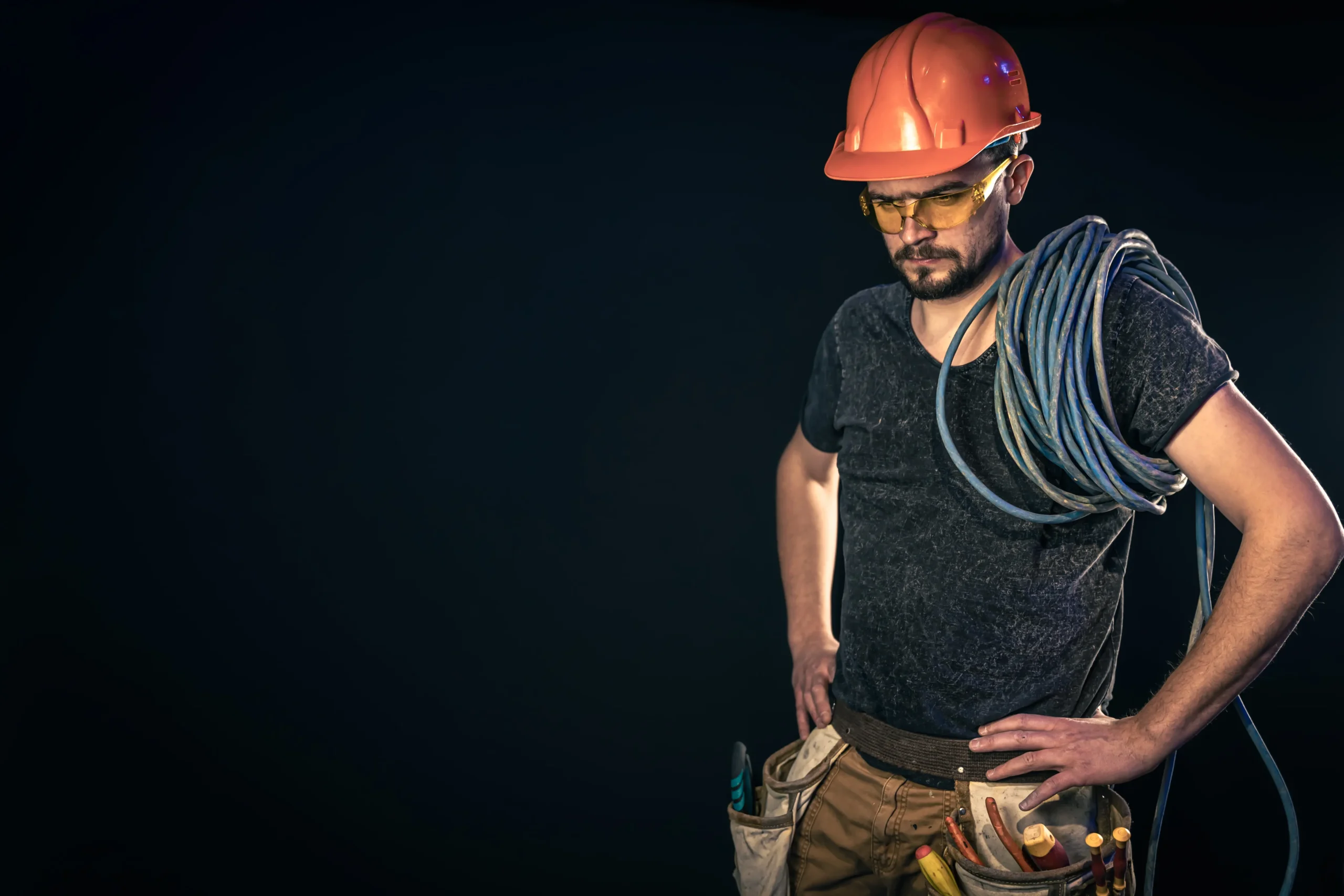
An electrical worker wearing PPE carries cables, showing readiness and risk awareness in line with NR-10 safety practices.
Why does NR-10 training need to be integrated with complementary training, especially when the company adopts Lockout/Tagout procedures to ensure effective control of electrical hazards?
The new NR-10 establishes that training for work with electricity must be integrated into the risk management system foreseen in NR-01, which renders isolated training insufficient when lockout/tagout procedures exist. LOTO involves the control of multiple hazardous energies and requires technical mastery of insulation, disconnection, physical lockout, signaling, voltage absence testing, and safe system release. Without complementary training, the worker does not develop complete operational competence to perform these steps in a standardized and traceable manner, compromising the effectiveness of risk control and regulatory compliance.
From a legal and expert perspective, integrated training allows demonstrating that the professional was trained proportionally to the real risks of the activity. The combination of NR-10, LOTO, NR-12, and NR-01 enables the production of consistent technical evidence, such as training plans, practical assessments, operational records, and procedure validation. When a company limits training to a generic course, without integration with other controls, it weakens the qualification assessment and may indicate a deficiency in risk management, increasing exposure to administrative, civil, and criminal liability.
What are the main reasons that make the new NR-10 an immediate priority for companies, what is the effective date, and what are the technical, operational, and legal impacts of the regulatory update?
The updated NR-10 represents a structural change in how companies should manage electrical risks, definitively integrating the standard into the Occupational Risk Management model foreseen in NR-01. The new NR-10 expands the technical, documentary, and operational requirements, reinforces the responsibility of employers, and increases the level of traceability required in training, procedures, and controls. Given this scenario, immediate attention is not optional, but strategic, as delayed adaptation can result in administrative, civil, and criminal liabilities, especially in cases of accidents, inspections, or expert assessments.
| Evaluated Aspect | New NR-10 | Impact on the Company | Importance of Updating |
|---|---|---|---|
| Effective Date | February 2025 | Limited timeframe to adapt documents, training, and procedures | Prevents fines, shutdowns, and legal liabilities |
| Integration with NR-01 | Direct linkage to GRO and PGR | Requires alignment between risk analysis, training, and controls | Strengthens technical and legal defense |
| Electrical Risk Management | Focus on systematic and preventive control | Increases operational management complexity | Reduces probability of serious accidents |
| Training and Qualification | Requirement for technical and practical evidence | Eliminates generic training and weak certificates | Ensures traceability and forensic validity |
| Technical Documentation | Expansion of mandatory records | Higher administrative and organizational demands | Supports compliance in audits |
| Legal Liability | Stronger link between management and incidents | Increased civil and criminal exposure | Protects managers and technical leaders |
| Operational Procedures | Standardization and formal validation | Need for internal process review | Improves operational reliability |
| Inspection and Forensic Review | More rigorous technical criteria | Higher likelihood of scrutiny | Reduces vulnerabilities in investigations |
Why is training conducted solely in simulators not considered sufficient to replace practical experience in a real operational environment where there is exposure to actual risks?
Simulator practice does not replace real-world operation because it does not fully reproduce the physical, environmental, organizational, and human variables present in the work environment. In high-risk activities, especially electrical ones, professionals need to deal with noise, temperature, interference, production pressures, energized equipment, space restrictions, unforeseen failures, and decision-making under real stress. The simulator works with controlled, predictable scenarios without material consequences, which limits the development of risk perception, operational discipline, and the ability to respond to critical situations. From a regulatory standpoint, this does not meet the proportionality criterion between risk and training required by NR-01 and NR-10.
From a technical, legal, and expert perspective, real-world practice is indispensable to demonstrate effective operational competence. In audits and investigations, what is evaluated is not only the transmitted content but also the worker’s proven ability to safely perform procedures under real conditions. Simulators do not validate skills such as physical isolation, lockout/tagout, verification of absence of voltage, correct use of collective and personal protective equipment in the field, and interaction with other professionals. When a company limits training to a virtual environment, it weakens the proof of competence and may indicate a deficiency in risk control, increasing liability in the event of an incident.
What are the technical, legal, and operational reasons that make continuous attention to updates in NR-10 and other current Regulatory Standards indispensable?
Attention to updates to NR-10 and other Regulatory Standards is essential because they define the minimum legal and technical standard for controlling occupational risks. The new NR-10 incorporates the Risk Management model of NR-01 more rigorously, requires integration with the PGR (Risk Management Program), reinforces the traceability of training, expands the responsibility of managers, and establishes more objective criteria for proving compliance. Ignoring these changes compromises the consistency of internal procedures, weakens technical documentation, and exposes the company to fines, shutdowns, contractual disputes, and expert analysis.
From a legal and strategic point of view, keeping up with updated standards is a measure of asset and institutional protection. In inspections, audits, accidents, or legal disputes, the analysis is always based on the version of the standard in force at the time of the event. Outdated companies demonstrate a failure in preventive management, which strengthens the characterization of guilt, negligence, or omission. Furthermore, qualified regulatory compliance improves governance, reduces rework costs, increases operational reliability, and strengthens the corporate image with clients, insurers, and regulatory bodies.

A worker handles electrical cables in a low-light environment, highlighting the need for strict NR-10 controls and safe work execution.
What are the main types of technical and documentary evidence that a company should keep organized to demonstrate regulatory compliance in audits, inspections, and expert assessments, and what is the purpose of each in the verification process?
Proof of regulatory compliance is not based on formal declarations or isolated certificates, but on a structured set of technical, operational, and documentary evidence that demonstrates the effective management of occupational risks. In audits, inspections, and expert assessments, the focus is on the company’s ability to prove that it identified hazards, assessed risks, implemented controls, provided appropriate training to its workers, and continuously monitored their activities. The absence, weakness, or inconsistency of these records compromises the technical and legal defense, and may characterize a systemic failure in safety management.
| Type of Evidence | Document or Record | Technical Purpose | Relevance in Audits and Forensic Reviews |
|---|---|---|---|
| Risk Management | PGR, Risk Inventory, Risk Matrix | Demonstrate hazard identification, assessment, and control | Basis for proving preventive management |
| Training and Qualification | Certificates, attendance records, assessments, lesson plans | Prove training compatible with operational risk | Validates worker authorization |
| Practical Evidence | Photos, videos, field reports | Demonstrate real execution of procedures | Supports training effectiveness |
| Operational Procedures | SOPs, work instructions, LOTO protocols | Standardize critical activities | Evidence of operational control |
| Technical Documentation | NR-10 file, diagrams, reports, technical projects | Demonstrate installation safety | Supports technical analysis |
| PPE and EPC Management | Delivery records, CA certificates, inspections, training logs | Prove use of individual and collective protection | Demonstrates risk mitigation |
| Maintenance and Inspection | Work orders, reports, schedules | Ensure system integrity | Reduces technical failure risks |
| Monitoring and Auditing | Internal audit reports, corrective action plans | Demonstrate continuous improvement | Indicates system maturity |
| Technical Responsibility | ART records, contracts, professional licenses | Identify legal technical accountability | Establishes responsibility linkage |
| Communication and Management | Safety meetings, minutes, notices, incident records | Demonstrate preventive culture | Reinforces governance in OSH |
What operational, technical, and managerial factors most frequently characterize omission, negligence, or undue exposure to electrical risk, generating criminal liability related to NR-10?
The main triggers for criminal liability related to NR-10 (Brazilian Regulatory Standard 10) stem from systematic failures in the management of electrical risks, especially when the company fails to implement measures foreseen in NR-01 (Brazilian Regulatory Standard 1) and NR-10 itself. The absence of an updated PGR (Risk Management Program), the non-existence or fragility of electrical installation records, generic training without adherence to the real risk, lack of formalized procedures, lack of risk analysis before interventions, and inadequate use of collective and personal protective equipment (PPE) characterize organizational omission. When these failures are recurrent and known to management, they constitute institutional negligence, strengthening criminal liability in case of accident, serious injury, or death.
Another critical factor is the deliberate or tolerated exposure to risk, often associated with pressure for productivity, cost reduction, or operational improvisation. Allowing energized work without technical justification, releasing unqualified professionals, outsourcing activities without competence validation, ignoring failures pointed out in internal audits, and maintaining deteriorated equipment are behaviors that aggravate the causal link. In investigations, these elements demonstrate the predictability of the damage and the absence of preventive action. Under these conditions, the company ceases to be merely jointly liable and becomes seen as an active agent in the risk situation, significantly increasing its criminal liability.
What are the technical, legal, and operational reasons that make it immediately necessary for companies to adapt to the new NR-10 standard? What is the validity period of the standard, and what are the strategic impacts of its update?
The new NR-10 (Brazilian Regulatory Standard 10) demands immediate attention from companies because it reinforces the integration between risk management, training, operational procedures, and legal accountability, aligning directly with the NR-01 model and Occupational Risk Management. The standard comes into effect in February 2025, establishing new parameters for controlling electrical risks, requiring technical evidence, strengthening document traceability, and more rigorous training qualifications. Late adaptation compromises the consistency of the Risk Management Plan (PGR), weakens electrical records, invalidates internal processes, and increases exposure to fines, shutdowns, and expert analysis.
The update is strategic because it redefines the compliance standard required in audits, inspections, and accident investigations. The company will be evaluated not only by the existence of documents but also by the technical coherence between identified risks, adopted measures, applied training, and continuous monitoring. Organizations that do not update their systems demonstrate a failure in preventive governance, strengthening the characterization of negligence. Conversely, timely compliance strengthens legal defense, reduces administrative, civil, and criminal liabilities, improves operational reliability, and positions the company at a higher level of maturity in electrical safety management.
What are the technical, legal, and expert impacts of using NR-10 courses translated by artificial intelligence or taught by translators and interpreters without technical training and qualified professional responsibility?
The use of NR-10 (Brazilian Regulatory Standard 10) courses translated by artificial intelligence or taught by translators without technical training directly compromises the integrity of the normative and operational content. NR-10 requires contextualized interpretation, mastery of electrical engineering, understanding of real risks, and practical application of procedures. Automatic translations or those mediated by professionals without technical competence tend to generate conceptual distortions, terminological errors, critical omissions, and misinterpretations of legal requirements. This affects procedures such as risk analysis, energized work, LOTO (Lockout/Tagout), selection of collective and personal protective equipment (PPE), and control measures, creating gaps that significantly increase the probability of operational failures and accidents.
From a legal and expert perspective, this model completely weakens the proof of competence. In audits, inspections, and investigations, the absence of a qualified instructor, a technical manager, and a validated methodology constitutes a serious deficiency in training. The certificate loses probative value and can be interpreted as an attempt to simulate compliance. Furthermore, the company assumes the risk of joint liability for negligence by adopting a demonstrably inadequate training model. In the event of an incident, the use of translations without technical validation reinforces the organizational culpability, increasing the risk of administrative sanctions, civil damages, and criminal liability.
Can GWO legally replace NR-10 in the Brazilian context? What are the technical and legal risks of adopting this equivalence without regulatory backing?
GWO does not replace NR-10 in Brazil, as it is an international standard primarily focused on the wind energy sector, without normative force under Brazilian labor law. NR-10 is a mandatory regulatory standard, established by Ordinance 3.214/78, with direct legal backing in the CLT (Consolidation of Labor Laws) and oversight by the Ministry of Labor. No private, international, or sectoral certification has the authority to revoke, replace, or automatically equate to an NR. Using only GWO as a basis for electrical training in the national territory constitutes regulatory non-compliance, regardless of the program’s technical quality.
From a legal and expert standpoint, assuming equivalence without a legal basis completely weakens the company’s defense. In audits, inspections, and accident investigations, the valid reference is the current NR-10, not voluntary standards. The absence of formal training according to the Brazilian standard can be classified as omission, negligence, and failure in risk management. Furthermore, GWO certificates do not fulfill requirements such as electrical documentation, integration with the PGR (Risk Management Program), traceability, and technical responsibility. In the event of an incident, this choice may aggravate the causal link, increasing administrative, civil, and criminal liabilities.

A multicultural team in an industrial setting reviews procedures and technical documentation on site. The interaction emphasizes the need for accessible language and real comprehension of instructions to ensure compliance with NR requirements.
What are the legal responsibilities of ABED, ABENDI, MEC, distance education decrees, and CREA regarding the validation of Regulatory Standards courses, especially in the 100% online modality, and to what extent do these entities provide legal support to this training format?
The validity of Regulatory Standards courses does not depend on institutional seals, educational accreditations, or generic authorizations for distance learning, but on full compliance with the technical requirements stipulated in the Regulatory Standards themselves. In the case of NR-10 and other standards involving critical risks, the legislation requires theoretical and practical training compatible with the activity, technical supervision, competency assessment, and documentary evidence. No educational or professional entity can waive these legal requirements on its own. In audits, inspections, and expert assessments, the central criterion is adherence to labor standards, not the existence of parallel certifications.
| Entity / Instrument | Legal Authority | Validates 100% Online NR Courses? | Legal Limitation | Impact in Audits and Forensic Reviews |
|---|---|---|---|---|
| ABED (Brazilian Distance Education Association) | Promotion and representation of distance learning | No | Has no labor regulatory authority | Does not provide legal validity |
| ABENDI (Brazilian Association for Non-Destructive Testing) | Industrial technical certification | No | Operates outside the scope of NRs | Irrelevant for legal training validation |
| MEC (Ministry of Education) | Regulation of formal education | No | Does not regulate occupational safety training | Does not replace NR requirements |
| EAD Decrees | Regulation of distance education | No | Applicable only to the educational system | Do not authorize waiver of practical training |
| CREA / CONFEA | Professional council oversight | No | Does not approve NR courses | May question irregular training |
| Regulatory Norms (NRs) | Labor regulation | Yes, when requirements are met | Require practical training and technical evidence | Primary basis for legal validation |
The requirement for a Rescue Team and Emergency Plan applies to practical training activities in Regulatory Standards, and what are the legal consequences when these practices are carried out without this safety structure?
The requirement for a Rescue Team and Emergency Plan applies directly to practical NR (Brazilian Regulatory Standards) training whenever there is exposure to real risks, such as in activities foreseen in NR-10, NR-33, NR-35, NR-20 and related standards. During practice, the worker is subject to the same dangers present in daily operations, including electric shock, falls, hazardous atmospheres, fire, and burial. Legislation requires that these activities be planned, supervised, and supported by emergency response procedures, with trained personnel, adequate equipment, and effective communication. The absence of this structure constitutes a serious failure in risk management and a direct breach of safety standards.
From a legal standpoint, conducting practical training without a rescue team and a formal emergency plan completely weakens the company’s position in the event of an incident. In inspections, audits, and expert assessments, this omission can be classified as negligence, recklessness, or organizational incompetence. Furthermore, it reinforces the causal link between the company’s conduct and the damage that occurred, expanding administrative, civil, and criminal liability. The company becomes responsible not only for the accident but also for the absence of mandatory preventive measures, which can result in increased fines, shutdowns, high compensation payments, and personal liability for managers and technical supervisors.
Is it legally and technically acceptable to teach Regulatory Standards courses in English in Brazil to workers who do not master the technical language, and does this practice constitute a breach of NR-01?
It is neither technically nor legally acceptable to provide Regulatory Standards training in a foreign language to workers who do not master the technical language necessary to understand the risks, procedures, and responsibilities. NR-01 (Brazilian Regulatory Standard 01) requires that training be effective, understandable, and appropriate to the workers’ profile, ensuring genuine assimilation of the content. When training is conducted in English without participants having technical proficiency in the language, it directly compromises learning, risk perception, and the correct application of operational procedures, undermining the preventive purpose of the standard.
From a legal and expert perspective, this practice can be classified as a failure in risk management and a deficiency in training. In audits and investigations, the company must demonstrate that the worker fully understood the instructions received, which includes proficiency in the language used. The absence of this proof weakens the validity of the training and may constitute non-compliance with NR-01, in addition to reinforcing the characterization of organizational negligence. In the event of an accident, the use of an inappropriate language tends to aggravate the causal link, increasing administrative, civil, and criminal liability.
Need valid NR training with practical instruction and technical compliance? CLICK HERE.
Want the full NR-10 training, updated and delivered with real regulatory conformity? CLICK HERE.