Technical Name: TRAINING COURSE – BASIC LEVEL FIRE BRIGADE – NBR 14276 TAUGHT IN ENGLISH
Referência: 230330
Ministramos Cursos e Treinamentos; Realizamos Traduções e Versões em Idioma Técnico: Português, Inglês, Espanhol, Francês, Italiano, Mandarim, Alemão, Russo, Sueco, Holandês, Hindi, Japonês e outros consultar
What is the objective of the Fire Brigade Course NBR 14276 in English?
The central objective is to train multilingual professionals to prevent, act, and lead immediate responses to fires, in accordance with ABNT NBR 14276, within organizational environments composed of diverse teams. The course prepares participants to master technical terminology, operational commands, and emergency protocols in English, overcoming the language barriers that often compromise safety in international contexts.
However, the true differentiator lies in forming brigade members capable of listening to the environment before the alarm sounds. Instead of merely translating words, the course shifts perception: it teaches how to interpret signals, understand risk behaviors, and act with clarity, even under pressure. After all, in critical operations, those who don’t understand freeze, those who do, lead.
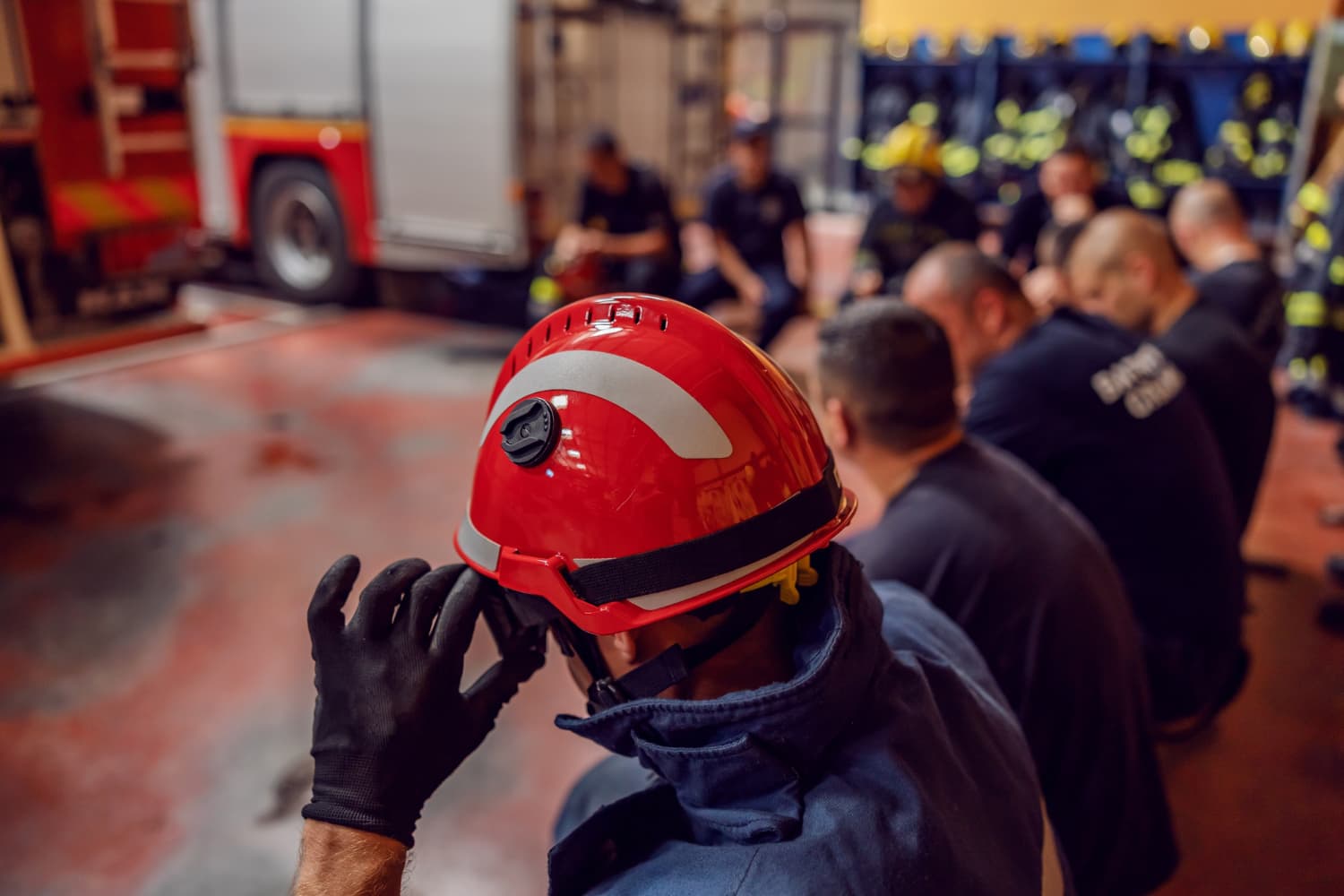
Before any firefight, there is listening. A strategic briefing among brigade members takes place before operational activities begin. It is in this moment that mental alignment precedes physical action, ensuring that every response reflects a clear, technical, and conscious internal plan.
What are the most common mistakes in the use of portable fire extinguishers during real fire situations?
In emergency scenarios, the incorrect use of a fire extinguisher compromises the effectiveness of the response and increases risks. The most recurring mistakes involve basic, yet critical, operational failures:
Inadequate extinguishing agent: Choosing the wrong type (e.g., water on an electrical fire) can worsen the situation and endanger the operator.
Incorrect aim: Directing the jet at the flames instead of the base reduces extinguishing efficiency.
Safety pin not removed: Prevents activation and nullifies the initial response.
Inaccurate handling: Lack of firmness or improper positioning compromises jet control.
Ignoring the discharge time: Discharge is short; hesitating or wasting time drastically reduces the response capacity.
These failures, although simple, become decisive when every second defines the outcome of the incident.
In which situations must the fire brigade’s actions be immediately replaced by intervention from the Fire Department?
Replacement is mandatory whenever the incident exceeds the brigade’s technical limits, as defined by NBR 14276 and IT 17. This includes scenarios involving:
Structural threat to the building
Presence of unstable chemical products
Rapid and uncontrolled fire spread
Imminent risk of explosion or collapse
Depletion of the brigade’s operational resources
Well-trained professionals understand: knowing when to stop is more strategic than insisting on lost control. The course teaches how to precisely identify this transition point, ensuring that protocol never turns into stubbornness. After all, leading also means stepping back intelligently and handing over to those with the right means to resolve.
How does the lack of regular inspection and recharge of extinguishers compromise the brigade’s effectiveness and expose the company to penalties?
Neglecting extinguishers turns a safety asset into a mere visual prop. When fire strikes, there are no second chances. The technical ineffectiveness of an expired or discharged extinguisher undermines the entire response effort of the brigade.
| Failure Committed | Technical Implication | Legal Risk |
|---|---|---|
| Expired fire extinguisher | Ineffective extinguishing agent | Fine and site interdiction (per NR 23) |
| Depressurized pressure gauge | Inoperable extinguisher | Civil liability for operational negligence |
| Expired inspection seal | Lack of legal traceability | Immediate compliance order or regulatory action |
The course makes it clear: a brigadista does not operate in a vacuum, they depend on a validated system. Therefore, when the structure fails, blaming the operator is useless. Ultimately, the failure begins with the lack of routine care. And, as in every organization, what is not inspected is not truly taken seriously.
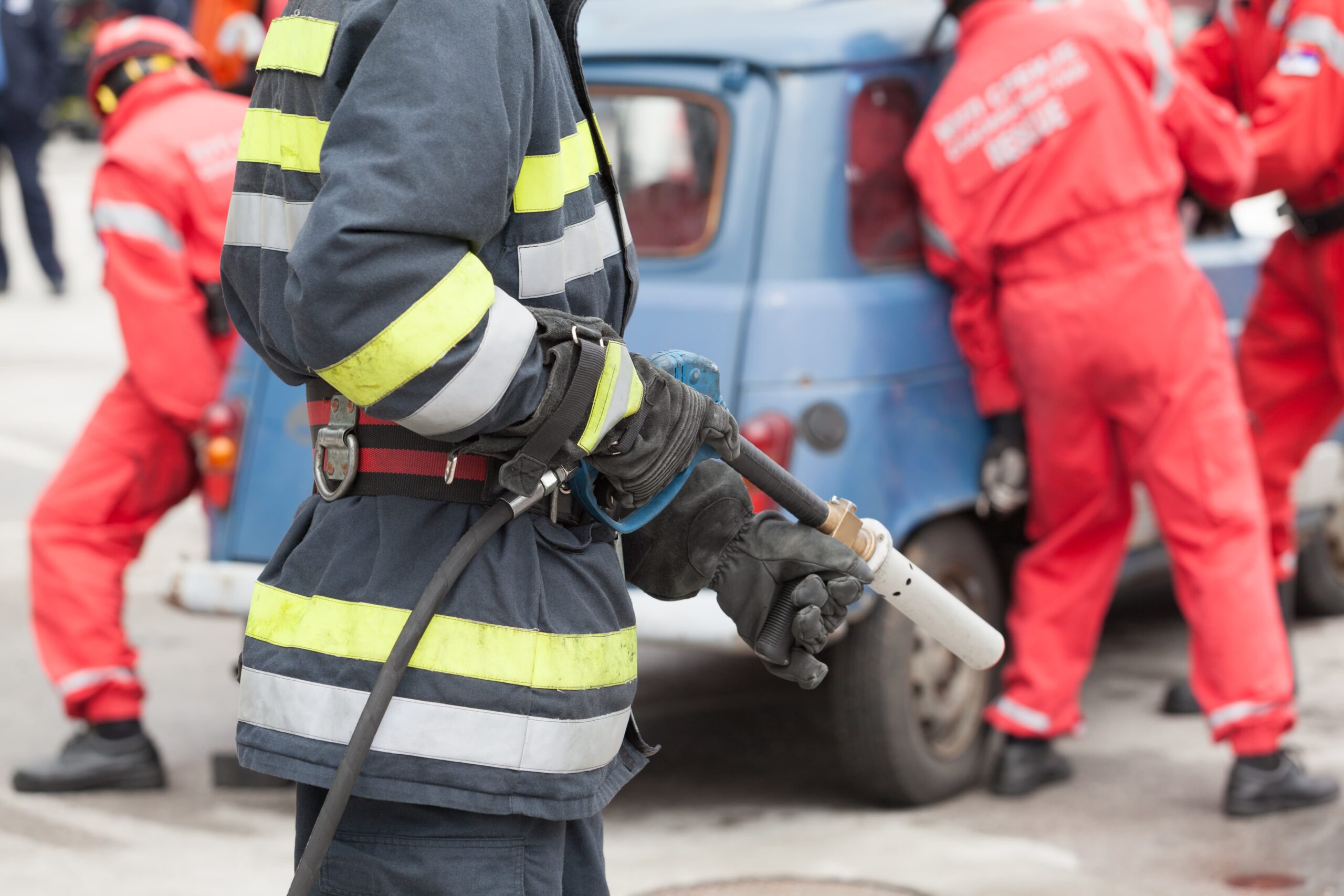
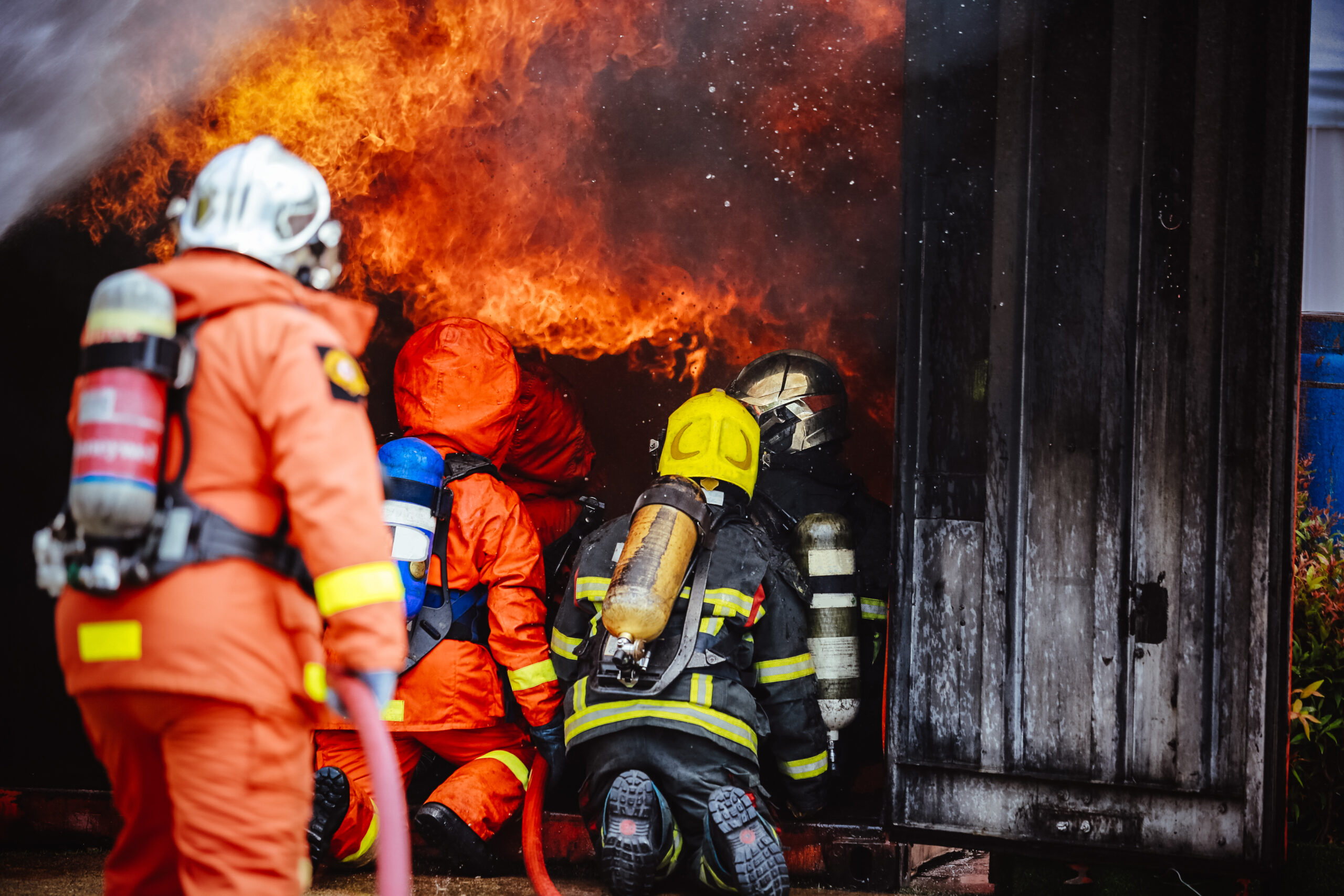
Joint action between fire brigade members and the technical rescue team. Readiness in handling hydraulic tools requires more than skill, it demands full presence in every detail.
Why is this Fire Brigade Course more than just a legal requirement and actually a tool for organizational transformation?
The formation of fire brigades is a clear requirement under NR 23, ABNT NBR 14276, and state-level Technical Instructions. However, complying with the standard is merely the starting point. When delivered with method and depth, the course ceases to be just an obligation and becomes a strategic mechanism that expands professionals’ perception of time, space, and collective responsibility.
Furthermore, it goes beyond emergency preparedness — the course transforms organizational behavior. It develops brigade members who become internal references of readiness and self-control, silently influencing the company’s culture. In this way, even without alarms sounding, their presence reduces improvisation, reinforces vigilance, and sets a new operational standard — one in which safety begins before the emergency.
What is the true role of the fire brigade beyond immediate emergency response?
According to ABNT NBR 14276 and IT 17, the fire brigade is structured to act in fire prevention, evacuation, and initial firefighting. However, its role extends beyond immediate intervention. When well-trained, the brigade becomes a central influence on collective behavior, reshaping risk perception and promoting a culture of continuous safety awareness.
Additionally, the conscious brigade member is able to recognize early patterns before emergencies unfold, detect subtle deviations in routine, and act preventively, even when not officially mobilized. Thus, this posture transforms the brigade from a reactive unit into an active, present, and technically attuned force, capable of sustaining safety through effectiveness and full awareness.
Click the Link: Criteria for Certificate Issuance According to Standards
See Also:
Curso Brigada Agrícola
Laudo Porta Corta-Fogo
Curso IT-19 Sistema de Incêndio
Certificado de conclusão
Fire Brigade Course
TRAINING COURSE – BASIC LEVEL FIRE BRIGADE – NBR 14276 TAUGHT IN ENGLISH
Total Duration: 16 Hours
MODULE 1 – INTRODUCTION TO THE FIRE BRIGADE (2 hours)
Concept and importance of the fire brigade
Applicable legislation (NBR 14276, Fire Department Technical Instructions, NR 23)
Composition, duties, and structure of the brigade
Responsibilities of the brigade member
MODULE 2 – FIRE THEORY AND SPREAD (2 hours)
Phenomenon of combustion
Fire triangle and tetrahedron
Types of fire (Classes A, B, C, D, and K)
Specific risks by environment
MODULE 3 – FIRE PREVENTION AND CONTROL (2 hours)
Principles of fire prevention
Active and passive fire protection measures
Detection and alarm equipment
Escape routes, signage, and protection systems
MODULE 4 – USE OF FIREFIGHTING EQUIPMENT (4 hours)
Portable fire extinguishers: types, identification, and correct use
Fire hydrants and hose reels
Personal protective equipment (PPE) for brigade members
Basic firefighting techniques
Standard operating procedures (SOP) in emergencies
MODULE 5 – BASIC FIRST AID (2 hours)
Basics of initial victim care
Primary assessment
Control of bleeding, fractures, and burns
Basic cardiopulmonary resuscitation (CPR)
MODULE 6 – EVACUATION AND EMERGENCY PLAN (2 hours)
Area evacuation organization
Brigade member conduct during evacuations
Evacuation drills and panic control
Interaction with the Fire Department
MODULE 7 – EMERGENCY DRILL (2 hours)
Application of knowledge in a simulated emergency
Evaluation of team performance
Post-drill analysis and technical corrections
Course Completion and Certification:
Practical Exercises
Evidence Records
Theoretical Assessment
Practical Assessment (When contracted)
Certificate of Participation
Note:
We emphasize that the General Normative Training Syllabus may be modified, updated, or have items added or removed as deemed necessary by our Multidisciplinary Team.
Our Multidisciplinary Team is authorized to update, adapt, modify, and/or exclude content, including the inclusion or exclusion of Standards, Laws, Decrees, or technical parameters they deem applicable—whether directly related or not. The contracting party is responsible for ensuring compliance with applicable legislation.
Fire Brigade Course
Fire Brigade Course
Basic Level Credit Hours (according to NBR 14276):
Fire Fighting Theoretical Part: 4 Hours;
First Aid Theoretical Part: 4 hours;
Fire Fighting Practice Part: 4 Hours;
First Aid Practical Part: 4 hours;
Total course load = 16 hours.
Update (Recycling):
Minimum credit hours = 8 hours/class
Updating (Recycling): The employer must conduct periodic training Annually and whenever any of the following situations occur:
a) change in work procedures, conditions or operations;
b) event that indicates the need for new training;
c) return from work leave for a period exceeding ninety days;
d) change of company;
e) Exchange of machine or equipment.
Fire Brigade Course
Fire Brigade Course
Referências Normativas quando for o caso aos dispositivos aplicáveis e suas atualizações:
NR 01 – Disposições Gerais e Gerenciamento de Riscos Ocupacionais – (General Provisions and Occupational Risk Management);
NR 09 – Programa de Prevenção de Riscos Ambientais – (Environmental Risk Prevention Program);
NR 16 – Atividades e Operações Perigosas – (Dangerous Activity and Operations);
NR 23 – Proteção Contra Incêndios (Fire Protection);
IT 17 – Brigada de Incêndio (Fire Brigade);
ABNT NBR 12962 – Extintores de incêndio — Inspeção e manutenção – (Fire Extinguishers — Inspection and Maintenance);
ABNT NBR 14276 – Brigada de incêndio – Requisitos – (Fire Brigade – Requirements);
ABNT NBR 14277 – Instalações e equipamentos para treinamento de combate a incêndios e resgate técnico – Requisitos e procedimentos – (Installations and equipment for firefighting and technical rescue training – Requirements and procedures);
Protocol – Guidelines American Heart Association;
ISO 10015 – Gestão da qualidade – Diretrizes para treinamento – (Quality management – Guidelines for training);
ISO 45001 – Sistemas de gestão de saúde e segurança ocupacional – Requisitos com orientação para uso – (Occupational health and safety management systems – Requirements with guidance for use).
Note: This Service exclusively meets the requirements of the Special Social Security and Labor Secretariat (SEPRT); when dealing with assistance to other bodies, inform when requesting.
Fire Brigade Course
Fire Brigade Course
Our pedagogical project follows the guidelines imposed by Regulatory Standard nº1.
After payment is made, Purchase Order, Contract signed between the parties, or other form of closing confirmation, the teaching material will be released within 72 working hours (up to 9 days), due to the adaptation of the syllabus and compliance with the Standards Techniques applicable to the scenario expressed by the Contracting Party; as well as other adaptations to the didactic material, carried out by our Multidisciplinary Team for technical language according to the student’s nationality and Technical Operational and Maintenance Instruction Manuals specific to the activities that will be carried out.
Attention: The Course teaches how to Apply the normative concepts of the standard, which enables you to sign Projects, Reports, Expertise etc. these are the attributions that the (a) Legally Qualified Professional has with their Class Council, such as CREA.
This course aims to study situations where it will be necessary to apply: Concepts and Calculations according to relevant Standards and does not replace the analysis and responsibility on the part of each professional accredited by CREA or other Class Councils in the most varied situations, where makes it imperative to respect the conservation conditions of the equipment, periodic checking of the instruments, such as respect for the primary capacity predetermined by the PPE manufacturers, among others based on the corresponding Standards.
OTHER ELEMENTS WHEN APPLICABLE AND CONTRACTED:
Fire Fighting Part
Module 01 – Introduction
Objectives: Know and describe the general objectives of training and the brigade’s behavior.
Module 02 – Legal Aspects
Objectives: Know and describe the legal aspects related to the responsibility of the brigade; know and describe the procedures for the activation and operation of local public services for emergency assistance (fire brigade, Mobile Emergency Assistance Service (SAMU), Civil Police, Military Police).
Module 03 – Theory of Fire
Objectives: Know and describe combustion, its elements, and the chain reaction, fire temperatures (flash point, combustion and ignition).
Module 04 – Propagation and Fire Dynamics
Objectives: To know and describe the forms of fire propagation by conduction, convection, irradiation, as well as the physical-chemical phenomena of flashover and backdraft.
Module 05 – Fire Classes
Objectives: Identify and describe Fire classes.
Module 06 – Fire Prevention
Objectives: Know and describe prevention techniques for fire risk assessment.
Module 07 – Extinction Methods
Objectives: Know and describe the extinguishing methods of isolation, smothering, cooling and chemical extinction and their applications;
Practical Objectives: Demonstrate how to apply the methods.
Module 08 – Extinguishing Agents
Objectives: Know and describe the extinguishing agents of water and dry chemical powder (PQS), at least types AB, ABC and K; CO2, foams and others available at the plant, as well as their characteristics and applications; know and know how to describe the meaning of the extinguishing capacity declared in fire extinguishers.
Practical Objectives: Demonstrate how to apply extinguishing agents according to fire classes.
Module 09 – Personal Protective Equipment (PPE)
Objectives: Know and describe Personal Protective Equipment to protect the head, eyes and face, hearing protection, respiratory protection, trunk, upper limbs, lower limbs and whole body.
Practical Objectives: Demonstrate how to use personal protective equipment (PPE).
Module 10 – Fire Fighting Equipment 1
Objectives: Know and describe the types and operation of portable fire extinguishers and fire extinguishers on wheels, with water charge, dry chemical powder (PQS) BC and ABC, CO2, halotrom etc.; know and describe the criteria for defining the extinguishing agent; know and know how to perform visual inspection on fire extinguishers, including CO2.
Practical Objectives: Demonstrate how to operate portable fire extinguishers and fire extinguishers on wheels, with water charge, dry chemical powder (PQS) BC and ABC, CO2.
Module 13 – Area Abandonment
Objectives: Know and describe emergency exits, safety stairs, corridors and escape routes. emergency lighting systems, safety elevator and warning means: know and describe the techniques for leaving the area, organized exit. meeting and call points and panic control.
Module 14 – People with reduced mobility
Objectives: Know and describe the approach, care and management techniques in accordance with the plant’s emergency plan.
Module 26 – Plant Specific Risks
Objectives: Know and describe the specific risks and emergency plan of the plant.
Practical Objectives: Visit and learn about the plant’s specific risk areas.
First Aid Part
Module 15 – Initial Assessment
Objectives: To know and describe the procedures for evaluating the scenario, the mechanisms of injury, the number of victims and their physical examination.
Practical Objectives: Demonstrate how to recognize and assess imminent risks, carry out protection and safety measures, recognize the mechanisms of injury, the number of victims and their physical examination: carry out the screening, prioritization of care for victims and their physical examination .
Module 16 – Airways
Objectives: Know and describe the signs and symptoms of obstructions in adults, children and conscious and unconscious babies and pre-hospital treatment.
Practical Objectives: Demonstrate how to recognize the signs and symptoms of obstructions in conscious and unconscious adults, children and infants and pre-hospital treatment.
Module 17 – Cardiopulmonary Resuscitation (CPR)
Objectives: To know and describe the techniques of artificial ventilation and external cardiac compression (CPR) for adults, children and babies.
Practical Objectives: Demonstrate how to apply CPR techniques.
Module 20 – Bleeding
Objectives: Know and describe the techniques of hemostasis and pre-hospital treatment.
Practical Objectives: Demonstrate how to recognize and assess imminent risks, carry out protection and safety measures, recognize the mechanisms of injury, the number of victims and their physical examination: carry out the screening, prioritization of care for victims and their physical examination .
Module 25 – Movement, removal and transport of victims
Objectives: To know and describe the techniques for transporting victims, with and with suspicion of spinal cord injury, on a board and stretcher.
Practical Objectives: Demonstrate how to apply the techniques of moving, removing and transporting the victim on a board and stretcher.
Module 26 – Plant Specific Risks
Objectives: Know and describe the specific risks and emergency plan of the plant.
Practical Objectives: Visit and learn about the plant’s specific risk areas.
Activity Complements:
Awareness of Importance:
APR (Preliminary Risk Analysis);
PAE (Emergency Action Plan;
PGR (Risk Management Plan);
Understanding the need for the Rescue Team;
The importance of knowledge of the task;
Accident prevention and first aid notions;
Fire protection;
Perception of risks and factors that affect people’s perceptions;
Impact and behavioral factors on safety;
Fear factor;
How to find the fastest and easiest way to develop Skills;
How to control the mind while working;
How to administer and manage working time;
Why balance energy during activity in order to obtain productivity;
Consequences of Habituation of Risk;
Work accident causes;
Notions about the Tree of Causes;
Notions about Fault Tree;
Understanding Ergonomics;
Job Analysis;
Ergonomic Hazards;
Hazard Communication Standard (HCS) – OSHA;
Practical exercises:
Registration of Evidence;
Theoretical and Practical Assessment;
Certificate of participation.
Fire Brigade Course
Learn More: Fire Brigade Course
Norma Regulamentadora 23 – Proteção Contra Incêndios (Regulatory Standard 23 – Fire Protection)
23.1 All employers must adopt fire prevention measures accordingly. with state legislation and applicable technical standards.
23.1.1 The employer must provide all workers with information on:
a) use of fire-fighting equipment;
b) procedures for safely evacuating workplaces;
c) existing alarm devices.
23.2 Workplaces must have exits, in sufficient number and arranged in a manner that those who find themselves in these places can leave them quickly and safely, in case of emergency.
23.3 The openings, exits and passageways must be clearly marked with signs or light signals indicating the exit direction.
23.4 No emergency exits shall be locked or secured during the journey of Work.
23.5 Emergency exits may be equipped with locking devices that allow easy opening from inside the establishment.
F: NR 23.
01 – URL FOTO: Licensor’s author: EyeEm – Freepik.com
02 – URL FOTO: Licensor’s author: dusanpetkovic – Freepik.com
03 – URL FOTO: Licensor’s author: EyeEm – Freepik.com
Fire Brigade Course: Consult us.