Technical Name: NR 10 TRAINING COURSE – SAFETY IN ELECTRICAL INSTALLATIONS AND SERVICES – TAUGHT IN ENGLISH
Reference: 214007
We provide Courses and Training; We perform Technical Language Translations and Versions: Portuguese, English, Spanish, French, Italian, Mandarin, German, Russian, Swedish, Dutch, Hindi, Japanese, and others upon request
What Is the Purpose of the NR-10 English Course?
The NR-10 English Course, or Regulatory Standard No. 10, is a Brazilian standard that establishes safety guidelines for work in electrical installations and services. It was created by the Ministry of Labor and Employment (MTE) and aims to ensure the protection and health of workers who perform activities involving electricity, preventing accident risks such as electric shocks, fires, and explosions.
NR-10 is essential for ensuring safety in activities involving electricity, preventing accidents and maintaining operational continuity. The NR-10 course in English focuses on training professionals to work safely in compliance with legislation, through the identification and control of electrical risks.
The standard seeks to ensure that workers have practical and technical knowledge to preserve their physical integrity and the integrity of facilities. Therefore, its application is a shared responsibility between employers and workers, involving the provision of training and strict adherence to safety practices.
What Is NR-10?
NR-10 (Regulatory Standard No. 10), established by the Ministry of Labor, defines the minimum requirements and conditions to ensure the safety and health of workers who work in electrical installations and services, covering both low- and high-voltage systems.
This standard guides the planning, execution, and control of electrical activities, focusing on essential aspects such as risk analysis, mandatory use of PPE and safety devices, technical qualification, signage of energized areas, documentation organization (installation records), and emergency procedures, ensuring safer, more organized, and legally compliant work environments. In this way, NR-10 promotes a safer work environment in compliance with current legislation.
Therefore, NR-10 standardizes and professionalizes how electrical work is carried out in Brazil, being mandatory for any company or professional who works directly or indirectly with electrical systems.

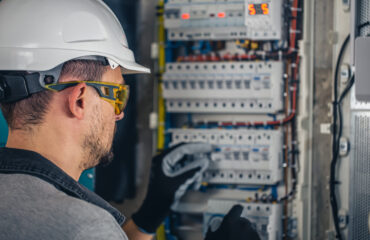
Technician with electrical equipment.
What Types of Electrical Installations and Services Exist?
The types of installations and electrical services covered by NR 10 are broad and involve all stages of the electrical cycle, from power generation to final consumption. In addition, this scope ensures that any activity involving electrical risk is regulated by the standard. Therefore, the main types are highlighted below:
Electrical Installations (fixed and mobile):
Power generation installations:
Hydroelectric, thermoelectric, solar, and wind plants.
Backup systems such as generators.
Transmission and distribution installations:
High-voltage transmission lines.
Overhead and underground distribution networks.
Building and industrial installations:
Electrical panels, distribution boards, and busbars.
Lighting systems, outlets, motors, transformers, etc.
Temporary installations:
Construction sites, events, temporary maintenance.
Mobile installations such as platforms, containers, mobile units.
Automation and control systems:
PLCs, frequency inverters, sensors, and supervisory systems.
Energized data networks (e.g., PoE).
Electrical Services:
Electrical projects and assemblies;
Inspections, tests, and measurements (thermography, grounding, insulation resistance);
Operations in energized or de-energized installations (switching, lockout, interventions);
Preventive, corrective, and predictive maintenance;
Installation and replacement of electrical components and equipment;
Commissioning and decommissioning of electrical systems;
Electrical safety and continuity tests;
Risk analyses and preparation of technical reports.
What Are the Main Points of NR 10 – Safety in Electrical Installations and Services?
Scope: The standard applies to all activities carried out in electrical installations, including the generation, transmission, distribution, and use of electrical energy.
Responsibilities: NR 10 establishes that both employers and workers have responsibilities regarding electrical safety. The employer must provide a safe work environment and adequate training, while workers must follow safety guidelines.
Safety Measures: The standard establishes several protection measures, including:
Adoption of protective devices (such as circuit breakers and fuses)
Use of Personal Protective Equipment (PPE).
Adequate signage in risk areas.
Periodic maintenance of electrical installations.
Training: It is mandatory for workers who deal with electricity to receive specific training addressing the associated risks and the safe practices they must adopt.
Documentation: NR 10 requires companies to maintain records of inspections and maintenance of electrical installations, in addition to documents that prove the qualification of the professionals involved.
When Is the NR 10 English Course Applied – Safety in Electrical Installations and Services?
The NR 10 English Course is applied whenever there are activities with electrical risk, covering everything from power generation to energy consumption. It is mandatory in industrial environments, construction sites, electrical maintenance, hospitals, areas with critical equipment, and explosion-risk zones. It also applies in training programs and educational institutions to promote a culture of electrical safety among professionals who work in international contexts.
What Are the Control Measures in the NR 10 English Course – Safety in Electrical Installations and Services?
The control measures of NR 10 include essential strategies and procedures to protect the health and safety of workers who handle electricity, aiming to reduce accident risks as much as possible. Therefore, these practices must be followed rigorously to ensure both the safety of professionals and the integrity of electrical installations.
De-energization and Lockout
De-energization: Whenever possible, services must be performed in de-energized installations (without electrical current), which eliminates direct risk.
Lockout and Tagout System: In this process, lockout and tagging devices are applied to ensure that the system cannot be accidentally re-energized during the work.
Personal Protective Equipment (PPE)
Essential PPE: The use of PPE such as insulating gloves, helmets, protective glasses, and insulated footwear is indispensable for worker safety in electrical operations.
PPE Testing: It is crucial to test this equipment and ensure that it fully complies with established safety specifications.
Collective Protective Equipment (CPE)
Barriers, Signaling, and Insulating Protections: These elements are used to clearly delimit and signal risk areas, helping to prevent accidental exposure.
Insulated Tools: The use of appropriate tools such as insulated pliers and screwdrivers offers protection against electric shock, increasing safety during activities.
Training and Qualification
Specific Training: All workers involved must undergo specific training, such as the NR 10 course, which addresses safety procedures and risk awareness.
Qualification and Renewal: Additionally, workers must complete this qualification and renew it periodically, especially for tasks involving high-voltage activities, ensuring constant updates on safety practices.

Central Electrical Panel.
What Are the Benefits of Applying the NR-10 Standard?
NR-10 reduces electrical accidents, ensures legal compliance, prevents fines and lawsuits, and standardizes technical procedures. It values trained professionals, integrates with other standards (such as NR 12 and ISO 45001), increases the reliability of installations, and strengthens document management for audits. In summary: more safety, efficiency, and legal protection for the company.
Check the main benefits:
Reduction of Electrical Accidents
Effective prevention against electric shocks, arc flashes, and burns.
Reduction of fatal accidents through technical and administrative controls.
Legal Compliance and Avoidance of Fines
Meets the obligations established in the Regulatory Standards of the Ministry of Labor.
Prevents fines, shutdowns, and legal actions due to negligence in electrical safety.
Standardization of Procedures
Establishes technical routines, risk analyses, and work permits.
Ensures traceability, uniformity, and control in activities involving electricity.
Professional Valorization
Trains workers to perform with greater responsibility and technical skill.
Enables the professional to access energized areas and perform critical services.
Integration with Other Standards
Compatible with NR 01, NR 12, NR 33, and ISO 45001.
Strengthens integrated occupational health and safety management.
Increase in Operational Reliability
Improves preventive maintenance and reduces failures and unexpected shutdowns.
Increases the availability and performance of electrical systems.
Support for Audits and Inspections
Promotes document management with updated records, reports, and training.
Facilitates approval in audits and continuous improvement processes.
What Are the Consequences of Not Taking the NR-10 Course?
Failure to apply NR-10 – Safety in Electrical Installations and Services – results in serious, immediate, and structural consequences for workers, companies, and technical supervisors. Therefore, among the main impacts, the following stand out:
Increase in Serious Accidents: Greater risk of shocks, burns, explosions, and therefore deaths due to failure in electrical risk prevention.
Legal Liability: Possibility of civil and criminal lawsuits against the company and the technical supervisor for negligence.
Fines and Shutdowns: Administrative sanctions and shutdowns imposed by labor inspectors.
Labor Lawsuits: Legal claims due to accidents or leave, resulting in indemnities and pensions.
Loss of Insurance Coverage: Insurance companies may deny claims due to noncompliance with standards.
Damage to Image and Reputation: Damage to credibility in contracts, certifications, and institutional relationships.
Technical Failures and Operational Downtime: Increase in electrical failures, rework, waste, and production losses.

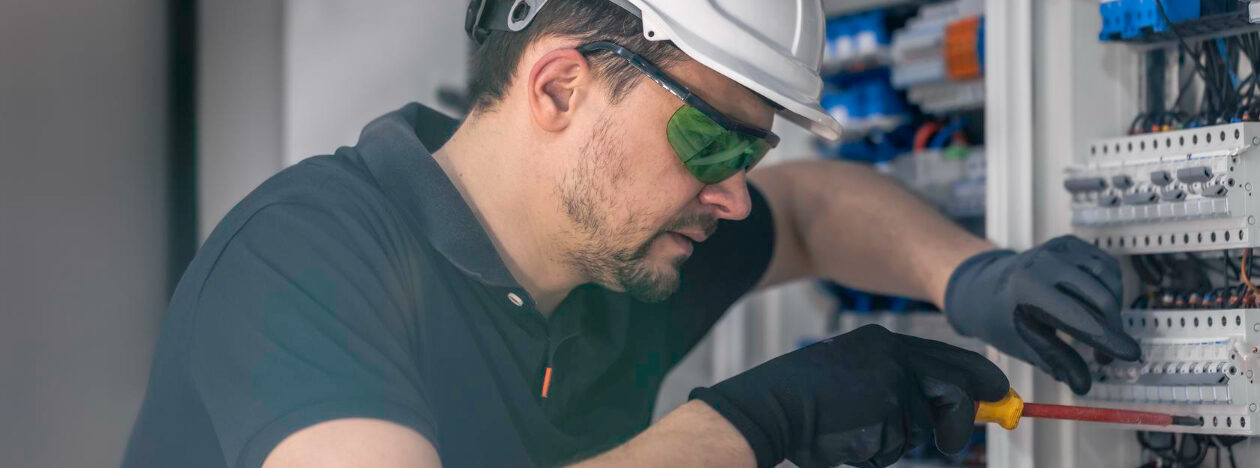
Electrical Technician
What Is the Importance of the NR-10 Course?
The NR-10 Course is essential for anyone working with electricity, ensuring safety in activities and compliance with the requirements of the Ministry of Labor. It teaches about electrical risks, use of PPE, and correct procedures, and it is mandatory for accessing energized areas.
In addition to meeting legislation, the training enhances the professional’s value, reduces accidents, and integrates with other standards such as NR 33 and NR 35, expanding qualification and operational safety. It is a strategic advantage in the job market.
Click the Link: Criteria for Issuing Certificates According to the Standards
Certificate of completion
NR 10 English Course
TRAINING COURSE NR 10 – SAFETY IN ELECTRICAL INSTALLATIONS AND SERVICES – TAUGHT IN ENGLISH
Workload: 40 Hours
Module 1: (2 HOURS)
Introduction to Electrical Safety
Module 2: (6 HOURS)
Risks in Electrical Installations and Services
a) Electric shock, mechanisms, and effects
b) Electric arcs; burns and falls
c) Electromagnetic fields
Module 3: (4 HOURS)
Risk Analysis Techniques
Module 4: (8 HOURS)
Electrical Risk Control Measures
a) De-energization
b) Functional grounding (TN/TT/IT); protective; temporary
c) Equipotential bonding
d) Automatic power disconnection
e) Residual current devices
f) Extra-low voltage
g) Barriers and enclosures
h) Lockout and impediments
i) Obstacles and shields
j) Insulation of live parts
k) Double or reinforced insulation
l) Placing out of reach
m) Electrical separation
Module 5: (3 HOURS)
Brazilian Technical Standards – ABNT NBR
NBR-5410, NBR 14039 and others
Module 6: (3 HOURS)
Ministry of Labor Regulations
a) Regulatory Standards (NRs)
b) NR-10 (Safety in Electrical Installations and Services)
c) Qualification, certification, training, and authorization
Module 7: (2 HOURS)
Collective Protective Equipment
Module 8: (2 HOURS)
Personal Protective Equipment
Module 9: (3 HOURS)
Work Routines – Procedures
a) De-energized installations
b) Work authorization
c) Signaling
d) Inspections of areas, tasks, tools, and equipment
Module 10: (2 HOURS)
Electrical Installation Documentation
Module 11: (3 HOURS)
Additional Risks
a) Work at height
b) Confined spaces
c) Indoor areas
d) Humidity
e) Atmospheric conditions
Module 12: (3 HOURS)
Fire Protection and Firefighting
a) Basic concepts
b) Preventive measures
c) Extinguishing methods
d) Practice
Module 13: (2 HOURS)
Electrical-Origin Accidents
a) Direct and indirect causes
b) Case discussions
Module 14: (4 HOURS)
First Aid
a) Notions of injuries
b) Prioritizing care
c) Application of artificial respiration
d) Cardiac massage
e) Techniques for removing and transporting injured individuals
f) Practice
Module 15: (1 HOUR)
Responsibilities
Completion and Certification:
Practical Exercises:
Evidence Records;
Theoretical Assessment;
Practical Assessment (When contracted);
Certificate of Participation.
Observation: The content presented follows the guidelines established by NR-10 (Regulatory Standard No. 10), which addresses safety in electrical installations and services. The purpose of the standard is to ensure the physical integrity of workers and prevent accidents involving electricity through safety measures and training.
NOTE:
We emphasize that the General Normative Program Content of the Course or Training may be modified, updated, with items added or removed as necessary by our Multidisciplinary Team. Our Multidisciplinary Team is authorized to update, adjust, modify, and/or remove items, as well as include or exclude Standards, Laws, Decrees, or technical parameters they deem applicable, whether related or not. The Contractor is responsible for ensuring compliance with all applicable legislation.
NR 10 English Course