Technical Name: Offshore Containers Course DNVGL-ST-E271
Reference: 156192
We provide courses and training; We carry out Translations and Interpretations in Technical Language: Portuguese, English, Spanish, Mandarin, German, Hindi, Japanese, Arabic and others consult.
Offshore Containers Course
This course aims to transport related requirements for offshore containers with respect to design, manufacture, testing, certification, marking and periodic inspection. The course covers the container structure and any permanent equipment for handling, filling, emptying, refrigerating, heating and safety purposes.
What is an Offshore Container?
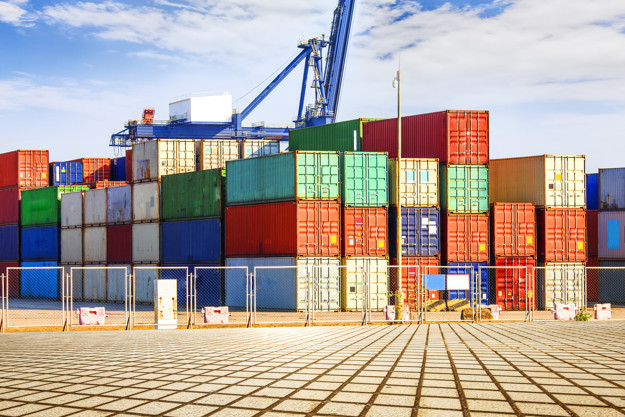
An offshore container is a portable unit with a maximum gross mass not exceeding 25.000kg, for repeated use in the transport of goods or equipment, handled in open seas, to, from or between fixed and/or floating installations and ships.
Click on the Link: Criteria for Issuing Certificates in accordance with the Norms
Treinamento Livre Profissionalizante Noções Básicas (Não substitui Formação Acadêmica ou Ensino Técnico)Certificado de conclusão
Offshore Containers Course
Introduction;
Relationship with other standards, codes and regulations;
National authorities;
Definitions;
List of symbols;
Approval and certification procedures;
Certification of existing containers;
Maintenance of certificate;
Materials;
Steel, Aluminium, Non-metallic materials;
Material certificates;
Design;
Structural strength;
Welding;
Design details;
Tank containers;
Bulk containers;
Prototype testing;
Production;
Primary and secondary structure;
Production testing and documentation;
Inspection and certification;
Marking;
Safety marking;
Identification and certification markings;
Marking of lifting set;
Plating of containers;
Data and inspection plate;
Lifting sets;
General requirements;
Approval and certification of lifting sets;
Design of lifting sets;
Certificates for lifting sets and components;
Periodic examination, tests and repairs on:
Containers,
Lifting sets,
Tank containers;
Inspection reports;
Example of offshore container;
Guidelines and examples on strength calculations;
Calculation:
The frame,
The shear stress at fork pockets in bottom side rail,
Wall and door plates;
Design of pad eye;
Position, design and pad eye strength;
Example of drop test;
Calculations of lifting sets;
Chain sling dimensions;
Wire rope sling dimensions;
Type approval of lifting sets for offshore containers;
Approval programme for test facilities engaged in load testing and NDT inspection of offshore containers.
Offshore containers for use in temperate climates only;
Add-ons for Machines and Equipment when applicable:
Awareness of Importance:
Machine or Equipment Operation Instruction Manual;
Inspection and Maintenance Plan for the Machine or Equipment according to NR 12;
Technical Report with ART of the Machine or Equipment according to NR 12;
Load Test (with ART) according to NR 12;
END (Non-Destructive Testing) according to NR 12;
Electrical Tests NR 10;
Machinery and Equipment Tagging;
RETROFIT – Modernization Process;
Daily Checklist;
One-off or cyclical maintenance.
Activity Complements:
Awareness of Importance:
PRA (Preliminary Risk Analysis);
EAP (Emergency Action Plan;
RMP (Risk Management Plan);
Understanding the need for the Rescue Team;
The importance of knowledge of the task;
Prevention of accidents and notions of first aid;
Fire protection;
Perception of risks and factors that affect people’s perceptions;
Impact and behavioral factors on safety;
Fear factor;
How to discover the fastest and easiest way to develop Skills;
How to control the mind while working;
How to manage working time;
Why balance energy during activity in order to obtain productivity;
Consequences of Risk Habituation;
Causes of accidents at work;
Understanding Tree of Causes;
Understanding Fault Tree;
Understandings on Ergonomics;
Workstation Analysis;
Ergonomic Risks;
Practical Exercises;
Evidence Record;
Theoretical and Practical Evaluation;
Certificate of participation.
Offshore Containers Course