

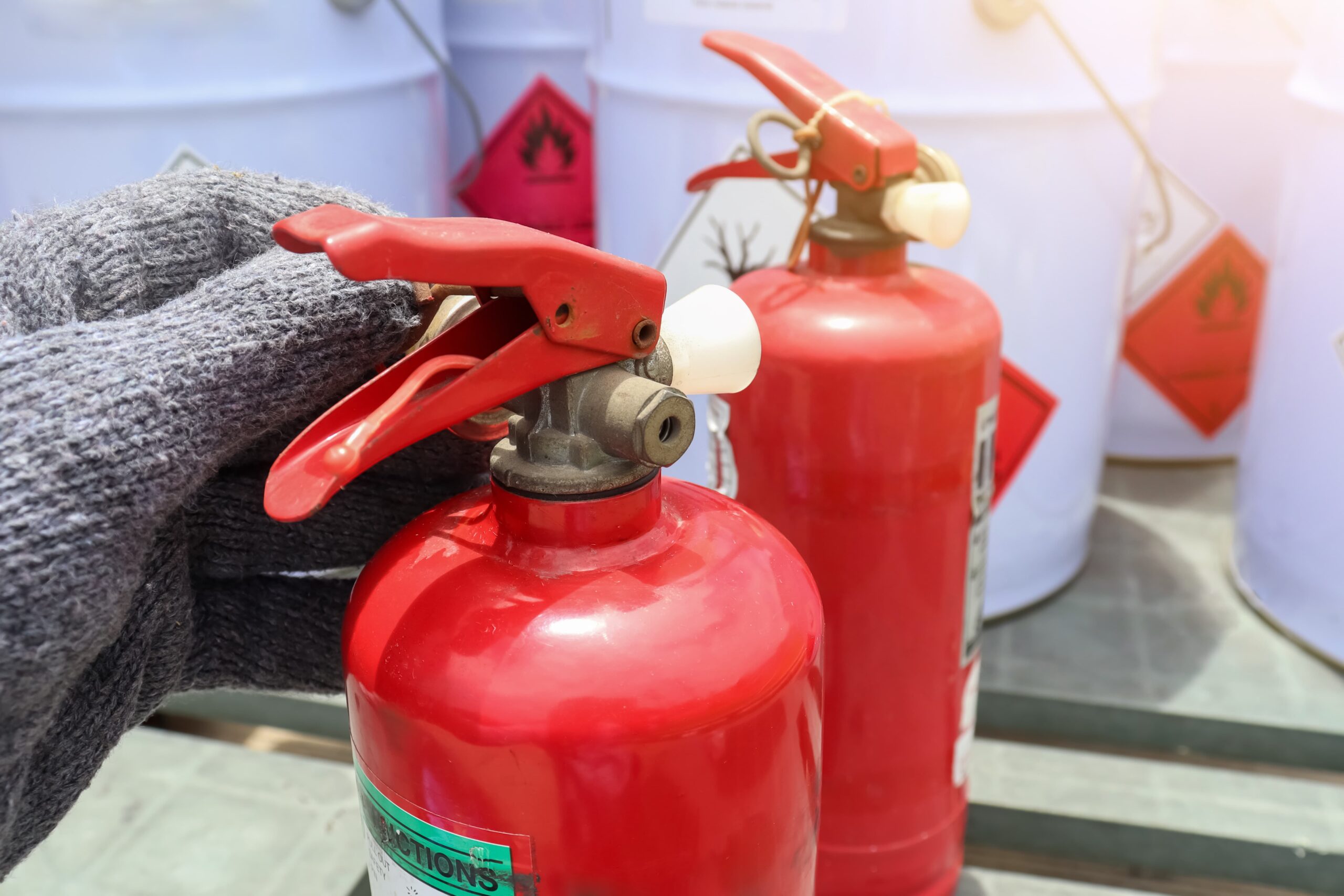
Intermediate NR 20 Course in English Intermediate NR 20 Course in English
F: FPK

Intermediate NR 20 Course in English

Intermediate NR 20 Course in English

Technical Name: INTERMEDIATE NR 20 TRAINING COURSE CLASS III FOR WORK WITH FLAMMABLES AND COMBUSTIBLES – TAUGHT IN ENGLISH

Reference: 58882

We provide Courses and Training; We perform Technical-Language Translations and Versions in: Portuguese, English, Spanish, French, Italian, Mandarin, German, Russian, Swedish, Dutch, Hindi, Japanese and others upon request.

Intermediate NR20 Course English

The objective of the Intermediate NR20 Course English is to train workers to operate safely in facilities that handle flammable and combustible liquids, in accordance with the technical criteria established by Regulatory Standard No. 20. Thus, the content covers hazard identification, risk analysis, implementation of control measures, proper use of Personal and Collective Protective Equipment (PPE and CPE), and response to emergency situations.

In addition, the training in the Intermediate NR 20 Course in English also includes the correct issuance, use, and control of the Permit to Work (PT), ensuring legal compliance, document traceability, and operational integrity. The course ensures that the professional is technically qualified to operate in classified areas, with a focus on preventing, controlling, and mitigating critical events involving flammable substances.
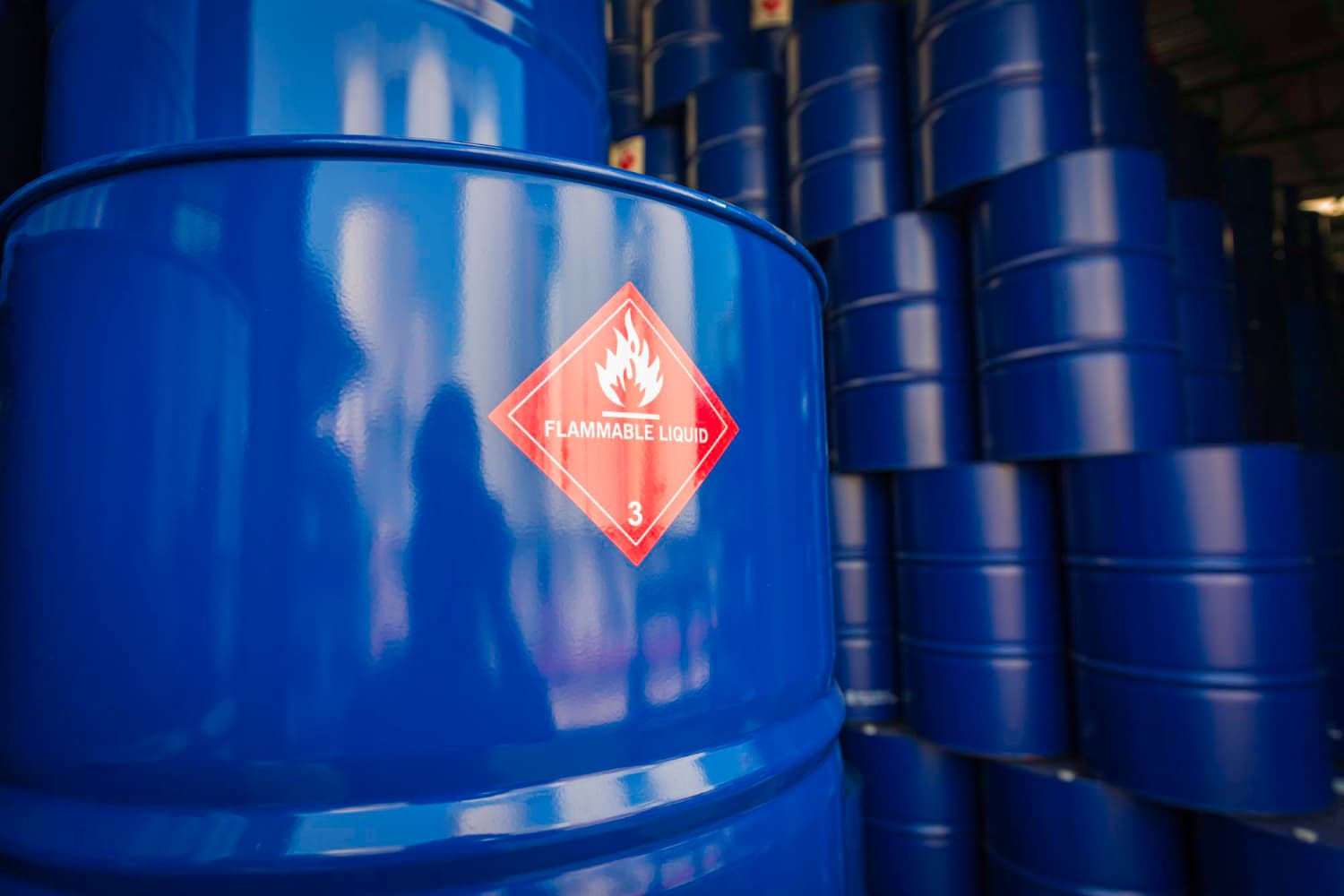
Storage of Class 3 flammable liquids with visible GHS identification. In accordance with NR 20, every container holding flammables must display standardized labeling and be stored in a ventilated, segregated area with access control.

What are the fundamental physicochemical parameters for characterizing a liquid as flammable or combustible?

The technical characterization of flammable or combustible liquids is based on the following physicochemical parameters:

Technical Parameter Definition
Flash Point (°C) Minimum temperature at which flammable vapors are released with external ignition
Ignition Point (°C) Temperature at which the liquid ignites without an external heat source
LEL / UEL Lower and Upper Explosive Limits (vapor/air mixture)
Vapor Density Indicates whether the vapor tends to rise or accumulate near the ground

These data determine the degree of hazard of the product, directly influencing storage strategies, ventilation, and isolation of ignition sources.

Intermediate NR20 Course English: Why does the absence of physical barriers and ignition source control turn a routine operation into an imminent critical risk?

In environments where flammable liquids are handled, the continuous or intermittent release of volatile vapors can form potentially explosive atmospheres (PEAs), even in seemingly controlled situations. Therefore, the absence of physical containment barriers, technical enclosure, efficient ventilation or isolation of classified areas compromises risk segregation, favoring the uncontrolled dispersion of these vapors.

Thus, the lack of strict control over ignition sources, such as heated surfaces, electrostatic discharges, equipment sparks or even grounding failures, creates a highly unstable scenario. Therefore, the combination between flammable vapors and uncontrolled ignition transforms a routine operation into a critical rupture point.

How to technically validate the use of PPE in activities involving volatile fuels, considering exposure time and material permeability?

The technical validation of PPE in environments with flammable risks requires an integrated approach based on the following fundamental criteria:

Chemical compatibility of the PPE material with the specific flammable liquid (consult the manufacturer’s chemical resistance table).
Continuous and intermittent exposure time, considering permeation and material degradation.
Certification and testing according to standards such as ABNT NBR 14023 (fire-resistant clothing)

Personal Protective Equipment should not be treated as a static barrier, but as a dynamic barrier conditioned to the operational context. Therefore, its effectiveness is directly related to the energy of the environment, frequency of use and active management of the PPE life cycle.
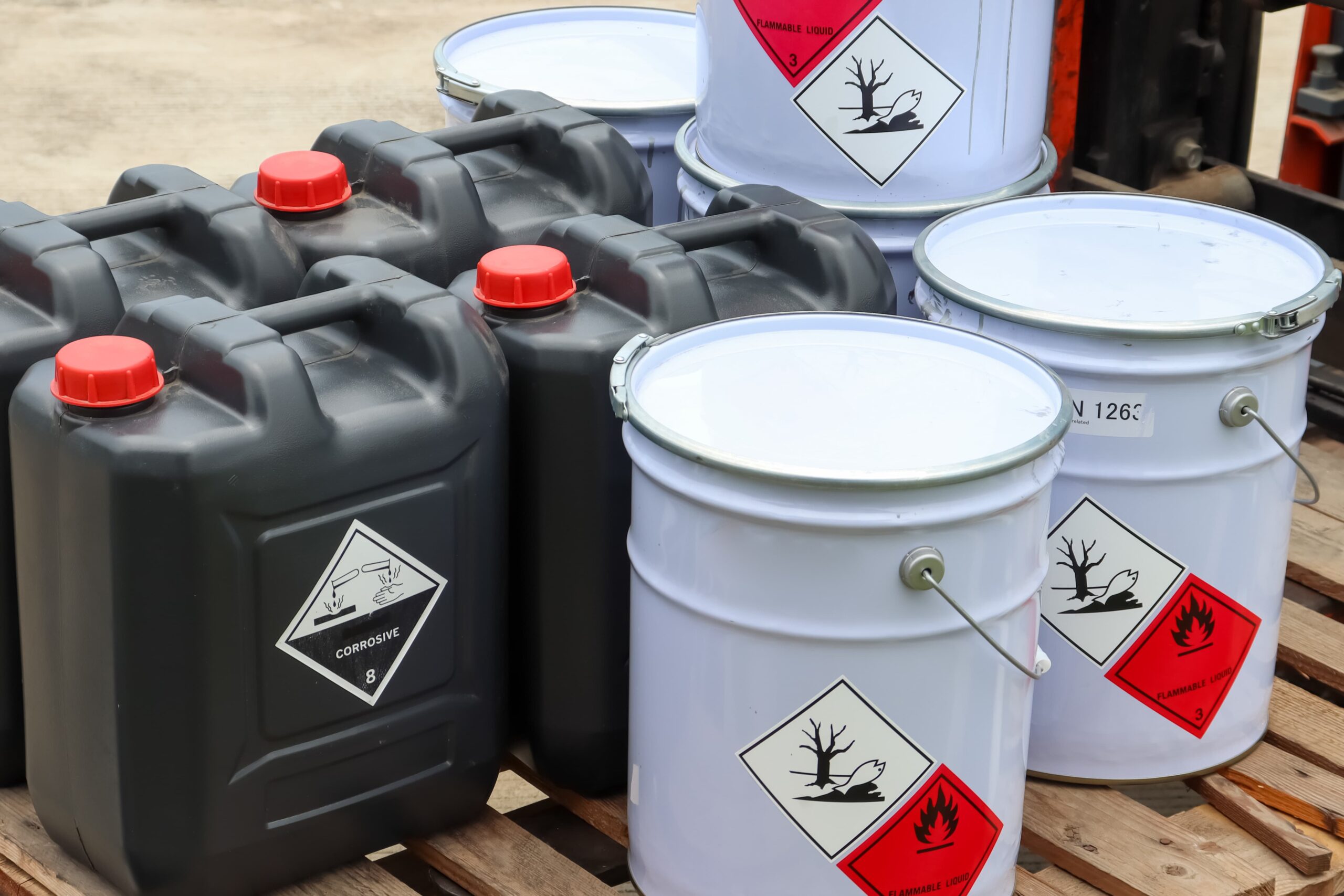
Mixed storage of flammable and corrosive liquids, requiring physical segregation and distinct signaling. NR 20 requires strict control over chemical incompatibilities and labeling in accordance with the Globally Harmonized System (GHS).

What are the minimum requirements for an emergency response plan involving leakage or fire with flammable liquids?

As established in NR 20 and supported by international best practices, an emergency response plan involving flammable liquids must be structured in a technical, objective and functional manner. The mandatory minimum elements include:

Updated risk map and evacuation route;
Isolation and leak containment procedures;
Identification of brigadiers and critical roles during the emergency;
List of extinguishing agents compatible with the flammables handled;
Integration with external emergency plans (Fire Department, Civil Defense);
Alarm systems, light and sound signaling, and specific PPE.

In addition, the plan must be tested, reviewed periodically and compatible with the real risk scenario of the facility. Its effectiveness depends on continuous operationalization and the familiarity of those involved with the procedures described. Thus, an outdated, unknown or unpracticed plan represents a hidden liability rather than a real protection tool.

Intermediate NR20 Course English: How should the Work Permit (PT) provided for in NR 20 be structured to ensure traceability, legal validity and operational effectiveness?

The Work Permit (PT), as established by NR 20, is a technical-formal instrument that validates the safe execution of activities in areas with flammable risk. To ensure its traceability, legal validity and operational effectiveness, the PT must contain the following mandatory elements:

Detailed description of the activity and location involved
Task-specific Risk Analysis
Implemented control measures (collective and individual)
Technical professional responsible for authorization and execution
Start/end date and time, with validity period
Signatures for acknowledgment and authorization

In addition, the PT must be archived and auditable, ensuring document traceability and legal responsibility. Therefore, operating without a valid, updated and technically grounded PT is not merely an administrative deviation; it is a conscious rupture of the safety system, shifting risk control to chance.
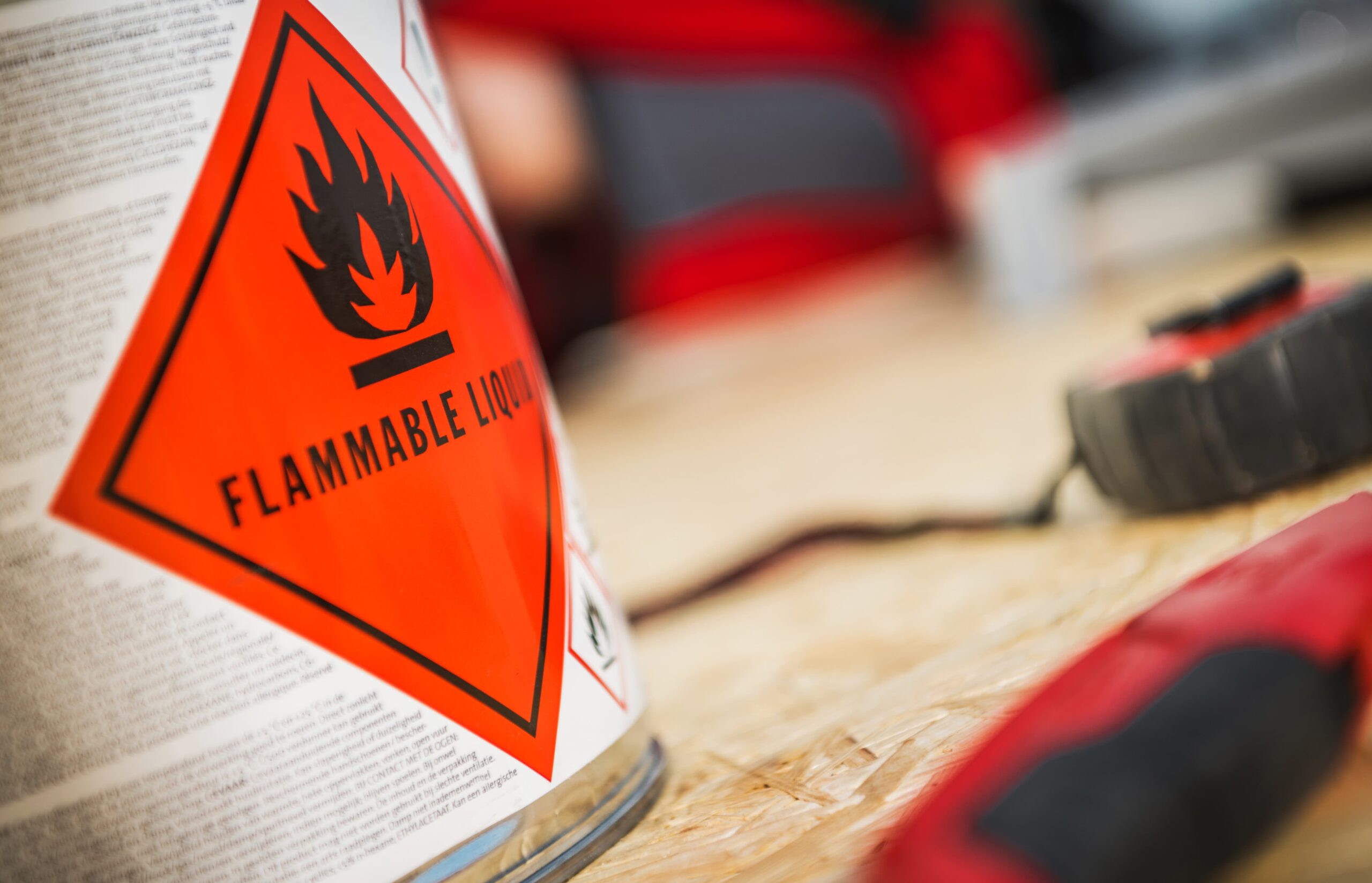
GHS identification of flammable liquid – Class 3. According to NR 20, labeling must be clear, durable and visible. Signage informs, but it is the operator’s attention that transforms the warning into preventive action.

How does the absence of a risk culture compromise even the most robust collective protection systems?

The effectiveness of any collective protection system lies not only in the devices installed but in the operational behavior that sustains them. Therefore, with diluted risk perception, the environment nullifies the practical function of gas sensors, containment barriers, forced ventilation and signaling in classified areas. Safety is not a final product but a living process sustained by continuous attention and a sense of collective responsibility.

In addition, risk culture is the invisible link that connects design, standards and human behavior. Therefore, without it, even systems with high functional reliability become merely scenographic. And there is a silent mental pattern that undermines this link, the automatic thought that “here, this never happens.” This seemingly harmless phrase is the seed of complacency and the statistical beginning of the next serious occurrence.

Intermediate NR20 Course English: What differentiates a certified worker from a truly qualified worker for areas with flammables?

The certificate proves formal participation in a course. True qualification manifests in practice, through how the worker interprets the environment, recognizes subtle variations in operational risk and makes decisions based not only on protocol but on active technical presence. Therefore, they act with predictability, discipline and normative mastery, but also with heightened attention to the dynamics of the field where they operate.

Thus, qualification goes beyond fulfilling workload requirements; it aligns technical knowledge with situational awareness and direct responsibility for the impact of one’s own conduct. Awareness emerges when the operator understands that their attention, or distraction, shapes the behavior of risk.

Click the Link: Criteria for Issuing Certificates according to the Standards

Free Professional Training Basic Notions (Does not replace Academic Education or Technical Training)

Workload: 16 Hours

Certificate of completion

Prerequisite: Literacy


Intermediate NR 20 Course in English

INTERMEDIATE NR 20 TRAINING COURSE CLASS III FOR WORK WITH FLAMMABLES AND COMBUSTIBLES – TAUGHT IN ENGLISH
Total Workload: 16 Hours

Module 1 – Flammables: Characteristics and Risks (2 Hours)
Technical definitions: flammables vs combustibles
Relevant physicochemical properties (flash point, ignition point, LEL/UEL)
Types of flammable products and their physical states
Hazards associated with storage and handling

Module 2 – Collective Control Measures and PPE (2 Hours)
Physical barriers, ventilation and containment
Appropriate Personal Protective Equipment (PPE)
Safety signage and delimitation of classified areas
Good operational practices and safe routines

Module 3 – Ignition Sources and Prevention (2 Hours)
Types of ignition sources (flames, electricity, friction, static electricity, etc.)
Methods for controlling and eliminating ignition sources
Grounding, equipotential bonding and explosion-proof systems

Module 4 – Fire Protection (2 Hours)
Detection and alarm systems
Extinguishing agents suitable for flammables
Procedures for area evacuation and isolation
Coordinated actions with the fire brigade

Module 5 – Emergencies with Flammables (2 Hours)
Identification and response to leaks, fires and explosions
Emergency action plan and risk communication
Evacuation, initial response and containment
Basic first aid for chemical and thermal burns

Module 6 – Detailed Study of NR 20 (2 Hours)
Structure of Regulatory Standard No. 20
Classification of facilities (I, II and III)
Legal and technical responsibilities of employers and workers

Module 7 – Preliminary Hazard/Risk Analysis (2 Hours)
Fundamental concepts of PHA/RA
Identification, assessment and prioritization of risks
Risk analysis exercises in simulated field
Discussion of real cases and incidents

Module 8 – Work Permit for Flammables (2 Hours)
Definition and importance of the Work Permit (PT)
Mandatory elements: activity description, control measures, validity
Issuance, cancellation and filing of the PT
Procedures for releasing and closing critical activities

Completion and Certification:
Practical Exercises (when contracted);
Evidence Recording;
Theoretical Evaluation;
Practical Evaluation (when contracted);
Certificate of Participation.

NOTE:
We emphasize that the General Normative Program Content of the Course or Training may be changed, updated, with items added or removed as necessary by our Multidisciplinary Team. Our Multidisciplinary Team is authorized to update, adjust, modify and/or remove items, as well as insert or remove Standards, Laws, Decrees or technical parameters they deem applicable, whether related or not, and the Contracting Party is responsible for complying with the requirements set forth in the relevant Legislation.

Intermediate NR 20 Course in English

Intermediate NR 20 Course in English

Participants without experience:
Minimum workload = 32 hours/class

Participants with experience:
Minimum workload = 16 hours/class

Update (Refresher):
Minimum workload = 08 hours/class

Update (Refresher): The employer must conduct periodic training every two years and whenever any of the following situations occur:
a) change in procedures, conditions or work operations;
b) event indicating the need for new training;
c) return to work after an absence longer than ninety days;
d) change of company;
e) Replacement of machine or equipment.

Operators must have completed elementary education and must receive qualification and specific training on the equipment, with a minimum workload of sixteen hours and a biennial update with a minimum workload of four hours.

Intermediate NR 20 Course in English
Intermediate NR 20 Course in English

Normative References when applicable to the relevant provisions and their updates:
NR 01 – Disposições Gerais e Gerenciamento de Riscos Ocupacionais (General Provisions and Occupational Risk Management)
NR 20 – Segurança e Saúde no Trabalho com Inflamáveis e Combustíveis (Safety and Health at Work with Flammables and Combustibles)
ABNT NBR 14605-1 – Transporte terrestre de produtos perigosos – Equipamentos para transporte rodoviário de produtos líquidos perigosos – Parte 1: Requisitos gerais (Land transport of dangerous goods – Equipment for road transport of hazardous liquid products – Part 1: General requirements)
ABNT NBR 14605-2 – Transporte terrestre de produtos perigosos – Equipamentos para transporte rodoviário de produtos líquidos perigosos – Parte 2: Inspeção e manutenção de tanques rodoviários (Land transport of dangerous goods – Equipment for road transport of hazardous liquid products – Part 2: Inspection and maintenance of road tanks)
ABNT NBR 17505-1 – Armazenamento de líquidos inflamáveis e combustíveis – Parte 1: Classificação de líquidos, terminologia e critérios gerais (Storage of flammable and combustible liquids – Part 1: Liquid classification, terminology and general criteria)
ABNT NBR 17505-2 – Armazenamento de líquidos inflamáveis e combustíveis – Parte 2: Sistemas fixos de armazenamento (Storage of flammable and combustible liquids – Part 2: Fixed storage systems)
ABNT NBR 17505-3 – Armazenamento de líquidos inflamáveis e combustíveis – Parte 3: Operações (Storage of flammable and combustible liquids – Part 3: Operations)
ABNT NBR 17505-4 – Armazenamento de líquidos inflamáveis e combustíveis – Parte 4: Proteção contra incêndio (Storage of flammable and combustible liquids – Part 4: Fire protection)
ABNT NBR 14973 – Armazenamento de líquidos inflamáveis e combustíveis – Desativação, remoção, destinação, preparação e adaptação de tanques subterrâneos usados (Storage of flammable and combustible liquids – Deactivation, removal, destination, preparation and adaptation of used underground tanks)
ABNT NBR 15428 – Armazenamento de líquidos inflamáveis e combustíveis — Critérios e procedimentos para serviços de manutenção de unidade abastecedora (Storage of flammable and combustible liquids — Criteria and procedures for maintenance services of fueling units)
ABNT NBR 15776 – Armazenamento de líquidos inflamáveis e combustíveis (Storage of flammable and combustible liquids)
GHS – Sistema Globalmente Harmonizado de Classificação e Rotulagem de Produtos Químicos (ONU) (Globally Harmonized System of Classification and Labelling of Chemicals – UN)
Protocolo – Guidelines American Heart Association (American Heart Association Guidelines Protocol)
ISO 10015 – Gestão da qualidade – Diretrizes para treinamento (Quality management – Guidelines for training)
ISO 45001 – Sistemas de gestão de saúde e segurança ocupacional – Requisitos com orientação para uso (Occupational health and safety management systems – Requirements with guidance for use)
Note: This Service exclusively meets the requirements of the Special Secretariat for Social Security and Labor (SEPRT); when it involves compliance with other Agencies, please inform at the time of the request.

Intermediate NR 20 Course in English

Intermediate NR 20 Course in English

NR 20 – Safety and Health at Work with Flammables and Combustibles is the standard that establishes mandatory requirements to prevent accidents in activities involving flammable and combustible liquids.

It requires the classification of facilities (Class I, II or III), worker training, the use of risk control measures, and the adoption of emergency procedures, such as response plans and work permits.

It is applied in gas stations, industries, laboratories, terminals and any location that stores or handles flammable products.

Attention: The Course teaches how to Apply the normative concepts of the standard, which enables signing Projects, Technical Reports, Expert Analyses, etc. These are the attributions that the Legally Qualified Professional holds with their Professional Council, such as CREA.
This course aims to study situations in which the application of Concepts and Calculations according to the relevant Standards will be necessary and does not replace the analysis and responsibility of each professional accredited with CREA or other Professional Councils in various situations, where it becomes imperative to respect the conditions of equipment preservation, periodic calibration of instruments, as well as compliance with primary capacity predetermined by PPE manufacturers, among other aspects supported by the corresponding Standards.

Attention:
Distance Learning (EAD), Blended The EAD Certificate, also known as Online, according to LAW No. 9.394 OF DECEMBER 20, 1996, may be used for: Complementary Activities; Company Assessments; Public Tenders; University Extension; Extracurricular hours; Improving chances of employment; Recruitment processes; Internal promotions; Academic Title Evaluations; Doctorate admissions; Master’s admissions; Among other opportunities.
100% EAD (Distance Learning) or Blended courses require a Pedagogical Project and are only valid for the Employer if they fully comply with SEPRT Ordinance No. 915 of July 30, 2019 – NR 01 – General Provisions of the Special Secretariat for Social Security and Labor. Click here

OTHER ELEMENTS WHEN APPLICABLE AND CONTRACTED:
c) Intermediate Course
I) Theoretical program content:
Flammables: characteristics, properties, hazards and risks;
Collective and individual controls for work with flammables;
Ignition sources and their control;
Fire protection with flammables;
Emergency procedures involving flammables;
Study of Regulatory Standard No. 20;
Preliminary Hazard/Risk Analysis: concepts and practical exercises;
Work Permit for Flammables.

II) Practical program content:
Knowledge and use of fire protection systems for flammables.
Safety with Flammables and Combustibles;
Flammable properties of matter;
Combustible properties;
Explosive Atmospheres;
Interpretation of Regulatory Standard NR-20;
Preliminary Risk Analysis;
Concepts and Practical Exercises;
Work Permit for Flammables;
Characteristics of flammables;
Properties of combustibles;
Hazards and risks arising from exposure;
Collective control for work with flammables;
Individual control for work with flammables;
Protective equipment;
PPE and CPE;
Ignition sources;
Fire Protection with Flammables;
Emergency procedures with flammables;
Emergency response procedures;
Victim assistance;
Familiarization with fire protection systems for flammables;
Proper functioning of protection systems;
Accident prevention;
Procedures and basic first aid notions;

Activity Complements:
Awareness of the Importance of:
PHA (Preliminary Hazard Analysis);
EAP (Emergency Action Plan);
RMP (Risk Management Plan);
Understanding the need for the Rescue Team;
The importance of task knowledge;
Accident prevention and basic first aid notions;
Fire protection;
Risk perception and factors affecting human perception;
Impact and behavioral factors in safety;
Fear factor;
How to discover the fastest and easiest way to develop skills;
How to control the mind while working;
How to manage and organize work time;
Why balancing energy during activity improves productivity;
Consequences of Risk Habituation;
Causes of occupational accidents;
Basic notions of Cause Tree;
Basic notions of Fault Tree;
Understanding Ergonomics;
Workplace Analysis;
Ergonomic Risks;
Communication and Hazard Standard (HCS – Hazard Communication Standard) – OSHA;

Practical Exercises:
Record of Evidence;
Theoretical and Practical Evaluation;
Certificate of Participation.

Intermediate NR 20 Course in English

Learn More: Intermediate NR 20 Course in English:

Regulatory Standard NR-20
Safety and Health at Work with Flammables and Combustibles
[…]
Item 20.11.5 Workers who work in Class I, II and III facilities, enter areas or locations of extraction, production, storage, transfer, handling and manipulation of flammables and combustible liquids, and maintain direct contact with the process or processing while performing maintenance and inspection activities, must take the Intermediate course.
20.11.6 Workers who work in Class I facilities, enter areas or locations of extraction, production, storage, transfer, handling and manipulation of flammables and combustible liquids, and maintain direct contact with the process or processing while performing operational and emergency response activities, must take the Intermediate course.
[…]
20.11.10 Workers who completed the Basic course and subsequently require the Intermediate course must complete an additional 8 hours covering the content established in items 6, 7 and 8 of the Intermediate course, including the practical component.
20.11.11 Workers who completed the Intermediate course and subsequently require the Advanced I course must complete an additional 8 hours covering the content established in items 9 and 10 of the Advanced I course, including the practical component.
20.11.13 The worker must participate in a Refresher course, whose content shall be established by the employer, with the following periodicity:
b) Intermediate course: every 2 years with a workload of 4 hours;
20.11.14 Instructors responsible for delivering the Integration, Basic, Intermediate, Advanced I and II, and Specific courses on Flammables and Combustibles must be proficient in the subject.
20.11.15 The Integration, Basic and Intermediate courses on Flammables and Combustibles must have a professional responsible for their technical organization, who must also be one of the instructors.
20.11.17 For the Integration, Basic, Intermediate, Advanced I and II and Specific courses, the issuance of the certificate shall occur only for workers who, after evaluation, demonstrate satisfactory performance.
20.17.2.2 The building safety officer must designate a technical professional responsible for the installation, operation, inspection and maintenance, as well as for supervising safety procedures during the tank refueling process.
20.17.2.3 Workers involved in the activities of operation, inspection, maintenance and refueling of the tank must be trained with the Intermediate course, according to Annex II.
20.17.3 For underground tanks, the provisions of item 20.17.2.1, caput, subitems “b”, “e”, “f”, “g”, “h”, “i”, “j” and “k”, as well as items 20.17.2.2 and 20.17.2.3, apply, along with the requirements of national technical standards and, in their absence or omission, international technical standards.
F: NR 20

01 – URL FOTO: Licensor’s author: EyeEm – Freepik.com
02 – URL FOTO: Licensor’s author: noomcpk – Freepik.com
03 – URL FOTO: Licensor’s author: EyeEm – Freepik.com
04 – URL FOTO: Licensor’s author: EyeEm – Freepik.com

Intermediate NR 20 Course in English: Contact-us.

As Normas Regulamentadoras – NR, são leis relativas à segurança, saúde, medicina do trabalho e meio ambiente, são de observância obrigatória pelas empresas privadas e públicas e pelos órgãos públicos da administração direta e indireta, bem como pelos órgãos dos Poderes Legislativo e Judiciário, que possuam empregados regidos pela Consolidação das Leis do Trabalho – CLT. PORTARIA Nº 3.214 de 08/06/1978.
Positivo. As Normas Regulamentadoras (NR) são disposições complementares ao Capítulo V (Da Segurança e da Medicina do Trabalho) do Título II da Consolidação das Leis do Trabalho (CLT), com redação dada pela Lei nº 6.514, de 22 de dezembro de 1977. Consistem em obrigações, direitos e deveres a serem cumpridos por empregadores e trabalhadores com o objetivo de garantir trabalho seguro e sadio, prevenindo a ocorrência de doenças e acidentes de trabalho. As primeiras normas regulamentadoras foram publicadas pela Portaria MTb nº 3.214, de 8 de junho de 1978. As demais normas foram criadas ao longo do tempo, visando assegurar a prevenção da segurança e saúde de trabalhadores em serviços laborais e segmentos econômicos específicos.
Eles podem ocorrer por diversos motivos. Quando ocorre um acidente além de destruir todo o “bom humor” das relações entre os empregados ou também o gravíssimo problema de se defender de uma série de procedimento ao mesmo tempo, então vale a pena investir nesta prevenção; Apesar da Lei da Delegação Trabalhista não prever que se aplica a “culpa en vigilando”, mas, apenas a responsabilidade de entregar o equipamento, porém vale frisar que o Empregador também fica responsável em vigiar; Mesmo efetuando todos os Treinamentos e Laudos obrigatórios de Segurança e Saúde do Trabalho em caso de acidente de trabalho o empregador estará sujeito a Processos tipo: Inquérito Policial – Polícia Civil; Perícia através Instituto Criminalista; Procedimento de Apuração junto Delegacia Regional do Trabalho; Inquérito Civil Público perante o Ministério Público do trabalho para verificação se os demais trabalhadores não estão correndo perigo; O INSS questionará a causa do acidente que poderia ser evitado e se negar a efetuar o pagamento do benefício ao empregado; Familiares poderão ingressar com Processo na Justiça do Trabalho pleiteando danos Morais, Materiais, Luxação, etc.; Tsunami Processual obrigando o Empregador a gerar Estratégias de Defesas mesmo estando certo; O Empregado não pode exercer atividades expostas a riscos que possam comprometer sua segurança e saúde, sendo assim o Empregador poderá responder nas esferas criminal e civil.
MODALIDADE EAD – PDF – APOSTILA: Você receberá um acesso em nossa plataforma EAD, onde o curso será disponibilizado através de módulos com apostila em PDF e materiais complementares como normas técnicas aplicáveis e memorial de cálculo quando aplicável. MODALIDADE EAD – AUDIOVISUAL (VÍDEO AULA): Nesta modalidade você receberá o material da modalidade anterior + videoaulas sobre o assunto gravadas pela nossa equipe multidisciplinar com imagens ilustrativas para melhor fixação do conteúdo. MODALIDADE EAD – TRANSMISSÃO AO VIVO (ATÉ 8H): Nesta modalidade, além do material das outras modalidades, você terá um dia (até 8H aula) de Transmissão Ao Vivo com um de nossos Instrutores Responsáveis, você poderá conversar em tempo real e tirar dúvidas pertinentes diretamente com o Instrutor. Em todas as modalidades você poderá tirar dúvidas com nossa equipe multidisciplinar sobre o assunto estudado, através do nosso e-mail. Basta enviar todas as suas dúvidas que em até 72 horas úteis eles respondem.
Negativo. O que habilita a assinar o Laudo (Relatório Técnico) é a formação acadêmica e seu devido Registro ATIVO no Conselho de Classe (CREA, CRQ, CRM, RRT, etc…). Os Cursos de Aprimoramento servem para ensinar aquilo que não foi visto ou esquecido durante seus estudos na Faculdade de Formação Superior. Os Cursos tem por objetivo o estudo de situações onde será necessário a aplicação de: Conceitos e Cálculos conforme Normas pertinentes e não substitui a análise e responsabilidade por parte de cada PLH (Profissional Legalmente Habilitado, credenciado junto ao CREA ou outros Conselhos de Classes nas mais variadas situações, onde se torna impreterivelmente fundamental respeitar as condições de conservação dos equipamentos, aferição periódica dos instrumentos, tal como o respeito de capacidade primária pré-determinada pelos fabricantes de EPI’s, entre outros embasados nas Normas pertinentes.
Positivo. As Normas Técnicas Brasileiras são um conjunto de especificações técnicas e diretrizes cuja função é padronizar o processo de desenvolvimento de produtos e serviços no Brasil. Da fase de projeto e pesquisa até a entrega aos consumidores, as NBRs são desenvolvidas de forma neutra, objetiva e técnica. Elas são elaboradas por PLH (Profissional Legalmente Habilitado) da ABNT (Associação Brasileira de Normas Técnicas), as NBRs possuem força de lei, pois são mencionadas em Leis, Portarias, Decretos etc…

De acordo com a Norma Regulamentadora 01:
NR 1.1.6.2 Os documentos previstos nas NR podem ser emitidos e armazenados em meio digital com certificado digital emitido no âmbito da Infraestrutura de Chaves Públicas Brasileira (ICP-Brasil), normatizada por lei específica. 
NR 1.1.6.3.1 O processo de digitalização deve ser realizado de forma a manter a integridade, a autenticidade e, se necessário, a confidencialidade do documento digital, com o emprego de certificado digital emitido no âmbito da Infraestrutura de Chaves Públicas Brasileira (ICP-Brasil). 
NR 1.1.7.1.1 Ao término dos treinamentos inicial, periódico ou eventual, previstos nas NR, deve ser emitido certificado contendo o nome e assinatura do trabalhador, conteúdo programático, carga horária, data, local de realização do treinamento, nome e qualificação dos instrutores e assinatura do responsável técnico do treinamento. 
NR 2.2.1.1 A empresa ou instituição especializada que oferte as capacitações previstas nas NR na modalidade de ensino à distância e semipresencial, deve atender aos requisitos constantes deste Anexo e da NR-01 para que seus certificados sejam considerados válidos.

Para saber mais, clique aqui!

Cursos e Treinamentos de Capacitação na área de Segurança e Saúde do Trabalho são considerados LIVRES e atendem o Ministério do Trabalho e Emprego, conforme preconizam as NR, portanto não há o que se falar em reconhecimento pelo MEC. Os Cursos e Treinamentos de Aprimoramento são para atender requisitos específicos de instituições/associações voltadas à Segurança e Saúde do trabalho, sua função é ensinar aquilo que não foi visto ou esquecido durante seus estudos na Faculdade de Formação Superior. Os Cursos desenvolvidos por nossa equipe multidisciplinar não são de formação técnica, nem superior, sendo assim, não se aplicam às condições e exigências do MEC.
ESSA MUDANÇA COMEÇA POR VOCÊ! Pesquise, confirme, mude suas escolhas e tome atitudes. Seja proativo e seja parte interessada nas mudanças e quebras de paradigmas dentro da sua organização. Como Stakeholder, você precisa buscar sempre a melhor qualidade para sua gestão, a fim de mitigar os riscos à sua organização. Como fazer isso? Seguindo os Conceitos da ISO 45001 buscando um sistema de gestão de SSO (Segurança e Saúde Ocupacional) e fornecendo uma estrutura para gerenciar os riscos e oportunidades de SSO. Busque metas e resultados para prevenir lesões e problemas de saúde relacionados ao trabalho para os colaboradores e proporcione locais de trabalho seguros e saudáveis. Além de eliminar os perigos e minimizar os riscos de SSO, tome medidas preventivas e de proteção efetivas.

LEGISLAÇÃO TRABALHISTA – CONSOLIDAÇÃO DAS LEIS DO TRABALHO 
PORTARIA 3214/78 DO M.T.E.

CLT SOBRE SEGURANÇA E SAÚDE NO TRABALHO AO EMPREGADOR DETERMINA:
Art. 157 – Cabe às empresas:
1- Cumprir e fazer cumprir as normas de segurança e medicina do trabalho;
2- Instruir os empregados, através de ordens de serviço, quanto às precauções a tomar no sentido de evitar acidentes do trabalho ou doenças ocupacionais;
3- Adotar as medidas que lhes sejam determinadas pelo órgão regional competente;
4- Facilitar o exercício da fiscalização pela autoridade competente.

NR-1 – Disposições Gerais:
O item 1.9 da NR-1 aduz ao empregador:
O não cumprimento das disposições legais e regulamentares sobre segurança e medicina do trabalho acarretará ao empregador a aplicação das penalidades previstas na legislação pertinente.


CONSTITUIÇÃO FEDERAL DE 1988:
Art. 7º – São direitos dos trabalhadores urbanos e rurais, além de outros que visem à melhoria de sua condição social:
XXII – redução dos riscos inerentes ao trabalho, por meio de normas de saúde, higiene e
Segurança.
XXVIII – Seguro contra acidentes de trabalho, a cargo do empregador, sem excluir a indenização a que este está obrigado, quando incorrer em dolo ou culpa.

Benefícios da Previdência Social – Lei 8.213:
A Lei 8.213 de 1991, normas de segurança e saúde no trabalho e dispositivos pecuniários e punitivos pela não observância da prevenção de acidentes e doenças laborais, ambos às empresas, quais sejam:
Art. 19. […] § 1º A empresa é responsável pela adoção e uso das medidas coletivas e individuais de proteção e segurança da saúde do trabalhador.


LEGISLAÇÃO CIVIL:
Artigo 927 do Código Civil: “aquele que, por ato ilícito(Arts. 186 e 187), causar dano a outrem fica obrigado a repará-lo“.
Artigo 932 – são também responsáveis pela reparação civil:
Item III – o empregador ou comitente, por seus empregados, serviçais e prepostos, no exercício do trabalho que lhes competir, ou em razão dele.”
Art. 949 – no caso de lesão ou outra ofensa à saúde, o ofensor indenizará o ofendido das despesas do tratamento e dos lucros cessantes até ao fim da convalescença, além de algum outro prejuízo que o ofendido prove haver sofrido.

Brasil (2010, página. 107) sobre a responsabilidade civil prevista no Código Civil:
Código Civil em vigor define nos artigos: 186 e 187 os atos ilícitos; 927 a 932 obrigação de indenizar;
934 ação regressiva, ou seja, o empregador efetua o pagamento da indenização civil por ser o responsável primário, entretanto, poderá propor uma ação regressiva contra quem deu causa ao acidente;
942 o comprometimento dos bens do autor da ofensa.


REGULAMENTO DA PREVIDÊNCIA SOCIAL:
O pagamento, pela Previdência Social, das prestações por acidente do trabalho não exclui a responsabilidade civil da empresa ou de outrem.

Lei de Introdução ao Código Civil Brasileiro:
Artigo 30, da Lei de Introdução ao Código Civil Brasileiro: “Ninguém se escusa de cumprir a lei, alegando que não a conhece.”

Artigo 157 da CLT: “Cabe às empresas:
Cumprir e fazer cumprir as normas de segurança e medicina do trabalho;
Instruir os empregados, através de Ordens de Serviço, quanto às precauções a tomar no sentido de evitar acidentes do trabalho ou doenças ocupacionais;
Adotar as medidas que lhe sejam determinadas pelo órgão regional competente;
Facilitar o exercício da fiscalização pela autoridade competente.”
Artigo 159 do Código Civil: “Aquele que por ação ou omissão voluntária, negligência, imprudência ou imperícia, causar dano a outra pessoa, obriga-se a indenizar o prejuízo.”

Artigos do Código Civil:
Artigo 1521: ” São também responsáveis pela reparação civil, o patrão, por seus empregados, técnicos serviçais e prepostos.”
Artigo 1522: “A responsabilidade do artigo 1522 abrange as pessoas jurídicas que exercem exploração industrial.”
Artigo 1524: “O que ressarcir o dano causado por outro pode reaver, daquele por quem pagou, o que houver pago.”
Decreto 3048, de 06 de maio de 1999.


LEGISLAÇÃO PENAL:
Dos crimes contra a pessoa e contra a vida; Homicídio simples
Artigo 121 Matar alguém: Pena – reclusão, de seis a vinte anos.
Quando o acidente decorre de culpa grave, caracterizado em processo criminal, o causador do evento fica sujeito:
1º – se culposo
§ 3º – detenção de 1 a 3 anos.
§ 4º – aumentada de 1/3 (um terço), se o crime resulta de inobservância de regra técnica de profissão, arte ou ofício, ou se o agente deixa de prestar imediato socorro à vítima, não procura diminuir as consequências do seu ato, ou foge para evitar prisão em flagrante.

Das lesões corporais:
Artigo 129 Ofender a integridade corporal ou a saúde de outrem: Pena – detenção, de três meses a um ano.
Lesão corporal de natureza grave
§ 1º Se resulta:
I – Incapacidade para as ocupações habituais, por mais de trinta dias; II – Perigo de vida;
III – debilidade permanente de membro, sentido ou função; IV – Aceleração de parto:
Pena – reclusão, de um a cinco anos.
§ 2° Se resulta:
I – Incapacidade permanente para o trabalho; II – enfermidade incurável;
III perda ou inutilização do membro, sentido ou função; IV – Deformidade permanente;
V – Em lesão corporal de natureza grave ou incapacidade permanente para o trabalho: Pena
– Detenção de 2 a 8 anos.
§ 7º – aumento de um terço da pena se o crime foi resultante de inobservância de regra técnica da profissão.
Da periclitação da vida e da saúde
Art. 132 – Expor a vida ou a saúde de outrem a perigo direto e iminente: Pena – detenção, de três meses a um ano, se o fato não constitui crime mais grave.
Parágrafo único. A pena é aumentada de um sexto a um terço se a exposição da vida ou da saúde de outrem a perigo decorre do transporte de pessoas para a prestação de serviços em estabelecimentos de qualquer natureza, em desacordo com as normas legais.(Incluído pela Lei nº 9.777, de 29.12.1998).

A responsabilidade penal, que é pessoal (do empregador, do tomador de serviços, do preposto, do membro da CIPA, do engenheiro de segurança, do médico do trabalho, etc.),
Será caracterizada não só pelo acidente do trabalho, quando a ação ou omissão decorrer de dolo ou culpa, mas também pelo descumprimento das normas de segurança, higiene e medicina do trabalho, expondo-se a risco e perigo a vida dos trabalhadores, como preceitua o Código Penal.

Constitui contravenção penal, punível com multa, deixar a empresa de cumprir as normas de segurança e higiene do trabalho. Art. 120.
Nos casos de negligência quanto às normas padrão de segurança e higiene do trabalho indicados para a proteção individual e coletiva, a Previdência Social proporá ação regressiva contra os responsáveis. Art. 121.
É importante, ainda, salientar outro artigo do Código Penal, referente ao chamado Crime de Perigo – art. 132: “Expor a vida ou a saúde de outrem a perigo direto e iminente”. A pena para este caso varia de 3 meses a 1 ano, se o fato não constituir crime mais grave.

Artigo 121 do Código Penal:
“Quando o acidente decorre de culpa grave, caracterizado em processo criminal, o causador do evento fica sujeito, se resulta morte do trabalhador:
Detenção de 1 a 3 anos.
Aumento da pena de um terço se o crime foi resultante de inobservância de regra técnica de profissão.”

Artigo 129 do Código Penal:
“Se resulta em lesão corporal de natureza grave ou incapacidade permanente para o trabalho:
Detenção de 2 meses a 1 ano.
Aumento de um terço da pena se o crime foi resultante de inobservância de regra técnica de profissão.”

Artigo 132 do Código Penal:
“Expor a vida ou a saúde do trabalhador à perigo direto e iminente.
Pena – Prisão de 3 meses a 1 ano.”
Decreto 3048, de 06 de maio de 1999,

Aprova o Regulamento da Previdência Social:
Art. 343. Constitui contravenção penal, punível com multa, deixar a empresa de cumprir as normas de segurança e saúde do trabalho.


LEGISLAÇÃO CIVIL:
Artigo 927 do Código Civil: “aquele que, por ato ilícito(arts.186e187), causar dano a outrem fica obrigado a repará-lo.”
Artigo 932 – são também responsáveis pela reparação civil:
Item III – o empregador ou comitente, por seus empregados, serviçais e prepostos, no exercício do trabalho que lhes competir, ou em razão dele.”
Art. 949 – no caso de lesão ou outra ofensa à saúde, o ofensor indenizará o ofendido das despesas do tratamento e dos lucros cessantes até ao fim da convalescença, além de algum outro prejuízo que o ofendido prove haver sofrido.

CÓDIGO DE DEFESA DO CONSUMIDOR:
Lei 8078/90 – Seção I: da Proteção à saúde e segurança
Capítulo III: Direitos básicos do consumidor
I: proteção da vida, saúde e segurança contra usos;
IV: A efetiva prevenção, reparação de danos patrimoniais, morais, individuais, coletivos e difusos.

Para saber mais, clique aqui