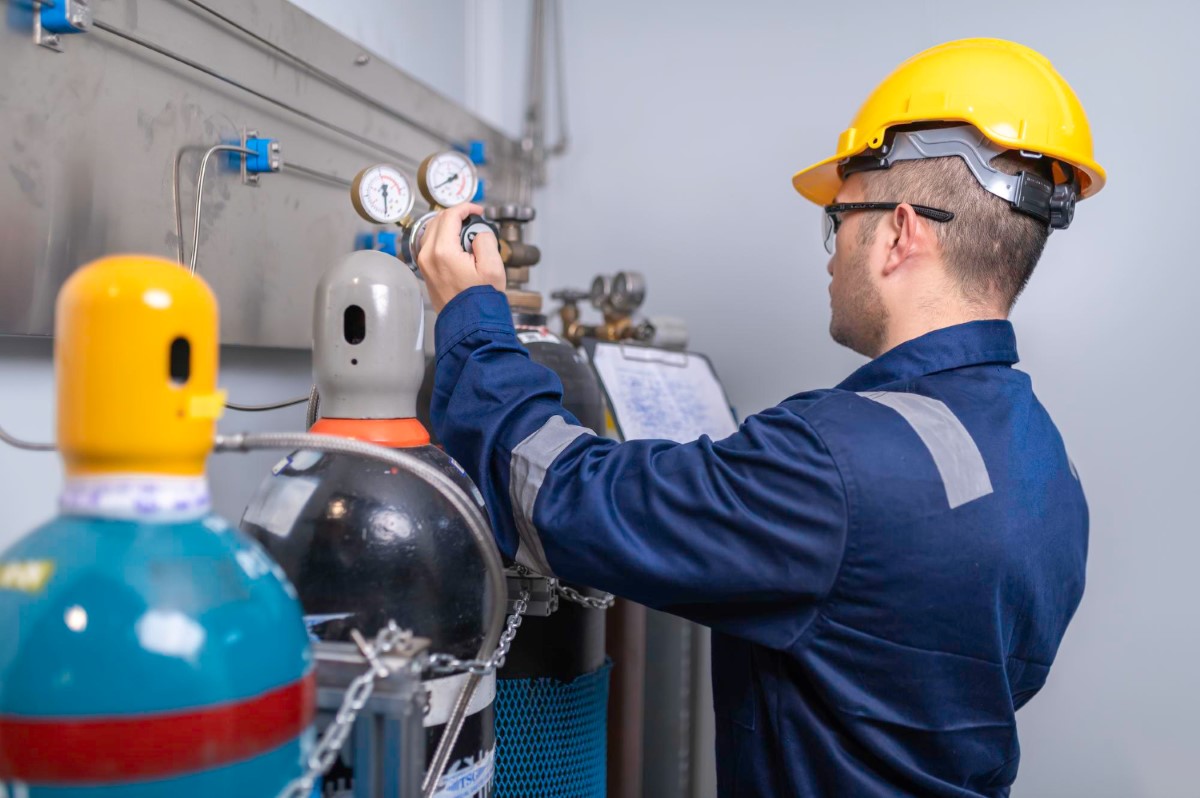
Technical Name: COMPRESSED AIR SUPERVISOR COURSE NR 18 – WORK SAFETY CONDITIONS IN THE CONSTRUCTION INDUSTRY
Reference: 171030
We provide courses and training; We perform Translations and Versions in Technical Language: Portuguese, English, Spanish, French, Italian, Mandarin, German, Russian, Swedish, Dutch, Hindi, Japanese and others consult.
Compressed Air Supervisor English
The Compressed Air Supervisor English aims to qualify the professional to supervise activities in compressed-air environments with technical precision and safe decision-making. In this way, the participant learns to interpret pressure dynamics, evaluate physiological and operational risks, and apply procedures that maintain team integrity throughout all phases of the work. By understanding how work chambers, bells, pressurized tunnels, and pneumatic systems interact, the supervisor develops real mastery over the critical points that determine hyperbaric safety.
In addition, the training seeks to align operational practice with the requirements established by NR 18, ensuring legal compliance and the ability to respond to unexpected situations. As a result, the student strengthens the ability to coordinate compression and decompression procedures, monitor risk indicators, and guide workers with clarity and authority. The outcome is a professional prepared to operate in complex contexts where safety depends on quick, well-founded decisions.
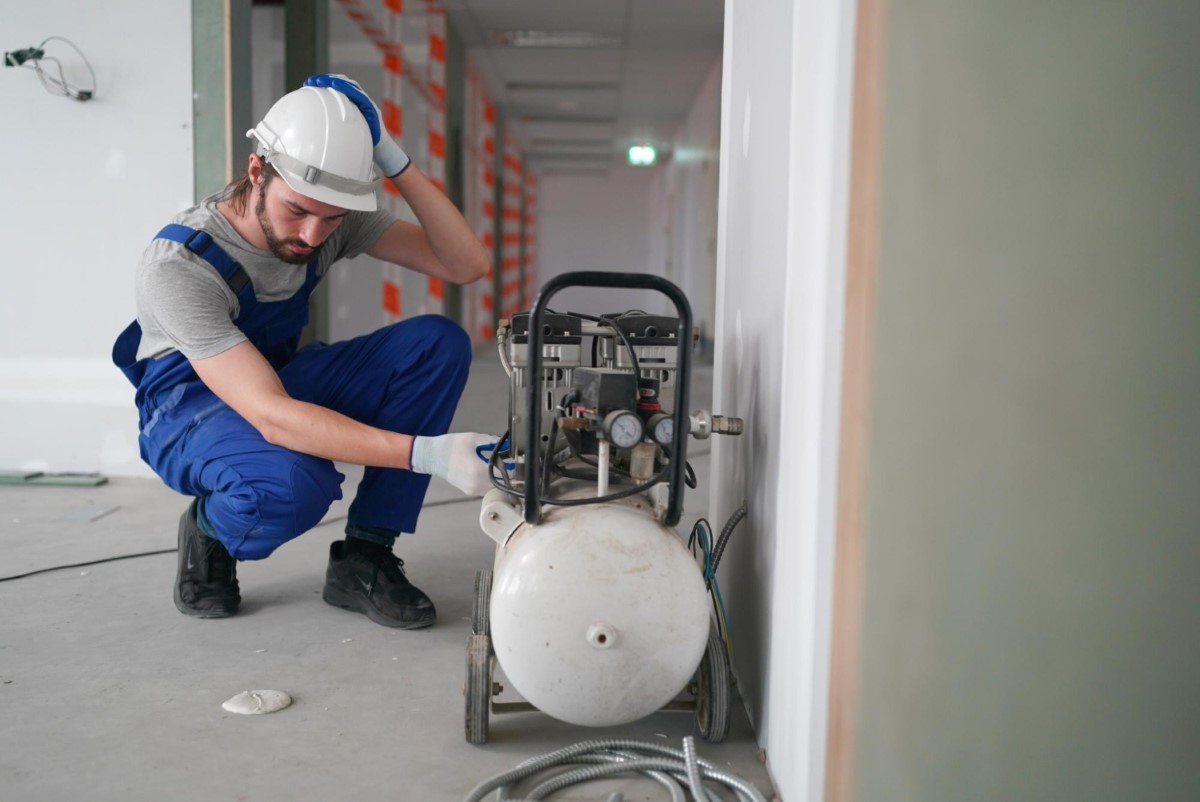
Worker inspecting a portable air compressor to verify structural integrity and pressure safety before activation.
Who is responsible for ensuring safety during compressed air operations?
The responsibility rests with the Compressed Air Supervisor, who actively manages hyperbaric risks and directs the operational procedures required by NR 18. The supervisor monitors team behavior, tracks pressure variations and makes immediate decisions whenever any deviation threatens physiological or structural stability. As a result, he becomes the essential link between field operations and full safety assurance.
Furthermore, the supervisor maintains constant communication with operators, electricians, tunneling crews and medical personnel. This alignment ensures that every step occurs under strict control and that decompression is carried out with technical precision. By acting in an integrated manner, the supervisor protects workers and guarantees full regulatory compliance.
When should decompression procedures be applied?
Before answering directly, it is important to recognize that decompression is not a simple action. It follows strict protocols designed to prevent embolism and reduce hyperbaric physiological impacts. Therefore, the supervisor must evaluate exposure time, maximum pressure reached and the type of task performed.
| Decompression Criterion | Technical Description |
|---|---|
| Proper moment | Applied once the hyperbaric activity ends, following the established return curve |
| Total duration | Adjusted based on maximum pressure and exposure time |
| Physiological conditions | Interrupted only after assessing symptoms or complaints |
| Environmental parameters | Continuous monitoring of chamber and bell internal pressure |
Compressed Air Supervisor English: Worker stability depends on pressure control
Before expanding, it is essential to understand that pressure directly affects human physiology. Consequently, the supervisor must maintain constant vigilance over operational variations.
Maximum pressure tolerated
Exposure duration
Breathing mixture specifications
Hyperbaric chamber conditions
Integrity of pneumatic systems
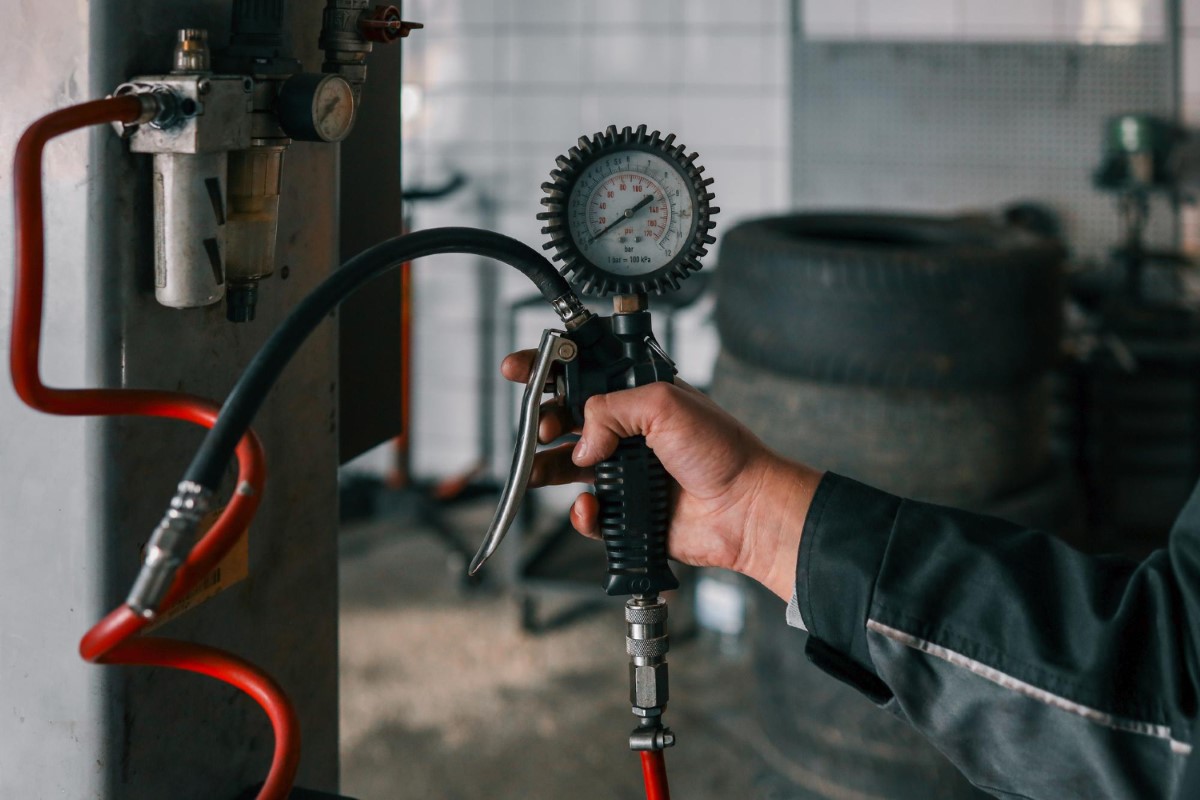
Operator checking an air pressure regulator to maintain safe pneumatic performance in hyperbaric environments.
Why is controlling the breathing mixture essential in hyperbaric environments?
Controlling the breathing mixture ensures that the partial pressure of gases remains within safe limits. In doing so, the supervisor prevents oxygen toxicity, nitrogen narcosis and respiratory collapse due to incorrect gas combinations. This constant monitoring reduces human error and enables rapid intervention whenever conditions unexpectedly change.
Additionally, the gas mixture directly influences both physical and cognitive performance. Minor deviations can impair concentration, increase fatigue or trigger early symptoms of decompression-related complications. Therefore, by maintaining strict control of the breathing mixture, the supervisor protects worker health and ensures operational compliance.
Where should monitoring systems be installed to ensure safe supervision?
To fully understand the answer, it is necessary to consider that monitoring systems serve as the first barrier against hyperbaric hazards. They must deliver accurate real-time information, allowing the supervisor to react immediately.
| Installation Location | Purpose |
|---|---|
| Working Chamber | Controls pressure, temperature and humidity |
| Recompression Chamber | Provides emergency recovery and stabilization |
| Central Control Panel | Ensures global visualization and alarms |
| Tunnel Technical Access | Detects leaks and sudden pressure changes |
| Main Compressors | Verifies ongoing system stability |
Compressed Air Supervisor English: Decompression sickness demands immediate technical response
Before detailing, one must recognize that this condition develops quickly and can cause severe damage. Consequently, the supervisor must master every stage of the emergency protocol.
Early symptom identification
Immediate transfer to the recompression chamber
Application of the prescribed return table
Continuous neurological monitoring
Direct communication with trained medical personnel
What is the impact of NR 18 on the daily routine of the Compressed Air Supervisor?
NR 18 structures the entire operation by defining limits, procedures and requirements that the supervisor must apply each day. It guides chamber construction, pressure management, inspection routines and emergency protocols. Through these directives, the standard creates a controlled environment and significantly reduces the probability of critical failures.
Moreover, NR 18 delivers operational predictability. With clearly defined rules, the supervisor responds faster to pressure changes, makes well-grounded decisions and leads the team with precision and confidence. The result is a consistent technical routine aligned with legal obligations and industry best practices.
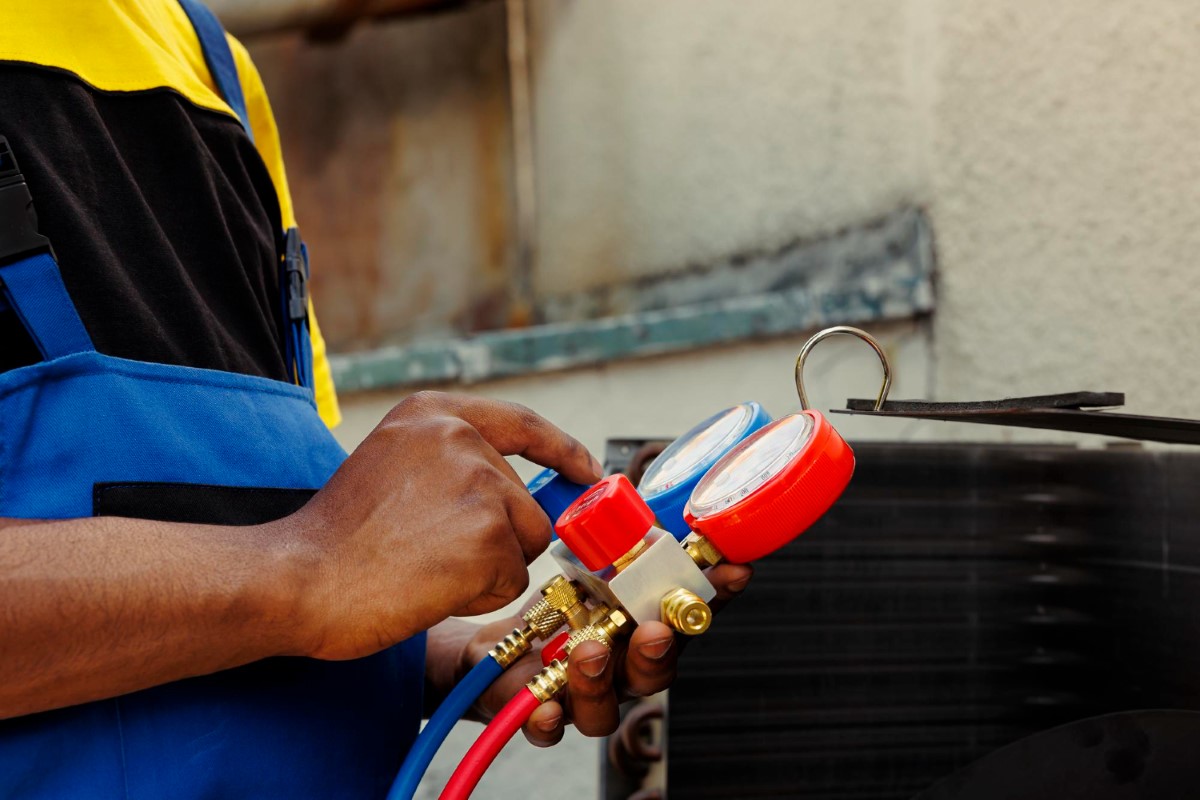
Technician adjusting pressure gauges to ensure stable compressed air conditions during field operations.
What is the important of the Compressed Air Supervisor English?
The Compressed Air Supervisor English is essential because it equips professionals with the technical competence to manage hyperbaric operations with precision and situational awareness. By understanding how pressure affects the human body, equipment stability and operational routines, the participant gains the ability to anticipate failures, prevent accidents and intervene decisively when conditions change. This knowledge elevates the supervisor from a passive observer to an active guardian of safety in environments where small deviations can lead to severe physiological or structural consequences.
Moreover, the training ensures full alignment with NR 18, which establishes the mandatory procedures for compressed air work, decompression protocols, chamber operation and emergency management. Through this regulatory foundation, the course strengthens legal compliance and enhances operational reliability. As a result, the supervisor becomes fully prepared to protect the workforce, maintain system integrity and guarantee that every phase of the compressed air activity meets the highest safety standards.
Click the Link: Criteria for Issuing Certificates in accordance with the Standards
Certificate of Completion
Compressed Air Supervisor English
COMPRESSED AIR SUPERVISOR COURSE NR 18 – WORK SAFETY CONDITIONS IN THE CONSTRUCTION INDUSTRY
Course Load: 16 Hours
Module 1 – Regulatory Framework and Application Field (2 Hours)
Scope and application field of NR 18 for compressed-air environments
Definitions and mandatory terminology for hyperbaric operations
Legal obligations of employers, engineers and supervisors
Technical responsibility, documentation and traceability
Concept and operational limits of spaces under compressed air
Module 2 – Work Structures Under Compressed Air (2 Hours)
Chamber of Work
Recompression Chamber
Campanula: purpose, sealing and structural behavior
Staff Lock: functions and transition procedures
Pneumatic tubes: integrity and operating conditions
Pressurized tunnels: classification and risk factors
Spaces or compartments under compressed air: requirements and constraints
Module 3 – Essential Operational Concepts (2 Hours)
Compressed Air Officer: responsibilities, authority and competence
Work time: exposure control and regulatory limits
Work pressure: safe parameters and adjustment criteria
Recognition of decompression sickness and embolism
Physiological effects of hyperbaric exposure
Normative indicators for environmental monitoring
Module 4 – General Principles for Pressurized Systems (2 Hours)
Preferential pressures for compressors
Preferential pressures for pneumatic tools and machines
Starting, starting-up and stopping devices
Pressurized components and structural integrity
Classification according to activation type
Oscillating piston compressor: classification by cooling type
Screw compressor: principles and regulatory aspects
Compression types and cooling classifications
Oil-free and oil-based air systems
Lubrication classifications
Acoustic protection requirements
Module 5 – Compressor Technologies and Classifications (2 Hours)
Alternative piston compressor: operational overview
Diaphragm compressor
Free piston compressor
Liquid ring compressor
Vane compressor
Oscillating piston compressor
Screw compressor
Centrifugal compressor
Axial compressor
Classification by cycle
Classification by cooling
Classification by compression type
Classification by piston arrangement
Classification regarding presence of oil in the air
Classification regarding lubrication type
Classification regarding activation type
Module 6 – Lobe Compressor and Specific Classifications (2 Hours)
Lobe compressor: operational principles
Classification by compression type
Classification by acoustic protection level
Classification by triggering and activation systems
Module 7 – Risk Management Program (PGR) Requirements (2 Hours)
Living areas under compressed-air influence
Machines, equipment and tools: compatibility and restrictions
Work stages and sequencing
Work and safety procedures for hyperbaric environments
Impeditive conditions for compression and decompression
Protective measures and fail-safe requirements
Potential risks inherent to hyperbaric work
Safety systems for abnormal conditions
Module 8 – Electrical Installations, Emergencies and Additional Risks (2 Hours)
Electrical installations: physical arrangement and compliance
Impeditive conditions and protective measures
Risk analysis applicable to hyperbaric activities
Ergonomic aspects in compressed-air environments
Work accidents and occupational illnesses associated with pressure
Emergency procedures and conduct
Safety signs and operator communication protocols
Additional risks: mechanical, physiological, atmospheric and operational
Completion and Certification:
Practical Exercises (when contracted);
Evidence Records;
Theoretical Evaluation;
Practical Evaluation (when contracted);
Certificate of Participation.
NOTE:
We emphasize that the General Normative Program Content of the Course or Training may be modified, updated, supplemented, or have items excluded as deemed necessary by our Multidisciplinary Team. Our Multidisciplinary Team is authorized to update, adapt, modify, and/or exclude items, as well as insert or remove Standards, Laws, Decrees, or technical parameters they consider applicable, whether related or not. The Contracting Party is responsible for ensuring compliance with the relevant legislation.
Compressed Air Supervisor English