Technical Name: BASIC PLATFORM SAFETY TRAINING COURSE – SALVATAGEM CBSP
Reference: 171259
We provide courses and training; We perform Translations and Versions in Technical Language: Portuguese, English, Spanish, French, Italian, Mandarin, German, Russian, Swedish, Dutch, Hindi, Japanese and others consult.
Curso Plataforma Salvatagem em Inglês – Safety Course Platform Salvatagem
is to provide participants with solid theoretical knowledge on safety management, emergency preparedness and lifesaving systems applied to offshore and maritime platforms. Therefore, the course enables professionals to recognize critical risks, understand emergency scenarios and correctly interpret alarm systems, evacuation procedures and abandonment strategies. Moreover, the training reinforces structured decision making, clear communication and coordinated response under emergency command, always prioritizing the protection of human life and unit integrity in accordance with NR 37 – Safety and Health in Oil Platforms.
In addition, the course strengthens safety awareness by integrating risk management concepts, human factors and behavioral aspects that directly influence emergency response. Consequently, participants develop a clearer understanding of their roles and responsibilities within emergency organization structures, as well as the importance of compliance with established procedures. As a result, the training contributes to safer operations, reduced incident escalation and improved preparedness for critical situations, fully aligned with the principles and requirements established by NR 37 – Safety and Health in Oil Platforms.
Who should attend the Safety Course – Lifesaving Platform (Salvatagem) ?
This course is intended for professionals who work or may work on offshore, maritime or floating units where emergency preparedness and lifesaving awareness are critical. Therefore, it applies to operational staff, supervisors, safety technicians, engineers, support teams and any personnel who must understand emergency organization, evacuation logic and abandonment procedures.
Moreover, the course is suitable for both experienced professionals seeking reinforcement and new entrants who need structured theoretical grounding. As a result, participants gain clarity about responsibilities, command structures and safety expectations, in alignment with NR 37 – Safety and Health in Oil Platforms.

When is this training required or recommended?
This training becomes necessary whenever professionals are exposed to offshore or maritime environments where emergency scenarios may occur. In addition, it is strongly recommended during onboarding, role changes or before deployment to platforms or vessels.
| Situation | Purpose |
|---|---|
| New personnel onboarding | Introduction to safety and emergency concepts |
| Change of function or responsibility | Alignment with new emergency roles |
| Offshore mobilization | Emergency preparedness before embarkation |
| Safety program reinforcement | Continuous improvement and risk awareness |
This course builds emergency preparedness and lifesaving awareness.
This statement reflects the core function of the course, which is to structure emergency knowledge before real exposure occurs.
Key elements addressed
Emergency scenario recognition
Alarm interpretation and response
Evacuation and abandonment logic
Human behavior under emergency command
Why is theoretical training essential for lifesaving and emergency response?
Theoretical training establishes the foundation for correct decision making during emergencies. Therefore, it prepares professionals to understand procedures, recognize hazards and anticipate consequences before actions are required. Without this knowledge, reactions tend to be instinctive rather than controlled, increasing the risk of escalation.
Furthermore, theory aligns all personnel under the same operational language and command structure. Consequently, communication improves, roles become clear and coordinated responses emerge, which is a fundamental principle of NR 37 – Safety and Health in Oil Platforms.
Where are the concepts learned in this course applied?
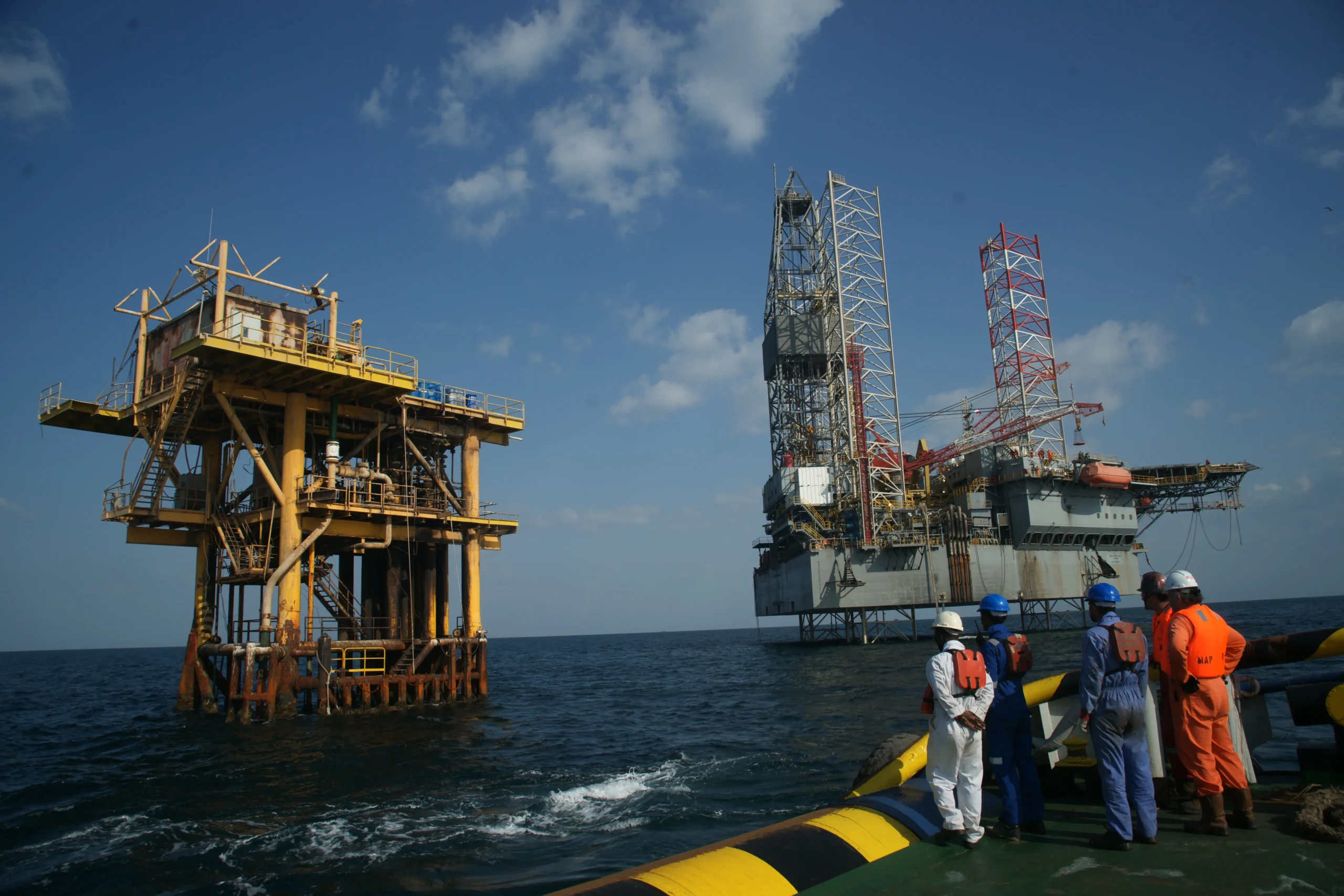
The knowledge acquired in this course applies directly to offshore platforms, floating units, support vessels and maritime operational environments. Additionally, it supports interface activities with ports, helidecks and emergency response teams.
| Environment | Application |
|---|---|
| Offshore platforms | Evacuation and abandonment readiness |
| Support and rescue vessels | Emergency coordination |
| Helidecks | Aircraft incident preparedness |
| Maritime logistics areas | Safety awareness and alarms |
Emergency organization and command structure are decisive.
This statement highlights the decisive role of organization and leadership during emergencies.
Core concepts
Defined chains of command
Clear action group responsibilities
Coordination between emergency teams
Reduction of chaos through structure
How does this course contribute to compliance and accident prevention?
This course supports compliance by aligning theoretical knowledge with regulatory requirements and structured safety management principles. Therefore, it reinforces adherence to emergency procedures, alarm systems and evacuation protocols established by NR 37 – Safety and Health in Oil Platforms, reducing nonconformities and operational deviations.
In addition, the training strengthens risk perception and behavioral awareness. As a result, professionals act more consciously, anticipate hazards and avoid normalization of risk, which directly contributes to accident prevention and safer offshore operations.

What is the importance of the Safety Course – Lifesaving Platform (Salvatagem)?
The Safety Course – Lifesaving Platform (Salvatagem) – Curso Plataforma Salvatagem em Inglês is important because it provides a structured theoretical foundation for emergency preparedness, lifesaving systems and coordinated response on offshore and maritime platforms. Therefore, the course enables professionals to understand emergency scenarios, alarm systems, evacuation and abandonment procedures, as well as their roles within the emergency command structure. This knowledge directly supports the protection of human life and the integrity of the unit, in compliance with NR 37 – Safety and Health in Oil Platforms.
In addition, the course is important for strengthening risk awareness, behavioral safety and regulatory compliance. Consequently, professionals develop a clearer perception of hazards, human factors and decision making under stress. As a result, organizations enhance emergency readiness, reduce incident escalation and reinforce a consistent safety culture aligned with NR 37 – Safety and Health in Oil Platforms.
Free Professional Training Basic Notions (Does Not Replace Academic Education or Technical Training)
Treinamento Livre Profissionalizante Noções Básicas (Não substitui Formação Acadêmica ou Ensino Técnico)Certificado de conclusão
Safety Course Platform Salvatagem
MODULE 1 – Course Objective, Definitions and Safety Management (4 Hours)
Course objectives and scope
Definitions related to safety, lifesaving and emergency response
Safety management structure on offshore and maritime units
Responsibilities of management, supervisors and personnel
Training concepts and competency requirements
MODULE 2 – Emergency Scenarios and Risk Analysis (6 Hours)
Fire, implosion and explosion
Oil or gas spill, well eruption and uncontrolled flow
Adverse weather, sea currents and seabed movement
Aircraft accidents and collisions with vessels or units
Man overboard
Serious injury, illness or death on board
Equipment failure affecting people or unit safety
Accidents involving radioactive materials and diving operations
Unit-specific emergency scenarios
MODULE 3 – Evacuation, Abandonment and Alarm Systems (6 Hours)
Evacuation and abandonment concepts
Rally points and muster stations
Emergency alarm and abandonment alarm
Decision criteria for delayed or immediate abandonment
Communication and accountability during emergencies
MODULE 4 – Emergency Organization and Command Structure (5 Hours)
Action groups and emergency command
Emergency control team and fire brigade
Rescue boat crew and lifeboat crew concepts
Coordination between teams during emergency situations
MODULE 5 – Lifesaving Systems and Safety Equipment (7 Hours)
Safety and lifesaving philosophy
Support boats and rescue boats
Rigid fireproof lifeboats
Inflatable life rafts
Personal lifesaving equipment and accessories
Escape routes and abandonment stations
Security plan concepts
MODULE 6 – Fire Safety and Emergency Control (6 Hours)
Fire prevention principles
Fire concepts, detection and alarm equipment
Firefighting systems
Firefighting procedures
Operational emergency control strategies
Return to normal operations
MODULE 7 – Respiratory Protection and Survival at Sea (4 Hours)
Human physiology related to breathing
Respiratory hazards and contamination
Respirators and breathing apparatus
Survival at sea theory
Emergency, evacuation and abandonment concepts
MODULE 8 – Human Factors, Risk Perception and Accident Analysis (2 Hours)
Risk perception and behavioral factors
Fear factor and stress management
Risk habituation and consequences
Causes of occupational accidents
Cause Tree and Fault Tree concepts
Safety Course Platform Salvatagem


Inexperienced participants:
Minimum workload = 80 hours/class
Experienced Participants:
Minimum workload = 40 hours/class
Update (Recycling):
Minimum workload = 20 hours/class
Update (Recycling): The employer must perform periodic training Annually and whenever any of the following situations occur:
a) change in work procedures, conditions or operations;
b) event that indicates the need for new training;
c) return from work leave for a period longer than ninety days;
d) change of company;
e) Exchange of machine or equipment.
Safety Course Platform Salvatagem
Normative References (Sources) to the applicable devices, their updates and replacements to date:
NR 01 – Disposições Gerais e Gerenciamento de Riscos Ocupacionais – (General Provisions and Occupational Risk Management);
NR 06 – Equipamento de Proteção Individual (Personal Protective Equipment);
NR 07 – Programa de Controle Médico de Saúde Ocupacional (Occupational Health Medical Control Program);
NR 20 – Segurança e Saúde no Trabalho com Inflamáveis e Combustíveis (Safety and Health at Work with Flammable and Combustible Materials);
NR 23 – Proteção Contra Incêndios – (Proteção Contra Incêndios);
NR 29 – Segurança e Saúde no Trabalho Portuário – (Safety and Health in Port Work);
NR 30 – Segurança no Trabalho Aquaviário – (Safety at Waterway Work);
NR 33 – Segurança e Saúde nos Trabalhos em Espaços Confinados (Safety and Health in Confined Spaces);
NR 34 – Condições e Meio Ambiente no Trabalho na Indústria da Construção, Reparação e Desmonte Naval – (Conditions and Environment at Work in the Shipbuilding, Repair and Dismantling Industry):
NR 37 – Segurança e Saúde em Plataformas de Petróleo – (Safety and Health in Oil Platforms);
Normam-05/DPC – Normas da Autoridade Marítima para Homologação de Material – (Marinha do Brasil – Diretoria de Portos e Costas) – (Rules of the Maritime Authority for Approval of Material – Navy of Brazil – Directorate of Ports and Coasts);
Normam-01/DPC – Normas da Autoridade Marítima para Embarcações Empregadas na Navegação em Mar Aberto – (Maritime Authority Rules for Vessels Used in Open Sea Navigation):
ABNT NBR 14276 – Brigada de incêndio – Requisitos – (Fire Brigade – Requirements):
ABNT NBR 14277 – Instalações e equipamentos para treinamento de combate a incêndio – Requisitos – (Installations and equipment for fire fighting training – Requirements):
Protocol – Guidelines American Heart Association;
ISO 10015 – Gestão da qualidade – Diretrizes para treinamento – (Quality management – Guidelines for training);
ISO 45001 – Sistemas de gestão de saúde e segurança ocupacional – Requisitos com orientação para uso – (Occupational health and safety management systems – Requirements with guidance for use);
Note: This Service exclusively meets the requirements of the MTE (Ministry of Labor and Employment) when it comes to service to other Bodies, inform when making the request.
Safety Course Platform Salvatagem
TECHNICAL CURIOSITIES – SAFETY COURSE PLATFORM SALVATAGEM
The Hidden Risk of Delayed Abandonment
In offshore emergencies, delaying abandonment is often a strategic decision rather than hesitation. However, technical studies show that the main risk lies not in the delay itself, but in the loss of situational awareness during prolonged standby periods. Stress, fatigue and information overload can silently reduce reaction capacity, making timing a critical safety variable.
Survival at Sea Depends More on Physiology Than Strength
Survival theory demonstrates that hypothermia, dehydration and panic are the real enemies at sea. Even strong individuals lose effectiveness quickly if they do not control breathing, posture and energy expenditure. Technical training emphasizes physiological understanding because mental control extends survival time far more than physical effort.
Equipment Fails More Often Than Procedures
Accident analysis consistently shows that emergency procedures are usually correct, but failures occur due to equipment unavailability, poor maintenance or improper configuration. Understanding systems, limitations and failure modes is therefore as critical as knowing written procedures.
Our pedagogical project follows the guidelines imposed by Regulatory Norm nº1.
After the payment, Purchase Order, Contract signed between the parties, or another form of closing confirmation, the teaching material will be released within 72 working hours (up to 9 days), due to the adaptation of the syllabus and compliance with the Standards Techniques applicable to the scenario expressed by the Contracting Party; as well as other adaptations to the teaching material, carried out by our Multidisciplinary Team for technical language according to the student’s nationality and Operational and Maintenance Technical Instruction Manuals specific to the activities to be carried out.
OTHER ELEMENTS WHEN APPLICABLE AND CONTRACTED:
Objective;
Definitions, Administration and Training;
Theoretical program, simulated exercise and real exercise;
Emergency:
Fire, implosion and explosion;
Well eruption, Spill or flow of oil or gas;
Bad weather conditions, sea currents or movements of the sea floor that could affect the stability or positioning of the unit;
Accident involving aircraft;
Man fall overboard;
Death, illness or serious injury on board;
Collision against the unit;
Equipment failure that affects the safety of people and/or unit;
Accident involving radioactive material;
Accident involving diving operations;
Others, according to the particularity of each unit;
Evacuation, Abandonment and Rally Points;
Safety, Salvation and Unity;
Population:
Essential Residents and Non-essential Residents;
Visitors, Alarms, Emergency Alarm and Abandonment Alarm;
Action groups and emergency command;
Emergency control team and Fire Brigade;
Rescue boat crew, Lifeboat crew and Emergency/abandonment training:
Safety/salvage exercises;
Emergency drills, Evacuation drills, Abandon drills, Delayed abandon drills and Immediate abandon drills;
Tasks table;
In-flight training book;
Security plan, Support boat, rescue boat and rigid fireproof lifeboat;
Inflatable raft, Abandonment Plan, Abandonment Station and Escape Plan;
General conditions:
Instruction manual;
Task table and Alarm systems;
Training book:
Type of training (theoretical program or exercise);
Subject and Instructor;
Trained Personnel and Chronological data;
Signature of the person in charge and participants;
Security plan and Specific conditions;
Trainings:
Theoretical program:
Fire prevention and fighting;
Concepts, Detection and alarm equipment;
Fire fighting systems and Procedures;
Salvage:
Concepts, Theory of survival at sea and Rescue equipment;
Palaments and accessories and Procedures;
Breath protection:
Concepts and Physiology of the human body;
Contamination/respiratory hazards;
Respirators, Emergency, evacuation and abandonment;
Existing concepts and resources;
Alarms and action groups;
Instruction manual and work table;
Security Plan and Procedures;
Safety/salvage exercises:
Retainer rifle, Rescue boat and Rigid lifeboat;
Inflatable life raft/buoy and Life jacket;
Personnel transfer basket;
Pyrotechnic artifacts;
Fire fighting equipment;
Operational emergency control:
Emergency alarm;
Activation of automatic equipment (when possible);
Team meeting, Identification of the occurrence, equipment and area;
Definition of the occurrence control strategy;
Execution of operational maneuvers;
Arrangements for return to normal situation;
Standalone breathing sets:
Emergency exercise e Evacuation exercise;
Delayed dropout exercise;
Immediate abandonment exercise;
Inspection:
Training centers.
Activity Add-ons:
Awareness of Importance:
APR (Preliminary Risk Analysis);
PAE (Emergency Action Plan;
PGR (Risk Management Plan);
ORM (Occupational Risk Management);
Understanding the need for the Rescue Team;
The Importance of task knowledge;
Prevention of accidents and notions of first aid;
Fire protection;
Perception of risks and factors that affect people’s perceptions;
Impact and behavioral factors on safety;
Fear factor;
How to discover the fastest and easiest way to develop Skills;
How to control the mind while working;
How to administer and manage working time;
Because balancing energy during activity in order to obtain productivity;
Consequences of Risk Habituation;
Causes of accidents at work;
Understanding the Cause Tree;
Understanding Fault Tree;
Understandings about Ergonomics;
Workplace Analysis;
Ergonomic Risks;
Hazard Communication Standard (HCS) – OSHA;
Safety Course Platform Salvatagem
Know more about: Safety Course Platform Salvatagem
37.5. Risk Management Program – PGR and risk analysis of facilities and processes 37.5.1 The operator of the installation and the companies providing permanent services on board must prepare and implement their respective PGR, per platform, observing the provisions of this Standard and the NR-01 (General Provisions and Occupational Risk Management).
37.5.2 When preparing the RMP, organizations must consider:
a) the methodologies for assessing environmental risks recommended in Brazilian legislation, and, in their absence, others already established internationally or established in a collective bargaining agreement or convention may be adopted, provided that they are stricter than the established technical-legal criteria ;
b) the risks generated by the service providers on board the platform; and
c) the adequacy of the criteria and tolerance and exposure limits, considering the exposure time and the different work regimes on board.
37.5.3 The operator of the installation must review the PGR or prepare a specific program when modification, expansion, scheduled stoppages of the platform and respective commissioning or decommissioning occur.
37.5.4 When requested, the installation operator must allow service providers to carry out, in loco, risk assessments and occupational exposures to agents identified in the platform’s PGR.
37.5.4.1 Alternatively, the facility operator may carry out these assessments, informing the results obtained to the service providers, in writing and upon receipt.
37.5.5 The risk inventory and the PGR action plan must be available for consultation by workers and their representatives.
37.5.6 Organizations, in accordance with the platform’s PGR, must indicate and register the activities and services that require:
a) preliminary risk analysis of the task;
b) release by an occupational safety professional;
c) issuance of a work permit; and
d) risky or simultaneous operations with monitoring/supervision of the activity by an occupational safety professional.
37.5.7 Based on the risk analysis, the installation operator must define the provision and location of eyewash stations and emergency showers on the platform, which must be kept in perfect working order and with easy access.
37.5.8 The PGR must be articulated with the risk analysis of the facilities and processes, this text does not replace the one published in the DOU prepared according to requirements established by the National Agency of Petroleum, Natural Gas and Biofuels – ANP.
37.5.8.1 The risk analysis of facilities and processes must have their scenarios, barriers, observations and recommendations disclosed to workers, according to their activities, as well as be available for consultation by all workers on board.
Source: NR 37.
01 – URL FOTO: Licensor’s author: EyeEm – Freepik.com
02 – URL FOTO: Licensor’s author: EyeEm – Freepik.com
03 – URL FOTO: Licensor’s author: todayinfographic – Freepik.com
04 – URL FOTO: Licensor’s author: EyeEm – Freepik.com
Safety Course Platform Salvatagem: Consult-us.