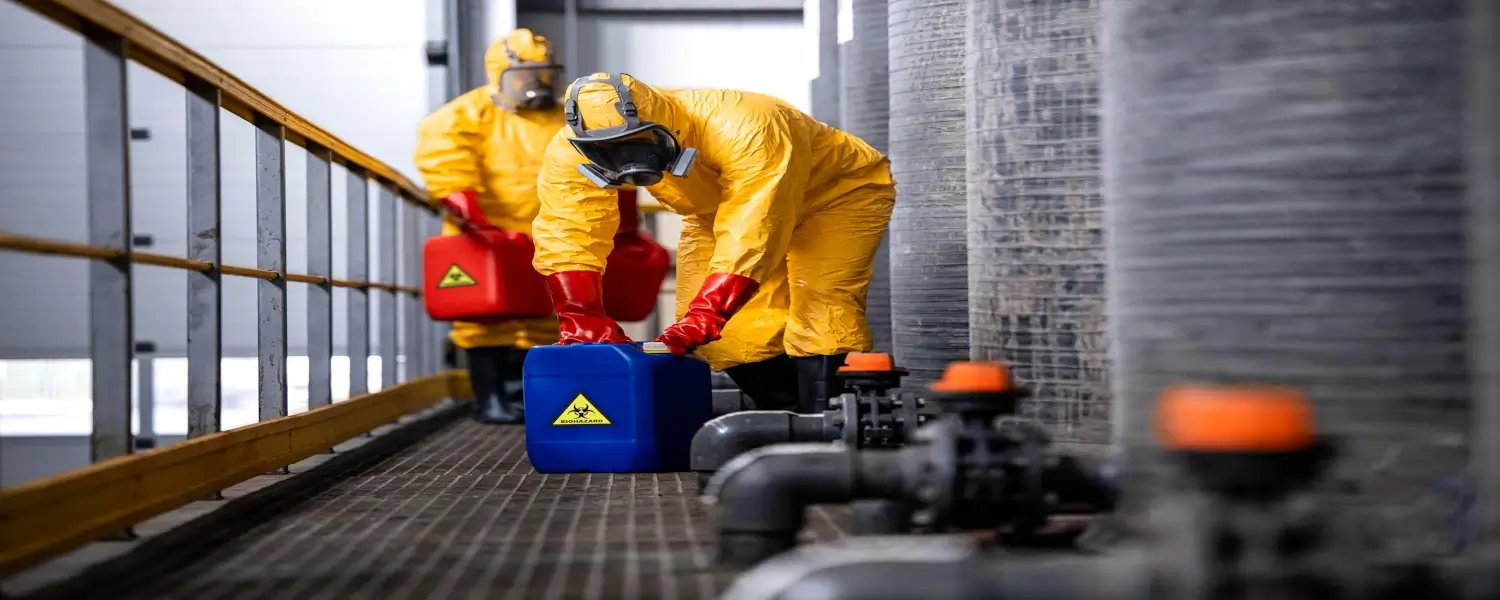
TECHNICAL NAME: TRAINING COURSE FOR HANDLING, STORAGE, STORAGE, TRANSPORT AND LEGISLATION OF DANGEROUS PRODUCTS
Reference: 201659
We provide Courses and Training; We carry out Translations and Interpretations in Technical Languages: Portuguese, English, Spanish, Mandarin, German, Hindi, Japanese, Arabic and others consult
Storage, Transport and Legislation of Dangerous Products Course
The Storage, Transport and Legislation of Dangerous Products course is designed to provide the knowledge and skills necessary to properly deal with the storage, transport and legislation related to dangerous products. Topics covered in this course may include:
Definition of Dangerous Goods: This topic covers what dangerous goods are, the different types of dangerous goods and the risks associated with them.
Applicable Law: Here, participants learn about the laws and regulations that govern the handling, storage and transportation of dangerous goods.
Storage: This topic covers best practices for the safe storage of dangerous goods, including the appropriate type of storage, necessary safety measures, and emergency procedures.
Transportation: This topic covers guidelines for the safe transportation of dangerous goods, including proper packaging, labeling, documentation, and emergency procedures.
Risk Management: Participants learn how to assess and manage risks associated with handling, storing and transporting dangerous products.
This course is essential for anyone working with dangerous products, whether in warehouses, transport or any other sector where these products are handled. It helps ensure that dangerous products are handled safely and effectively, minimizing risk to people and the environment
What are Dangerous Products?
Dangerous products are substances that have characteristics that may pose a risk to health, safety and the environment. The classification of a product as dangerous is defined in the Supplementary Instruction published by ANTT Resolution No. 5,232/2016. According to this resolution, a dangerous product is defined as any product that has the potential to cause harm or present a risk to health, safety and the environment.
The classification of dangerous products is based on the type of risk they present. There are several categories of hazardous materials, including, but not limited to, explosive substances, gases, flammable liquids, oxidizing substances, toxic and infectious substances, radioactive materials, corrosive substances, and various other types of hazardous materials.
The storage and logistics of these products require careful planning and must be carried out by specialized companies that have all the required certifications[3]. Furthermore, there are specific standards that define which products are dangerous for different modes of transport, such as water transport (river and sea).
What is the SDS (Safety Data Sheet)?
The Safety Data Sheet (FDS), also known as Material Safety Data Sheet (MSDS) in English, is a document that contains information about the possible risks (health, safety and environment) that may be caused by chemical products, in addition to guidance on how to handle, store and dispose of these products safely.
The SDS is a legal requirement in many countries and is usually provided by the chemical manufacturer or supplier. It is primarily intended for workers who may come into contact with the chemical in the course of their work, as well as emergency personnel such as firefighters and medical personnel.
Click on the Link: Criteria for Issuing Certificates in accordance with the Standards
Treinamento Livre Profissionalizante Noções Básicas (Não substitui Formação Acadêmica ou Ensino Técnico)Certificado de conclusão
Dangerous Goods Logistics Course English
Normative Syllabus:
Conceptualization: Chemistry of dangerous products;
Classification of dangerous products;
SDS (Safety Data Sheet);
Applicable legislation: dangerous products – Chemical incompatibility;
Chemical licenses and applicability;
Legislation for different segments – Chemicals;
International chemical storage legislation;
Licensing processes and applicable documentation;
Quantification of products and correct storage;
Identification and appropriate treatment of dangerous products;
Correct storage techniques;
Communication of information and incidents;
GHS – Global Harmonizing System – Global Harmonized System;
Hazard Communication Standard;
Awareness of risks and damage to the environment;
Collective and individual controls for work with flammable materials;
Flammable: characteristics, properties, dangers and risks;
Toxicology and risks of dangerous products;
Procedures for accidents;
First aid knowledge;
Neutralization of leaks and disposal of chemical products
Chemical Safety – ABIQUIM Standard – Brazilian Association of the Chemical Industry
PPRA (Environmental Risk Prevention Program) and PGR (Risk Management Program);
Emergency response:
Phase 1: First on Site
Phase 2: Identification of products;
Phase 3: Signaling and isolation;
Phase 4: Preliminary assessment and activation;
Phase 5: Operations command system (SCO):
Phase 6: Planning response actions;
Phase 7: Implementation of response actions;
Phase 8: Assessment of response actions;
Phase 9: Reestablishment of security;
Phase 10: Termination of the emergency response.
Types of dangerous material transportation;
Distances inside the parking lot;
Boundary fences;
Personal Protective Equipment (PPE) and Collective Protection Equipment (EPC);
Segregation of areas by risk class;
Registration for vehicle admission to parking;
Checklists for dangerous goods and transportation of dangerous goods.
Activity Complements – Awareness of the Importance:
APR (Preliminary Risk Analysis);
PE (Emergency Plan);
PGR (Risk Management Plan);
GRO (Occupational Risk Management);
Understanding the need for the Rescue Team – NBR 16710;
The Importance of knowledge of the task;
Accident prevention and first aid knowledge;
Fire protection – NBR 14276;
Perception of risks and factors that affect people’s perceptions;
Impact and behavioral factors on safety: Fear factor;
How to discover the fastest and easiest way to develop Skills;
How to control your mind while working;
How to manage and manage working time;
Because balance energy during activity in order to obtain productivity;
Consequences of Risk Habituation;
Causes of work accidents;
Understanding the Tree of Causes;
Understanding of Ergonomics, Workplace Analysis and Ergonomic Risks.
Basic notions of:
HAZCOM – Hazard Communication Standard;
HAZMAT – Hazardous Materials;
HAZWOPER – Hazardous Waste Operations and Emergency Response;
PDCA Cycle (Plan-Do-Check-Act) – ISO 45001;
FMEA – Failure Mode and Effect Analysis;
SFMEA – Service Failure Mode and Effect Analysis;
PFMEA – Process of Failure Mode and Effects Analysis;
DFMEA – Design Failure Mode and Effect Analysis;
Failure modes, effects and criticality analysis (FMECA);
Bow Tie Tool (Risk Management Process Analysis);
Accident Analysis Tool – TRIPOD Method;
Hazard Communication Standard (HCS) – OSHA;
Hawkins Scale (Awareness Scale);
Practical Exercises:
Recording Evidence;
Theoretical and Practical Assessment;
Certificate of participation.
NOTE:
We emphasize that the General Normative Syllabus of the Course or Training may be changed, updated, adding or deleting items as necessary by our Multidisciplinary Team.
Our Multidisciplinary Team is entitled to update, adapt, change and/or delete items, as well as the insertion or exclusion of Standards, Laws, Decrees or technical parameters that they deem applicable, whether related or not, with the Contracting Party being responsible for carrying out the necessary assistance. in accordance with the relevant legislation.